

Better Than Budgeting? Why Cash Flow Mapping Is The Key To Wealth
Let’s be real: traditional budgeting sucks. It’s the financial equivalent of a crash diet. You start with good intentions, cutting out everything fun, tracking every penny, and feeling guilty about buying a coffee. A few weeks later, you’re burnt out, you ‘cheat’ on a purchase, and the whole thing collapses. Sound familiar? You’re not alone. Most budgets fail because they’re built on a foundation of restriction and scarcity.
But what if there was a better way? What if, instead of putting your money in a cage, you gave it a GPS? That’s Cash Flow Mapping. This isn’t about saying ‘no’ to everything. It’s about consciously telling your money where to go to build the life you want. It’s the difference between being a passenger in your financial life and being the CEO. Forget pinching pennies; we’re talking about building pipelines to wealth. This is your guide to ditching the broke mindset and taking control of your financial destiny.
The Budgeting Trap: Why Your Old System Is Rigged to Fail

The dirty little secret of personal finance is that most budgets are designed for failure. They operate on a simple, flawed principle: spend less than you earn. While true, this approach ignores human psychology entirely. It creates a constant feeling of ‘less than’—less fun, less freedom, less spending. It forces you to focus on what you’re giving up, not what you’re building.
The Shame Cycle of Budgeting
When you have a budget with rigid categories like ‘$50 for entertainment,’ you’re setting yourself up for a trap. The second you spend $51, you’ve ‘failed.’ This triggers a shame cycle. You feel bad, think ‘what’s the point?’, and abandon the whole system. Cash Flow Mapping eliminates this by focusing on the bigger picture, not micromanaging every transaction.
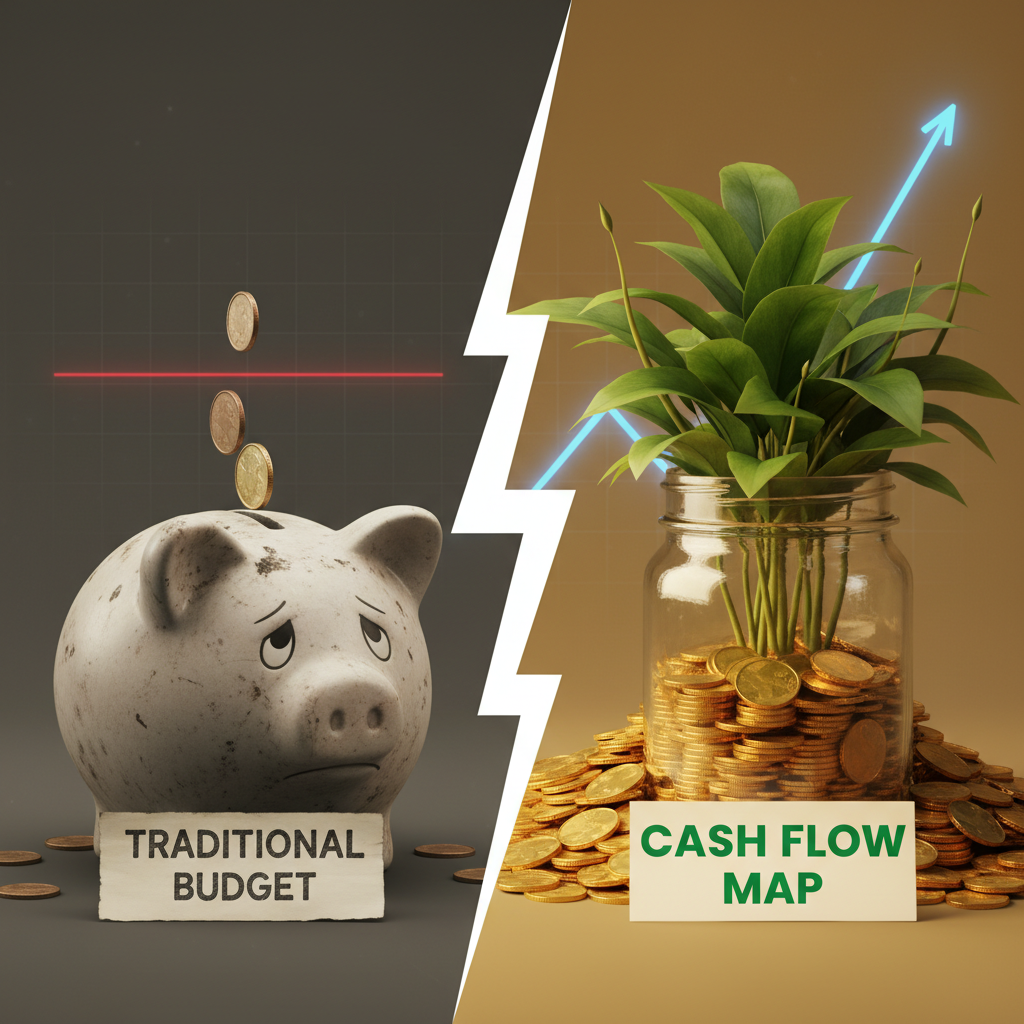
A traditional budget is a rearview mirror, obsessing over past spending. A cash flow map is a GPS, plotting the fastest route to your future wealth.
Traditional methods also fail to adapt to the reality of a side hustler’s life. Your income might be variable. One month you crush it, the next is slower. A rigid budget can’t handle that fluctuation without causing massive stress. It punishes you for inconsistency, whereas a cash flow map helps you strategically allocate windfalls and navigate lean times without derailing your long-term goals.
The Cash Flow Map: Your GPS to Financial Freedom

So, what exactly is this magic bullet? A cash flow map is a visual plan that shows how money moves through your life. It’s not a list of rules; it’s a strategy document. Instead of a hundred tiny spending categories, you focus on four main channels:
- Income Streams: All the cash coming in. Your 9-to-5, your side hustles, your Etsy shop, that freelance gig—everything.
- Fixed Costs: The non-negotiables. Rent/mortgage, car payment, insurance, basic utilities. These are the bills you have to pay to keep the lights on.
- Flex Spending: This is where life happens. Groceries, gas, entertainment, subscriptions. It’s your variable spending, but we’re not going to break it down into a million sub-categories. It’s one bucket you manage.
- The Wealth Engine: This is the most important channel and the one traditional budgets ignore. This is money actively being directed to build your future: high-yield savings, investments, extra debt payments on high-interest loans, and reinvestment into your side hustle.
The goal is simple: maximize the flow into your Wealth Engine. By seeing your money this way, you shift your focus from ‘What can I cut?’ to ‘How can I redirect more money to the engine that will make me wealthy?’ It’s an abundance mindset, not a scarcity one.
How to Build Your First Cash Flow Map in 3 Simple Steps
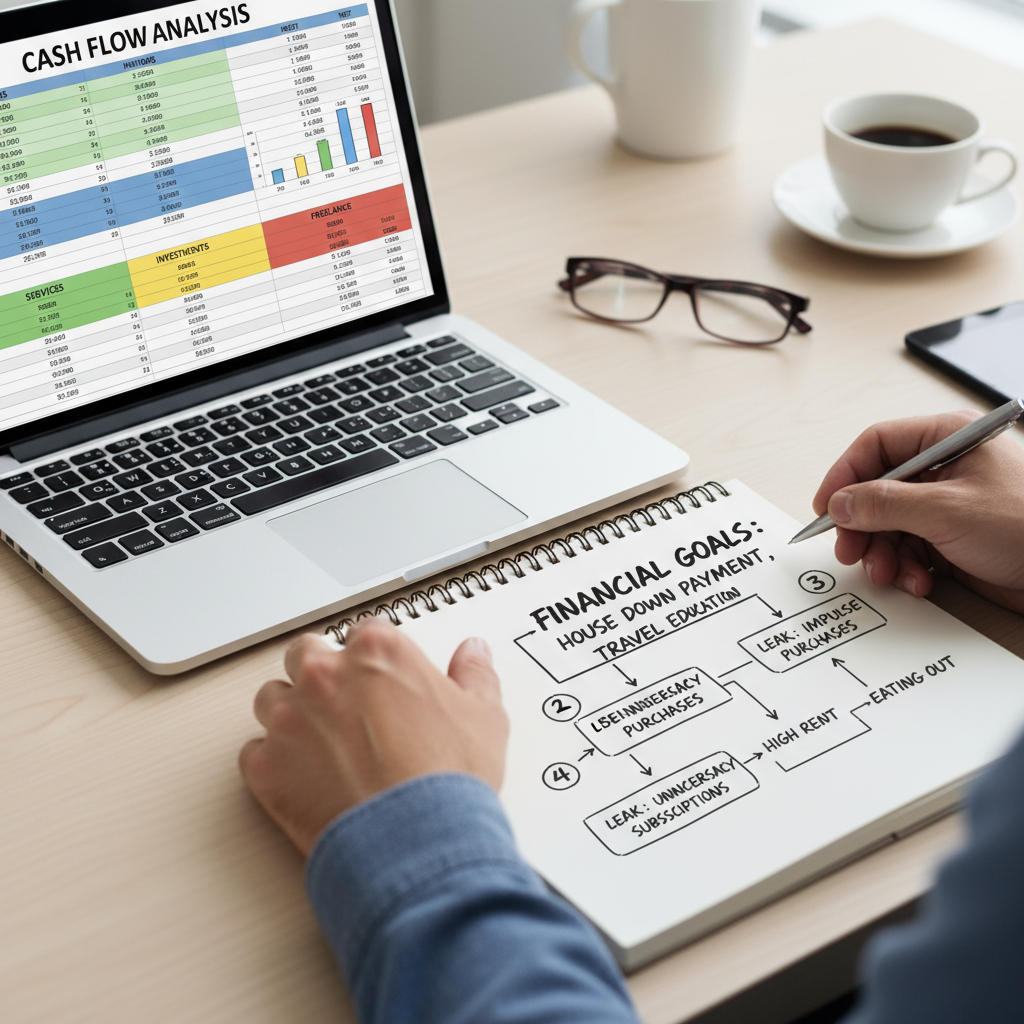
Ready to build your own GPS? This isn’t complicated. You don’t need fancy software, but tools can help. You can use a spreadsheet, a notebook, or an app like YNAB or Mint. The tool doesn’t matter as much as the process.
-
Step 1: Track Your Money’s REAL Movement
For the next 30 days, you’re a private investigator and your money is the subject. Don’t change your habits. Just track every single dollar that comes in and goes out. Be brutally honest. This isn’t about judgment; it’s about collecting data. Where is your money *actually* going? You might be surprised.
-
Step 2: Draw the Map & Assign to Channels
Once you have 30 days of data, it’s time to draw your map. Tally up your totals and assign every dollar to one of the four channels: Income, Fixed Costs, Flex Spending, and Wealth Engine. It might look something like this for a month:
Channel Source / Destination Amount Income Streams Day Job + Side Hustle $4,500 Fixed Costs Rent, Car, Insurance $2,200 Flex Spending Groceries, Gas, Fun, etc. $1,800 Wealth Engine 401k Contribution $500 -
Step 3: Find the Leaks & Redirect the Flow
Look at your map. In the example above, $1,800 is going into the ‘Flex Spending’ black hole. This is your opportunity. Can you turn that $1,800 into $1,500 by being more mindful? That’s not about deprivation; it’s about finding $300 that wasn’t serving you and giving it a real job. Redirecting that $300/month into your Wealth Engine is how the game is won. That’s an extra $3,600 a year working for you, not disappearing on random purchases. At a 7% return, that $3,600 per year becomes over $41,000 in 10 years. That’s a powerful move.
The Math: Cash Flow Mapping vs. Traditional Budgeting
Let’s see this in action. Meet Alex. Alex makes $50,000 a year. Let’s see how two different approaches impact Alex’s ability to build wealth over one year.
Scenario 1: The Restrictive Budget
Alex tries to budget. Alex feels stressed about every purchase, fails to stick to the rigid categories, and ends the year having only managed to save what was automatically deducted for a 401k match. There’s no strategy for extra income or debt paydown.
Scenario 2: The Cash Flow Map
Alex maps everything out. Alex sees that a huge chunk of money is going to random online shopping and expensive lunches. Instead of ‘cutting back,’ Alex decides to redirect $400 per month from the ‘Flex Spending’ channel directly into the ‘Wealth Engine.’ Alex also has a small side hustle that brings in an average of $250 a month, which the map directs straight to the Wealth Engine. The results are staggering.
| Metric | Traditional Budget (1 Year) | Cash Flow Map (1 Year) |
|---|---|---|
| Starting Net Worth | $5,000 | $5,000 |
| 401k Contributions | $3,000 | $3,000 |
| Strategic Savings/Investing | $0 | $4,800 (from redirecting) |
| Side Hustle to Wealth Engine | $0 (absorbed into spending) | $3,000 |
| Total Added to Wealth Engine | $3,000 | $10,800 |
| Ending Net Worth (approx.) | $8,000 | $15,800 |
The difference is undeniable. With the same income, the Cash Flow Map strategy more than tripled the amount of money Alex put towards building wealth. This isn’t about earning more; it’s about being more effective with what you have.
Level Up: Advanced Cash Flow Strategies for Hustlers
Once you’ve mastered the basics, you can turn your cash flow map into a high-performance machine for wealth generation. This is especially critical for anyone with a side hustle or variable income.
Automate Your Wealth Engine
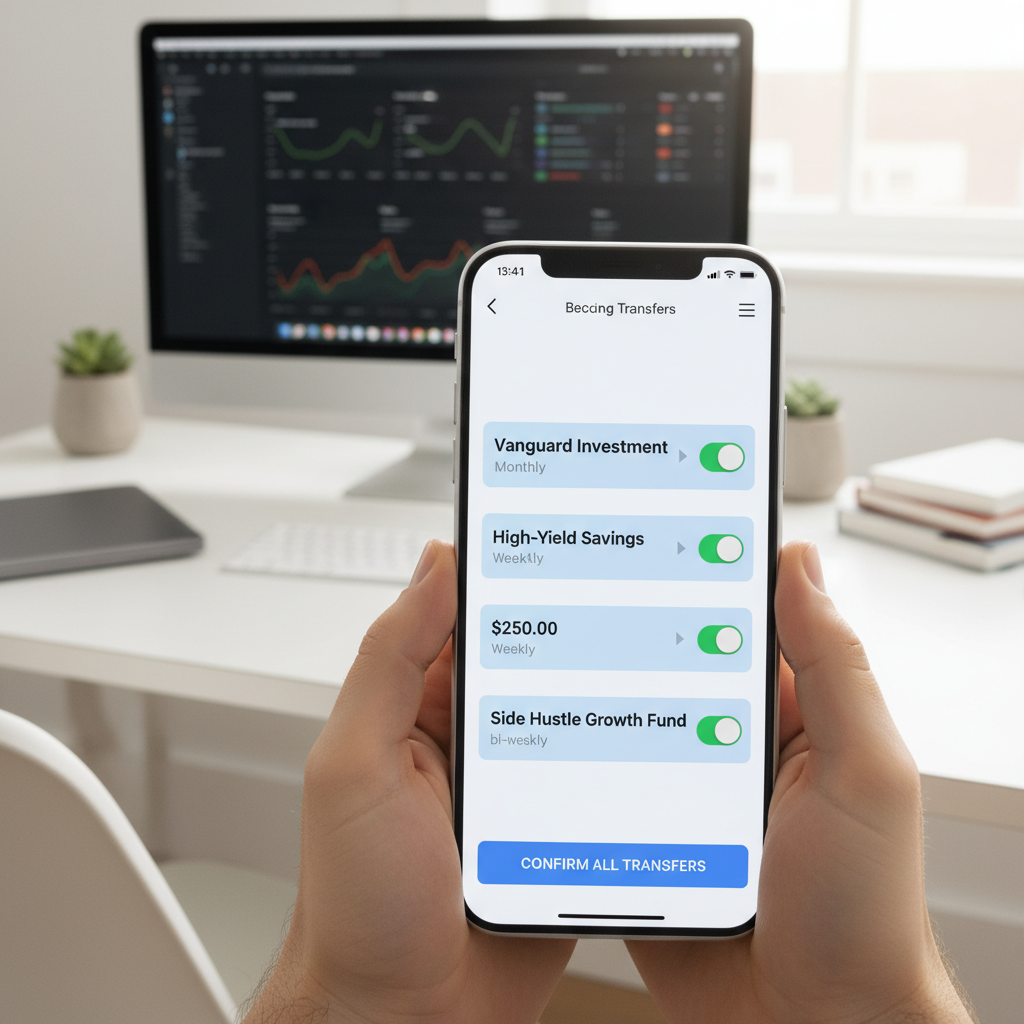
This is the number one rule. The moment you get paid from any income source, have automatic transfers set up to move money directly into your investment accounts, high-yield savings, or extra debt payments. Pay your future self first, before you even have a chance to spend it. This makes wealth-building your most important ‘bill’.
The ‘Profit First’ Method for Your Life
Borrowing a concept from business, decide on a ‘profit’ percentage for your life. Maybe it’s 15% of all income. That 15% immediately gets moved to your Wealth Engine. The rest is what you have left for Fixed Costs and Flex Spending. This flips the script from saving what’s left to spending what’s left after you save.
Create Sinking Funds with Purpose
Your cash flow map can help you plan for big expenses without derailing your progress. Want a vacation? Need a new laptop for your side hustle? Create a specific savings goal (a ‘sinking fund’) and direct a portion of your cash flow towards it each month. When the time comes to buy, the money is already there, and it doesn’t come out of your emergency fund or your investment contributions.
Scam Warning: Be wary of ‘gurus’ selling overly complex software or promising that their one weird trick will solve all your money problems. The best system is the one you understand and can stick with. A simple spreadsheet you use consistently is a thousand times better than expensive software you never open.
Conclusion
It’s time to stop fighting with your money and start leading it. Traditional budgeting asks you to play defense, to constantly guard against overspending in a game you’re psychologically destined to lose. Cash Flow Mapping is your offensive playbook. It’s a dynamic, empowering system that puts you in charge, transforming you from a frantic penny-pincher into a strategic wealth builder.
Draw your map. Identify your leaks. And start redirecting your cash with purpose. Your money should be your hardest-working employee, and a cash flow map is the job description that will finally get it to perform. The path to wealth isn’t paved with deprivation; it’s built by deliberate, strategic direction. Go build your empire.