

Addicted to Shopping? 5 Psychological Tricks to Stop Impulse Buying Now
Let’s get real. You see it. You want it. You click ‘Add to Cart.’ A little jolt of excitement hits—the shopper’s high. But a day later, when the package arrives, that high is gone. In its place? A mix of guilt, regret, and a slightly lighter bank account. Sound familiar? You’re not weak; you’re being played. Big-time retailers spend billions on psychologists and marketers to design online and in-store experiences that short-circuit the rational part of your brain and trigger your impulse to spend. They create fake urgency, manipulate your emotions, and make you feel like you’re missing out if you don’t buy right now.
But what if you could use psychology to fight back? What if you could become immune to their tricks and take back control of your wallet? This isn’t about living a life of miserable deprivation or never buying anything nice again. This is about empowerment. It’s about making sure every single dollar you spend is a conscious choice that moves you closer to your real goals—whether that’s getting debt-free, buying a house, or traveling the world. We’re about to arm you with five powerful psychological hacks that will help you stop impulse buying for good. It’s time to be the boss of your money, not a puppet for corporate marketing teams.
Trick #1: The 24-Hour Rule – Your Brain’s ‘Cool Down’ Button

The number one weapon retailers use against you is urgency. ‘Limited Time Offer!’ ‘Only 2 Left in Stock!’ ‘Sale Ends Tonight!’ These phrases are designed to trigger a primal fear of missing out (FOMO), causing you to buy without thinking. The 24-Hour Rule is your ultimate defense. It’s brutally simple but incredibly effective.
The Game Plan
When you feel that intense urge to buy something that isn’t a planned necessity, you don’t say no. You just say ‘not yet.’ Add the item to your online cart, write it on a list, or save the link. Then, you walk away for a full 24 hours. No exceptions.
The Rule: Never purchase a non-essential item on the same day you first see it. Give your brain 24 hours to separate the genuine ‘want’ from the manufactured ‘urgency.’
This delay does something magical. It allows the dopamine rush—that ‘feel-good’ chemical that makes the purchase so tempting—to fade away. Once the emotional high is gone, your rational brain can log back in and ask the important questions: Do I really need this? Do I already own something similar? Does this purchase align with my financial goals? More than 80% of the time, you’ll find the desire has completely vanished, or you’ll realize it was a foolish purchase.
The Math That Doesn’t Lie
Think this is small change? Let’s run the numbers. Let’s say you use this rule to dodge one impulse buy of $75 each week. That could be a new video game, a trendy jacket, or a fancy dinner out that you didn’t plan.
- Weekly Savings: $75
- Monthly Savings: $300
- Yearly Savings: $3,600
That’s not just ‘saving money.’ That’s a fully-funded emergency fund. That’s a huge chunk of a car down payment. That’s a trip to another continent. All from just giving yourself 24 hours to think.
Trick #2: The ‘Cost-Per-Use’ Mind Game – Exposing Bad Value
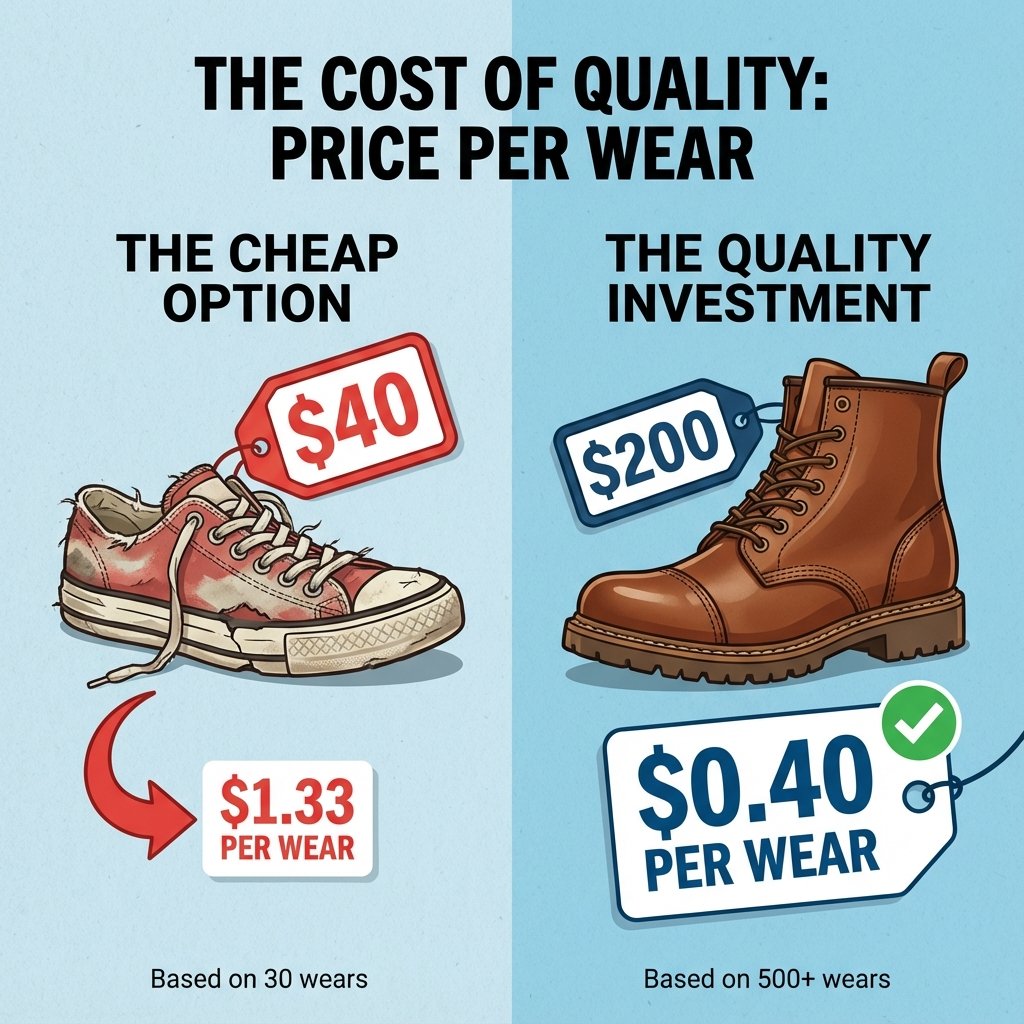
Our brains are easily fooled by a low price tag. A $20 t-shirt feels like a steal. A $150 pair of boots feels like a huge expense. But the initial price tag tells you almost nothing about the item’s true cost. The ‘Cost-Per-Use’ (CPU) calculation is a powerful psychological reframe that forces you to see the real value—or lack thereof—in every purchase.
How to Run the Numbers
The formula is simple: Total Price ÷ Estimated Number of Uses = Cost Per Use. Before you buy something, be brutally honest with yourself about how many times you’ll actually use it. A cheap, fast-fashion top might only survive five washes. A durable, classic leather jacket could last you a decade.
Let’s put this into a real-world comparison. You need a new pair of work shoes.
| Shoe Option | Price | Estimated Wears | True Cost Per Wear |
|---|---|---|---|
| Cheap, Fast-Fashion Loafers | $40 | 30 (They fall apart in one season) | $1.33 |
| High-Quality, Repairable Leather Shoes | $200 | 500 (They last for years) | $0.40 |
Suddenly, the ‘expensive’ $200 shoes are more than three times cheaper than the ‘bargain’ $40 pair every single time you put them on. This isn’t about always buying the most expensive thing. It’s about shifting your mindset from a ‘spender’ to an ‘investor.’ You’re investing in your wardrobe, your tools, and your life. This trick short-circuits the appeal of disposable junk and trains your brain to hunt for long-term value, saving you a fortune over time.
Trick #3: The ‘Future You’ Fund – Make Saving More Rewarding Than Spending
Why is it so easy to spend money now and so hard to save for the future? Blame your brain’s ‘present bias.’ It’s wired to prefer immediate rewards (a new gadget today) over distant ones (a comfortable retirement in 30 years). To beat this, you need to make the future reward feel just as real and exciting as the immediate purchase. Enter the ‘Future You’ Fund.
The Setup
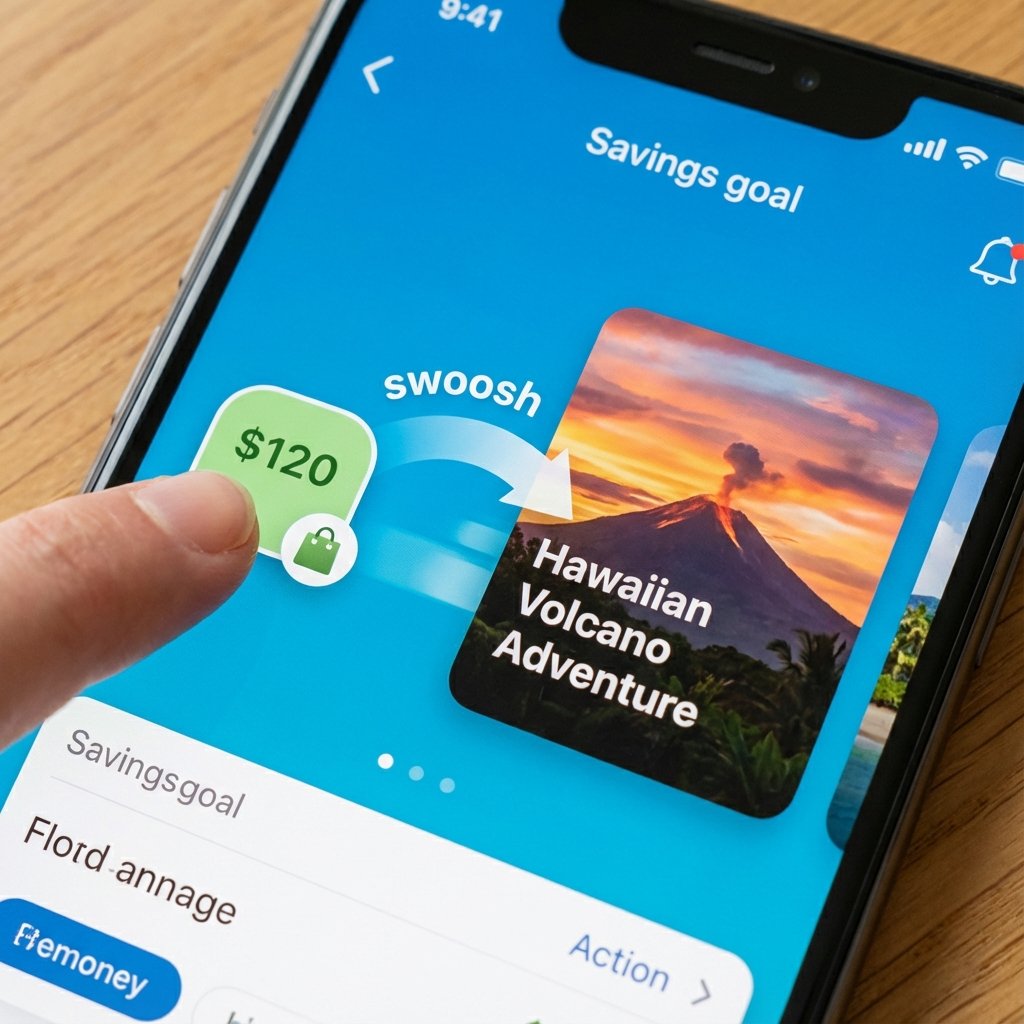
Open a separate, high-yield savings account and give it a very specific, motivating name. Don’t call it ‘General Savings.’ Call it ‘Debt-Free Freedom Fund,’ ‘Hawaiian Volcano Adventure,’ or ‘My Own Damn House Down Payment.’ Find a picture that represents that goal and make it the account’s icon. This makes your goal tangible and emotional.
The Killer Move
Here’s where the magic happens. Every single time you successfully use a trick like the 24-Hour Rule to dodge an impulse buy, you don’t just pat yourself on the back. You immediately open your banking app and transfer the exact amount of money you would have spent into your ‘Future You’ Fund.
You resisted buying that $60 video game? Boom. $60 goes straight into the fund. You walked away from that $120 dress? Whoosh. $120 is now working for ‘Future You.’ This action creates a powerful feedback loop. You get the same immediate dopamine hit you would have from shopping, but this time it’s linked to empowerment and progress, not spending and regret. You’re actively rewarding your good behavior, which makes it much easier to repeat.
Think about the impact. If you redirect just $50 a week from impulse buys to your goal fund, that’s $2,600 in a year, plus interest. You’re not just stopping a bad habit; you’re actively building your dream life with the money you save.
Trick #4: The Unsubscribe Purge – Silencing the Retail Sirens

Your inbox is a battlefield. Every day, dozens of companies are carpet-bombing you with professionally crafted temptations. They know your purchase history. They know what you’ve browsed. And they use this data to send you ‘personalized’ offers, flash sale alerts, and cart abandonment emails designed to wear down your willpower.
If you want to stop impulse buying, you have to stop the triggers at the source. It’s time for an Unsubscribe Purge.
The Action Plan
Set aside 30 minutes. Don’t just delete the emails—that’s a temporary fix. You need to go scorched-earth. Open every single marketing email from a retailer and scroll to the bottom. Find that tiny ‘Unsubscribe’ link and click it. Be ruthless. If it’s not from your bank, your utility company, or a service you actively use every week, unsubscribe. You can also use free services like Unroll.Me to bulk-unsubscribe from dozens of lists at once.
Next, go to your phone’s settings and turn off ALL notifications from shopping apps. Amazon, Target, Etsy, Shein—all of them. No more pings about a ‘deal of the day.’ You decide when you shop, not them.
Scam Warning: Be wary of extreme urgency. Tactics like countdown timers that reset or ‘Only 1 Left!’ claims on mass-produced items are often psychological manipulations, not factual statements about inventory. True scarcity is rare; fake scarcity is a sales tool.
This process is about more than just a cleaner inbox. It’s about reclaiming your mental space. Without the constant barrage of ‘buy now’ messaging, you’ll feel a sense of peace. You’ll find that you forget about wanting things you never really needed in the first place. You’re creating a digital environment that supports your financial goals, not one that sabotages them.
Trick #5: The HALT Trigger Check – Unmasking Your Emotional Spending

Let’s be honest: a lot of our impulse shopping has nothing to do with the item itself. We’re not buying a product; we’re buying a feeling. We shop to soothe boredom, to relieve stress after a bad day, or to feel a sense of control when other parts of our lives feel chaotic. This is emotional spending, and it’s a budget killer. The HALT method is a simple but profound self-awareness tool to stop it in its tracks.
How to Use HALT
HALT is an acronym that stands for the four most common emotional and physical triggers for bad decisions: Hungry, Angry, Lonely, and Tired. Before you make an unplanned purchase, you must stop and ask yourself:
- Am I Hungry? Low blood sugar can impair judgment and make you crave a quick fix, whether it’s a candy bar or a new pair of shoes.
- Am I Angry? Did you just have a fight with your boss or partner? Spending can feel like a way to ‘get back’ at the world or exert control.
- Am I Lonely? Are you scrolling through online stores because you’re bored and craving connection? The temporary thrill of a purchase can mimic a sense of fulfillment.
- Am I Tired? When you’re exhausted, your willpower is at its lowest. It’s much easier to give in to temptation and make decisions you’ll regret later.
The Frugal Fixes
Once you identify the real trigger, you can address it directly with a healthier, cheaper solution. Instead of clicking ‘Buy Now’:
- If you’re Hungry, eat a proper meal or a healthy snack.
- If you’re Angry, go for a run, listen to loud music, or journal about what’s bothering you.
- If you’re Lonely, call a friend, text a family member, or go to a public place like a park or library.
- If you’re Tired, take a 20-minute nap, go to bed early, or do some light stretching.
By using the HALT check, you’re not just denying an impulse; you’re learning to understand your own emotional landscape. You’re giving yourself what you actually need, instead of slapping a temporary, expensive band-aid on the problem. This is the deepest level of financial control—mastering your emotions so they don’t master your wallet.
Conclusion
Breaking a shopping addiction isn’t about willpower alone; it’s about having the right strategy. It’s about understanding the psychological triggers that retailers use against you and building a new set of mental habits to defend your financial future. You now have five powerful tools in your arsenal:
- The 24-Hour Rule: To let emotions cool and logic prevail.
- Cost-Per-Use Calculation: To identify and invest in true value.
- The ‘Future You’ Fund: To make saving more rewarding than spending.
- The Unsubscribe Purge: To silence the constant triggers and temptations.
- The HALT Check: To uncover and address the real emotional needs behind your spending.
Don’t try to implement all of them at once. Pick the one that resonates with you the most and commit to practicing it for the next 30 days. The goal isn’t perfection; it’s progress. Every time you consciously choose your long-term goals over a short-term impulse, you’re casting a vote for the life you want to build. You are in control. Now go make your money work for you.