


Listen up, hustlers and smart spenders. We’re constantly told the only way to get ahead is to earn more cash. More hours, more gigs, more grind. But what if I told you there’s a parallel economy—a system that lets you get high-value services, fresh goods, and even professional help without spending a single dollar? This isn’t a fantasy; it’s the lost art of bartering, and it’s making a massive comeback for people who are tired of the cash-is-king mentality.
Forget dusty images of old-world marketplaces. Today’s bartering is a strategic financial tool. It’s about recognizing that your time, your skills, and even the stuff you own have real, tangible value. For side hustlers, it’s a way to get business services like logo design or accounting help without draining your startup funds. For the frugal-minded, it’s getting a haircut in exchange for a few hours of babysitting. This is the ultimate life hack for a lean budget, and we’re about to break down exactly how you can master it.
Step 1: Uncover Your Hidden Assets (You’re Richer Than You Think)

Step 1: Uncover Your Hidden Assets (You’re Richer Than You Think)
Before you can trade, you need to know what you’re bringing to the table. Most people undervalue themselves, thinking they have nothing to offer. That’s nonsense. Your ‘inventory’ is split into two categories: Skills and Stuff. You need to do a serious audit of what you’ve got.
Your Skills Inventory
These are the services you can provide. Think beyond your 9-to-5. What do friends ask you for help with? What are your hobbies? Don’t dismiss anything. That ‘silly’ hobby could be someone else’s desperate need.
- Digital & Creative Skills: Graphic design, social media management, writing/editing, photography, video editing, website setup, SEO basics.
- Manual & Practical Skills: House cleaning, organizing, meal prep, baking, car repair, basic plumbing, painting, furniture assembly, gardening, pet sitting/dog walking.
- Professional & Consulting Skills: Tutoring, music lessons, personal training, resume writing, business planning, tax preparation, legal advice (if you’re qualified!).
Your Stuff Inventory
This is the tangible gear you own that others might want to use or have. Think about items you don’t use daily that have value.
- Equipment: Power tools, lawnmower, high-quality camera, musical instruments, camping gear.
- Goods: Homegrown vegetables from your garden, baked goods, handmade crafts, furniture you’ve refurbished.
- Access: A spare room for storage, use of a vehicle, a membership pass you can share.
The key is to think like an entrepreneur. Every skill and item is a potential asset. Write it all down. This list is your personal bartering catalog, the foundation of your new cash-free empire.
Step 2: The Barter Blueprint – Finding Your Trading Partner

Step 2: The Barter Blueprint – Finding Your Trading Partner
Okay, you know what you have to offer. Now, where do you find people to trade with? You need to hunt where your target audience hangs out, both online and in the real world.
Digital Hunting Grounds
The internet has made bartering easier than ever. You just need to know where to look.
- Facebook Groups: Search for “[Your City] Barter,” “Trade/Swap Group,” or even local community and parenting groups. These are goldmines. People post what they need and what they offer all the time.
- Specialized Websites: Platforms like TradeMade, Simbi, and Bunz are built specifically for skill and item swapping. They create a trusted environment and help you track the value of your trades.
- Craigslist & Nextdoor: Both have ‘barter’ sections. It can be a bit of a wild west, but you can find some incredible deals if you’re careful and specific in your posts.
Real-World Networking
Don’t underestimate the power of your local community.
- Local Businesses: That new coffee shop might need a simple website. Your local mechanic might want help with their social media. Small business owners are often cash-strapped and open to trades.
- Community Centers & Bulletin Boards: Old school, but it works. Local libraries, gyms, and co-working spaces are great places to connect with people who have complementary needs.
- Your Own Network: Start with friends, family, and colleagues. Announce what you’re looking for and what you can offer. You’d be surprised who needs your skills.
The Perfect Pitch: Scripts That Work
Once you find a potential partner, you need to make the first move. Don’t be weird or vague. Be direct, professional, and value-focused. Here are some scripts you can adapt:
Script for a Local Business (Email/DM):
“Hi [Business Name], I’m a huge fan of your [product/service]! My name is [Your Name], and I’m a local [Your Skill, e.g., photographer]. I’m looking to get some professional headshots done and noticed you offer them. I specialize in creating social media content for local brands. I’d love to propose a trade: a full headshot session in exchange for a month of social media content creation (12 posts + engagement). Let me know if you’re open to chatting about it!”
Script for a Facebook Group Post:
“TRADE OFFER: I’m offering 4 hours of professional home organization services. My pantry makeovers are legendary! ISO [In Search Of]: A deep clean of my car’s interior or someone to meal prep 5 healthy lunches for me for next week. Let’s help each other out! Here are some pics of my work.”
Step 3: The Art of the Deal – How to Negotiate Fair Value

Step 3: The Art of the Deal – How to Negotiate Fair Value
Negotiation is where most people get nervous. The secret? It’s not about winning; it’s about finding a win-win. To do that, you need to establish clear value and set firm boundaries.
Rule #1: Anchor to a Dollar Value
Even though no cash is changing hands, you MUST think in terms of real-world value. This keeps trades fair and prevents one person from feeling ripped off.
- For Services: What is your hourly rate? If you’re a graphic designer who charges $75/hour, a 4-hour logo project has a value of $300. You should be looking for a trade of equivalent value.
- For Goods: What’s the fair market price for the item? Check eBay, Facebook Marketplace, or retail prices for a comparable product.
Rule #2: Get Everything in Writing
This isn’t a corporate merger, but a simple, written agreement protects everyone. It doesn’t need to be complicated. A simple email or text message that both parties agree to is enough. It should clearly state:
- Who is involved: Full names of both parties.
- What is being exchanged: A detailed description of the services or goods. Be specific! “A 5-page WordPress website” is better than “a website.” “Three loaves of organic sourdough bread delivered on Monday” is better than “some bread.”
- The timeline: When will the services be completed or the goods delivered? Set clear deadlines.
- The agreed-upon value: Mentioning the cash value (e.g., “My services, valued at $500, for your services, valued at $500“) reinforces the fairness of the trade.
Key Rule for Fair Trades:
If it feels sketchy, it probably is. A fair partner will be transparent about value, scope, and timelines. If they’re vague or pushy, walk away. There are plenty of other trades out there.
Rule #3: Don’t Be Afraid to Say No
Sometimes the value just isn’t there. If a plumber wants you to build a full e-commerce website (a $5,000 value) in exchange for fixing a leaky faucet (a $200 value), that’s a hard pass. Politely decline and explain the value mismatch. “Thanks for the offer, but my services for that project are valued significantly higher. I’d be open to a smaller project, like a landing page design, if that works for you.”
The Payoff: Realistic Value Potential of Bartering
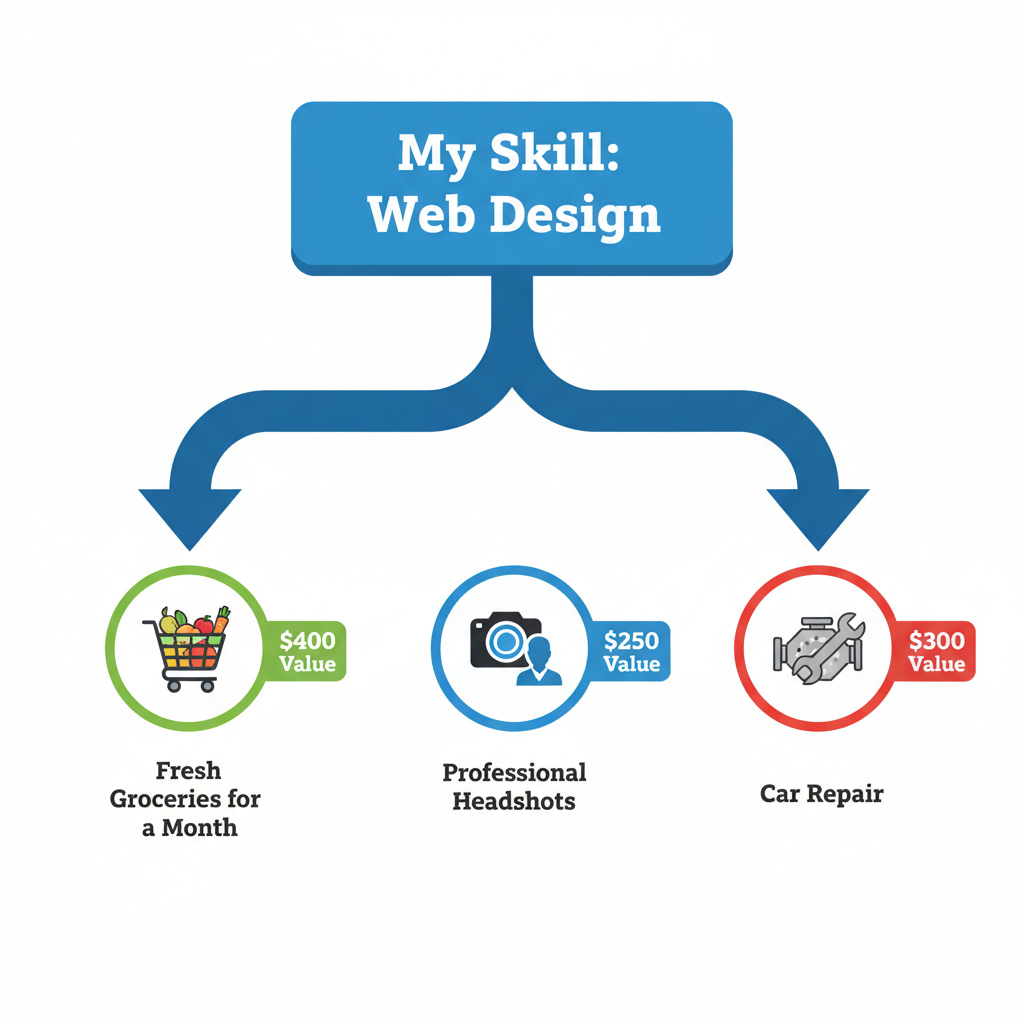
The Payoff: Realistic Value Potential of Bartering
So, what can you actually get out of this? This isn’t about trading for trinkets. This is about acquiring high-value assets and services that directly improve your life or business. Think of the ‘value’ as money you didn’t have to spend.
Here’s a breakdown of some common, high-value trades people are making right now. This is real money you’re keeping in your pocket.
| Your Skill / Item (Your Offer) | Potential Trade (What You Get) | Estimated Cash Value Saved |
|---|---|---|
| Social Media Management (10 hrs/month) | Monthly bookkeeping services for your side hustle | $400 – $600 |
| Professional Photography Session (2 hours) | A weekend stay at a friend’s vacation cabin | $350 – $700 |
| Building a Garden Bed & Planting | A share of the vegetable harvest for the entire season | $300+ |
| Babysitting (15 hours/month) | A monthly membership to a local yoga studio | $150 |
| Resume & Cover Letter Rewrite | Professional car detailing | $250 |
| Meal Prepping 10 Meals | A deep clean of your 2-bedroom apartment | $180 – $220 |
| Refurbished Dresser | A high-quality bicycle from someone’s garage | $400 |
Look at those numbers. By trading a skill you already have, you could ‘earn’ an extra $500 in value each month. Over a year, that’s $6,000 in services and goods you got without spending a dime. That’s a vacation. That’s a paid-off credit card. That’s a massive boost to your emergency fund. Bartering isn’t just a cute hobby; it’s a powerful financial strategy.
Scam Warning: How to Spot a Bad Trade and Protect Yourself

Scam Warning: How to Spot a Bad Trade and Protect Yourself
The vast majority of people in the bartering community are honest folks looking for a fair deal. But just like any marketplace, there are sharks in the water. You need to be smart and protect yourself. Your time and skills are valuable, so don’t let anyone take advantage of you.
Red Flags to Watch For:
- Vague Promises: They won’t commit to specifics. They say things like “I’ll hook you up” or “We’ll figure out the details later.” Hard pass. Details come first.
- The Bait and Switch: They agree to one thing, but when it’s time to deliver, the offer changes or diminishes. For example, they promise a ‘full website design’ but later say that doesn’t include making it mobile-friendly.
- Constant Delays and Excuses: You’ve delivered your end of the bargain, but they keep pushing back their delivery. While life happens, a pattern of excuses is a major red flag.
- Unwillingness to Put it in Writing: If they resist a simple email agreement, they are planning to leave themselves an out. There is no legitimate reason to refuse to clarify terms in writing.
- Pressure Tactics: They insist you have to start your work *right now* before you’ve even finalized the terms. They’re trying to rush you into a bad deal.
Your Bartering Armor: How to Stay Safe
- Vet Your Partner: If possible, check their references or past work. Look at their social media profiles. Do they seem legitimate?
- Agree on Milestones for Big Projects: For a large trade (like building a website), don’t deliver the entire project at once. Agree to trade in stages. For example, you deliver the homepage design mock-up, and they deliver the first half of their trade. This minimizes your risk.
- Trust Your Gut: This is the most important rule. If a deal feels off, if the person is evasive, or if it just seems too good to be true, walk away. It’s not worth the headache.
The Scammer’s Worst Nightmare: A Clear Contract
Remember, a simple, written agreement outlining the Who, What, and When is your single best defense. Honest people welcome clarity. Scammers run from it.
Conclusion
The power to get what you need isn’t always in your wallet; it’s in your hands, your head, and your garage. Bartering is more than just a money-saving trick—it’s a mindset shift. It’s about building community, valuing skills over dollars, and reclaiming control of your financial life. You have valuable assets right now that can be traded for things you need. So, take inventory, find your platform, and make your first pitch. Start small if you need to—trade a batch of cookies for a bag of homegrown tomatoes. Feel the power of that first cash-free transaction. You’ve just unlocked a new level in your financial game. Now go get what you’re worth.


Makenzie is the founder and lead writer at MoneyHackTips.com — a personal finance blog dedicated to delivering street-smart financial wisdom for real people on real budgets. With 300+ published articles covering everything from debt management to investing fundamentals, Makenzie’s mission is to make every dollar work harder. When not writing about money hacks, Makenzie is testing frugal living strategies, optimizing side hustles, and helping readers build financial freedom from scratch.