
Stop Buying Things You Don’t Want: The Cure for FOMO Spending
You know the drill. It’s 11 PM, you’re scrolling through your phone, and BAM. An influencer unboxes the one gadget that will supposedly change your life. A ‘limited time’ offer flashes across the screen for sneakers that everyone seems to have. Your friend posts a story from a boujee new restaurant. You feel a pang, a weird mix of anxiety and desire. Before you know it, you’ve clicked ‘Buy Now.’ The package arrives, the thrill lasts five minutes, and then it joins the pile of other ‘must-have’ items collecting dust. That, my friend, is FOMO Spending, and it’s one of the sneakiest thieves robbing you blind.
Marketers have spent billions to perfect this trap. They engineer scarcity, leverage social proof, and target your insecurities to make you feel like you’re falling behind if you don’t buy, buy, buy. But here’s the raw truth: FOMO is a scam designed to separate you from your hard-earned cash. This isn’t just another budgeting article telling you to stop buying lattes. This is your tactical guide to rewiring your brain, building an iron-clad defense against marketing BS, and turning the ‘Fear of Missing Out’ into the ‘Joy of Opting Out’ (JOOO). It’s time to stop funding their bottom line and start building your own empire.
The Real Cost of FOMO: Unmasking the Enemy

What’s FOMO Spending and Why It’s Robbing You Blind
Let’s get one thing straight: FOMO spending isn’t a character flaw. It’s a psychological tripwire that marketers intentionally exploit. It’s the modern-day version of ‘keeping up with the Joneses,’ except now the Joneses are a million influencers with perfect lighting and affiliate codes. It preys on a fundamental human need to belong, making you believe that owning a certain product will grant you access to an exclusive club of happiness and social status.
The Triggers Are Everywhere
Recognizing the enemy is the first step to defeating it. These are the primary weapons used against your wallet:
- The Influencer Hype Machine: That ‘authentic’ review? It’s often a paid ad. They’re not sharing a secret; they’re doing a job.
- ‘Limited Drop’ & Scarcity Tactics: Phrases like ‘Only 3 left!’ or ’24-hour flash sale!’ are designed to shut down your logical brain and trigger a panic-buy response.
- The Social Media Highlight Reel: You see your friends’ epic vacations, new cars, and expensive dinners. You don’t see their credit card debt or the overtime hours they worked to afford it. Comparison is the thief of joy—and cash.
- Targeted Ads That Read Your Mind: It’s not a coincidence. You mention needing a new blender, and suddenly your feed is flooded with them. Algorithms are designed to convert your fleeting thoughts into actual sales.
The Brutal Math They Don’t Want You to Do
This isn’t about small change. FOMO spending is a catastrophic leak in your financial ship. Let’s run some real numbers. Think about that trendy water bottle, those viral skincare products, or that subscription box you signed up for on a whim.
Let’s say your specific FOMO weakness costs you about $150 a month. That could be a couple of hyped-up clothing items, a few too many dinners at the ‘it’ spot, or a collection of gadgets you saw online. $150 a month doesn’t sound like a fortune, right? Wrong.
- In one year, that’s $1,800. That’s a round-trip flight to Europe, a high-end laptop for your side hustle, or a major chunk of a paid-off credit card.
- In five years, that’s $9,000 in cash. But if you had invested that $150 each month with an average 7% return, you’d be looking at over $10,700.
- In ten years? That same habit would have cost you over $25,000.
That’s the price of fitting in. It’s a down payment on a house, a fully funded emergency fund, or the seed money for your own business, all pissed away on stuff that didn’t genuinely improve your life. It’s time to get angry about it.
The Ultimate Frugal Hacker Rule #1: If you didn’t know you wanted it five minutes ago, you don’t actually need it. It’s not your desire; it’s their marketing.
The Mindset Flip: From FOMO to JOOO (The Joy of Opting Out)

The Power of a Mindset Flip
You can’t win this war with willpower alone. The marketing machine is too powerful. You need a new philosophy, a complete paradigm shift. Forget FOMO. It’s time to embrace JOOO: The Joy of Opting Out.
JOOO isn’t about deprivation, sacrifice, or being cheap. It’s about power. It’s the conscious, deliberate, and deeply satisfying choice to reject the noise and focus on what actually matters to you. It’s the ultimate power move in a world that wants you to be a mindless consumer.
Rewriting Your Internal Script
Changing your spending starts with changing your thinking. Every time you feel that FOMO itch, you need to have a new script ready in your head. This is how you reframe the narrative from lack to control:
- Old Script: ‘I can’t afford that.’ (Feels weak, like you’re missing out).
New JOOO Script: ‘I choose not to buy that because my money has a better job to do.’ (Feels powerful, strategic). - Old Script: ‘Everyone else has one, I’m being left behind.’ (Feels like social anxiety).
New JOOO Script: ‘I’m smart enough to see past the hype and I’m not playing their game.’ (Feels intelligent, independent). - Old Script: ‘I deserve a treat.’ (Often an excuse for an emotional purchase).
New JOOO Script: ‘I deserve financial freedom more than I deserve this temporary trinket.’ (Feels forward-thinking, self-respecting).
JOOO is about finding status in your savings account, not on your social media feed. It’s the quiet confidence of knowing you’re building real wealth while everyone else is chasing fleeting trends. It’s the freedom of having fewer possessions to manage, less debt to worry about, and more mental space to focus on your goals. The joy isn’t in what you’re giving up; it’s in the immense value of what you’re gaining.
Your 4-Step Tactical Defense Against FOMO Spending
The 4-Step FOMO-Proofing Plan
Alright, mindset is locked in. Now you need a practical, step-by-step battle plan. These aren’t suggestions; they are non-negotiable rules of engagement for protecting your cash. Implement them immediately.
-
Step 1: The 24-Hour ‘Add to Cart’ Purgatory
Impulse is the lifeblood of FOMO spending. Your job is to kill it with time. The rule is simple: you are no longer allowed to make an unplanned purchase on the spot. See something you ‘have to have’ online? Add it to the cart. Then close the tab and walk away. For a full 24 hours. That’s it. This cooling-off period lets the marketer-induced adrenaline fade and allows your rational brain to come back online. 9 times out of 10, you’ll realize you don’t actually want or need it. The urge will feel ridiculous a day later. This single habit can save you thousands.
-
Step 2: The ‘Why’ Interrogation
Before any purchase that survives the 24-hour purgatory, you must become a ruthless interrogator. Ask yourself these questions and answer them honestly:
- The Trigger Question: Why do I want this right now? Did I see an ad? Is it because someone else has it? Be honest about the emotional trigger.
- The Utility Question: What specific problem will this solve? Do I already own something that does the same job?
- The ‘Time Cost’ Question: This one is a game-changer. Calculate how many hours of your life you had to trade for this item. If you earn $25/hour after taxes, that $150 jacket isn’t $150—it’s 6 hours of your life. Is it worth 6 hours of your time? Suddenly the cost feels much more real.
-
Step 3: The Social Media Sanitize
Your social media feed is a battlefield, and right now, you’re losing. It’s time to control your environment. This is not optional. Go through your Instagram, TikTok, and Facebook and conduct a ruthless purge. Unfollow any account that makes you feel poor, inadequate, or constantly tempted to shop. This includes influencers, brands, and even that one friend who’s always showing off their latest luxury purchase. Mute them. Unfollow them. Your mental health and your bank account are more important than their feelings. Replace them with accounts that inspire you to save, learn a skill, or pursue your actual goals.
-
Step 4: The ‘Goal’ Shield
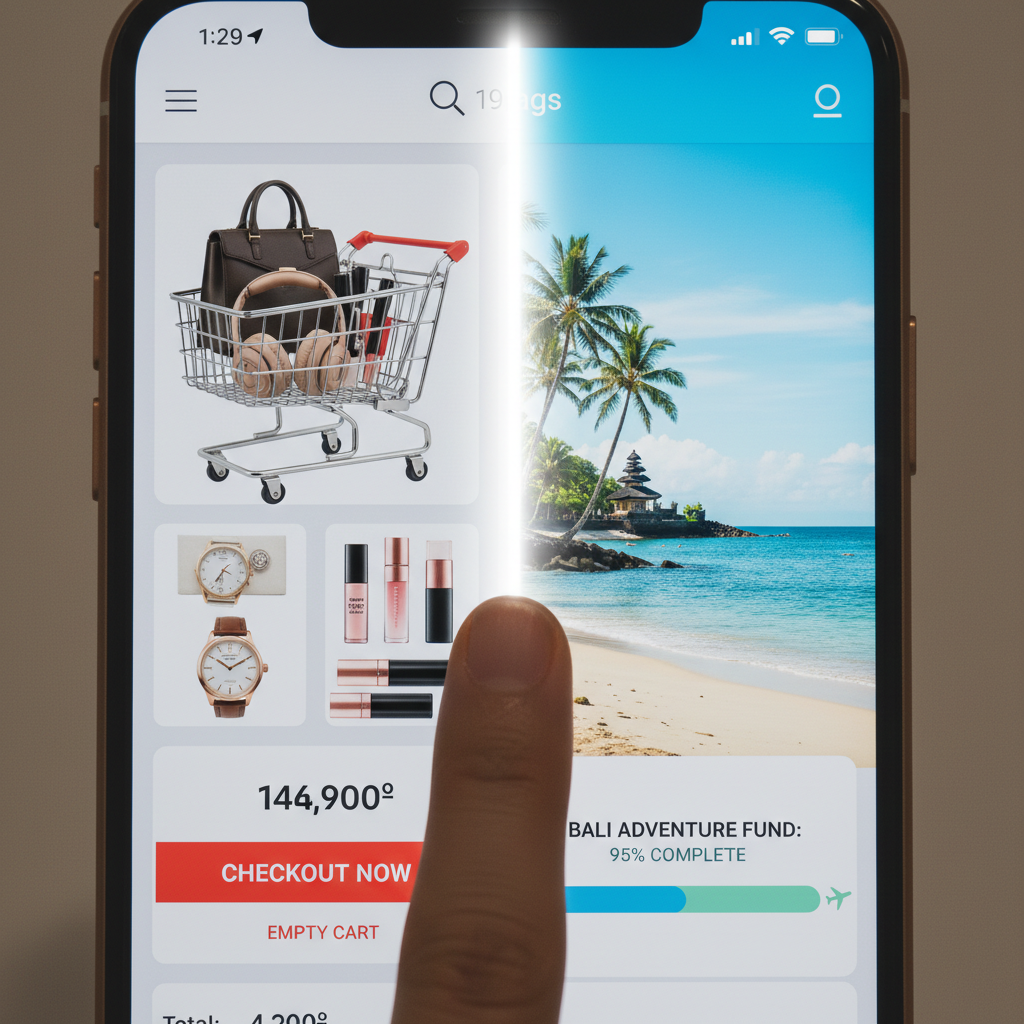
A vague idea to ‘save more money’ is useless. You need a powerful, motivating, and specific goal to act as your shield. What do you REALLY want? To be debt-free? A $5,000 down payment for a car? A $3,000 travel fund for a trip to Japan? Get specific. Find a picture of that goal—a debt-free notification, the car you want, a photo of Mount Fuji. Make that picture the lock screen on your phone. Now, every time you’re tempted to make a FOMO purchase, you’ll have to stare your real dream in the face and ask: ‘Does this purchase get me closer to my goal, or does it push it further away?’ It makes the choice crystal clear.
Your Anti-FOMO Arsenal: Tools & Habits for the Long Haul
Build Your Anti-FOMO Arsenal
Winning this fight requires more than just defense. You need to go on the offense with a set of tools and habits that automate good decisions and make it harder to fall into old traps.
Tools of the Trade
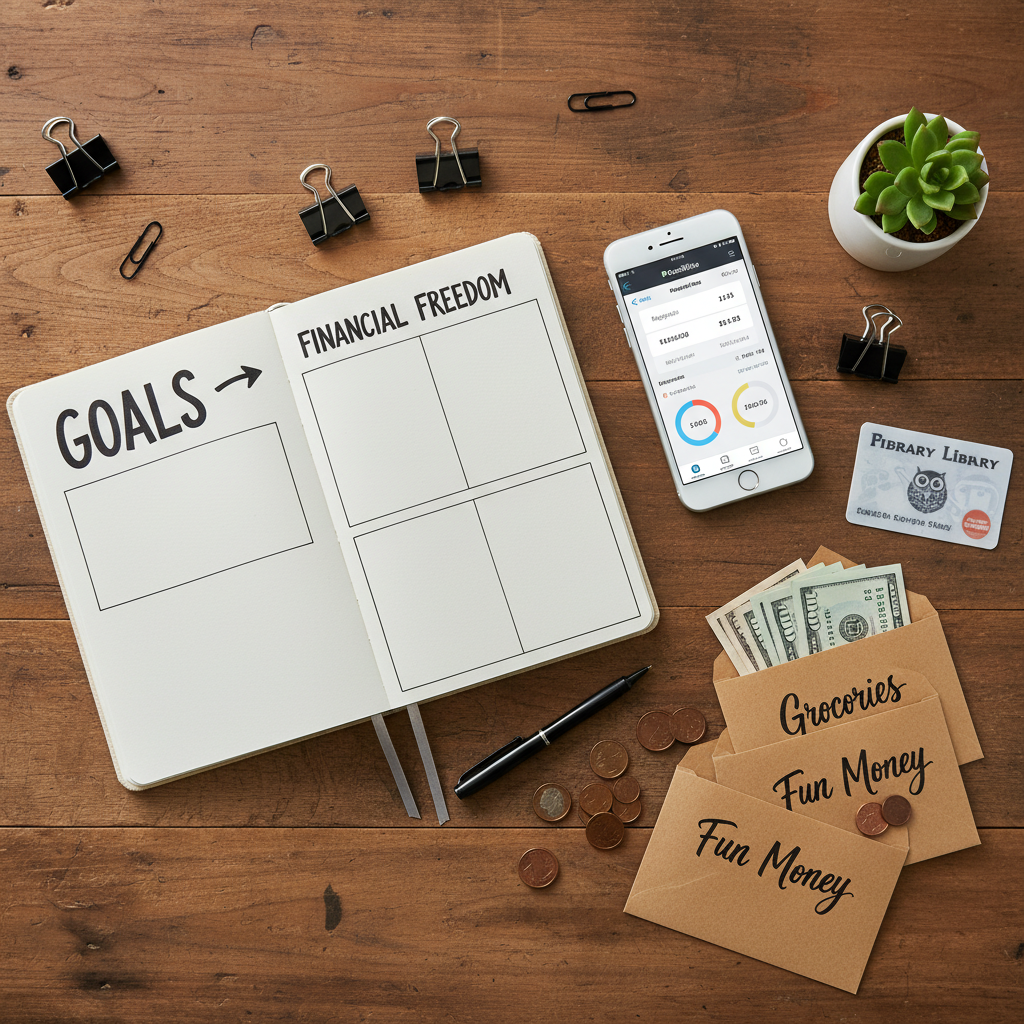
- Budgeting Apps That Force Clarity: Use an app like YNAB (You Need A Budget) or Mint. The key isn’t just tracking where your money went; it’s about giving every single dollar a job before the month begins. When you’re tempted to spend $80 on a whim, you can see in black and white that you’re stealing that money from your ‘Groceries’ or ‘Car Repair’ fund. It makes the trade-off painfully obvious.
- The Unsubscribe Hammer: Open your email. See that promotional email from a brand that always tempts you? Don’t just delete it. Scroll to the bottom and hit ‘Unsubscribe.’ Do this relentlessly. Every unsubscribe is you taking back a piece of your attention. A clean inbox is a clean mind, free from manufactured desire.
- Cash Envelopes for Danger Zones: For spending categories where you always overdo it (like ‘dining out’ or ‘fun money’), go old school. At the start of the month, pull out the budgeted amount in cash and put it in a physical envelope. When the cash is gone, you’re done. No swiping the credit card. It’s a hard, physical limit that digital spending just can’t replicate.
Habits That Harden Your Defenses
- Schedule a ‘No-Spend’ Challenge: Start small. Pick one weekend a month and declare it a ‘No-Spend Weekend.’ No restaurants, no shopping, no online orders. The goal is to use what you have, find free entertainment (parks, libraries, visiting friends), and prove to yourself that you can have a great time without opening your wallet. It resets your brain’s dopamine baseline.
- Practice a Daily Gratitude Routine: This sounds fluffy, but it’s a powerful psychological hack. Every morning, write down three things you already own that you’re grateful for. Your comfy bed, your coffee maker, a book you love. This actively combats the feeling of ‘lack’ that marketers exploit. It shifts your focus from what you don’t have to the abundance you already enjoy.
- Master the Art of the Alternative: Before every purchase, ask: ‘Is there a free or cheaper way to get this experience?’ Instead of buying a new book, download the Libby app and connect it to your library card for free e-books. Instead of meeting friends for $20 cocktails, suggest a hike or a potluck at home. You’re often chasing the experience, not the item itself. Find a cheaper path to the same feeling.
The Payoff: The Real Wealth You Build by Beating FOMO

The Real Payoff: What You Gain When You Ditch FOMO
Let’s talk about the prize. Beating FOMO isn’t just about a fatter bank account—though that’s a huge part of it. It’s about buying back your freedom and building a life on your own terms.
The Financial Payoff: The Compounding Power of ‘No’
Every time you say ‘no’ to a pointless, trend-driven purchase, you are paying your future self. That money doesn’t just disappear; it becomes a soldier in your army, ready to work for you. Let’s look at a simple breakdown of what redirecting that cash can do.
| Common FOMO Habit | Typical Monthly Cost | Savings in 1 Year | Potential Value in 5 Years (with 7% return) |
|---|---|---|---|
| Trendy Clothes & Gadgets | $100 | $1,200 | ~$8,400 |
| Overpriced ‘Must-Try’ Restaurants/Bars | $150 | $1,800 | ~$12,600 |
| Impulse Subscription Boxes | $50 | $600 | ~$4,200 |
| Total Redirected | $300 | $3,600 | ~$25,200 |
Look at that. Over $25,000 in just five years by cutting out three common FOMO traps. That is life-changing money. That’s a car paid in cash. That’s a business launched. That’s a massive safety net that buys you peace of mind.
The Lifestyle Payoff: More Than Just Money
The real wealth goes beyond the numbers. When you cure yourself of FOMO spending, you gain:
- Mental Clarity: You free up immense brainpower when you’re not constantly thinking about what to buy next or comparing yourself to others.
- Reduced Anxiety: Financial stress is a killer. Knowing you have savings, are out of debt, and are in control of your money provides a level of peace that no retail therapy can ever match.
- More Intentionality: With less clutter and fewer distractions, you have more time and resources to pour into your hobbies, relationships, and goals that genuinely bring you joy.
- Authenticity: You stop trying to project an image and start living a life that is true to you. Your possessions reflect your values, not the current trends.
This is the ultimate prize. It’s not about being cheap; it’s about being rich in the ways that truly matter: time, freedom, and control.
Conclusion
The constant pressure to keep up and buy more is a game rigged against you. FOMO is the marketing industry’s most effective weapon for keeping you broke, stressed, and perpetually dissatisfied. But you don’t have to play. By recognizing the triggers, flipping your mindset to the ‘Joy of Opting Out,’ and using the tactical defenses laid out here, you can take back the power. Every dollar you save from a FOMO purchase is a vote for your own future, for your own goals, for the life you actually want to live.
Stop letting algorithms and influencers dictate your financial destiny. Start building a life of intention, freedom, and real wealth. Your wallet—and your future self—will thank you for it. Now go take control.