

Never Pay Full Price: The Ultimate Back-to-School Savings Cheat Sheet
Listen up. That back-to-school list isn’t just a list; it’s a battle plan, and retailers are counting on you to surrender your cash without a fight. Every year, they roll out the shiny new displays, banking on the chaos and last-minute rush to drain your wallet. Forget that. We’re not paying the sticker price. This isn’t your average ‘clip a few coupons’ advice you’ve heard a thousand times. This is the ultimate cheat sheet, the inside track on how to gear up for the school year like a pro, keeping hundreds of dollars right where they belong: in your pocket. It’s time to stop being a passive consumer and start being a strategic shopper. You’re about to learn the system, exploit the deals, and walk away feeling like a champion. Ready to flip the script?
Step 1: The Pre-Game – Audit Your Arsenal & Set a Killer Budget

Before you even think about stepping into a store or opening a shopping app, you need a game plan. Walking in blind is how you end up with three extra glue sticks and a $300 receipt for a $150 list. The first move is always defense. You need to ‘shop’ at home first.
The Home Inventory Sweep
Grab that school supply list and a couple of bins. Go through every desk, closet, and junk drawer. You’ll be shocked at what you already own from last year’s haul. Sort everything into three piles:
- Keepers: Perfectly good supplies ready for another round. Test the pens, check the binders, sharpen the pencils.
- Maybes: A backpack that needs a quick wash, a binder with a small tear you can tape up. Assess if a little TLC can save you from a new purchase.
- Trash/Donate: Broken crayons, dried-up markers, and notebooks with only two pages left. Get rid of the clutter.
Once you have your ‘Keepers’ pile, cross those items off your official list with authority. Every item you cross off is pure savings. This 15-minute audit can easily save you $50-$75 before you spend a single dime.
Lock Down Your Budget
Now you have a real list. It’s time to assign a number to it. This isn’t a suggestion; it’s your hard limit. A budget is your shield against impulse buys and marketing traps. Be realistic, but be firm. Research the average cost of big-ticket items like backpacks and calculators to inform your number. Then, break it down.
| Category | Budget Allocation | Street-Smart Notes |
|---|---|---|
| Basic Supplies (Pens, Paper, etc.) | $75 | This is where you go generic and buy in bulk. Dollar store and store brands are your best friends here. |
| Backpack & Lunchbox | $50 | Look for durability. This is a potential splurge item, but only on brands with lifetime warranties. Otherwise, last year’s model on clearance is the move. |
| Clothing/Uniforms | $150 | Hit thrift stores and consignment shops first. For new items, use every coupon and cash-back trick in this guide. |
| Electronics (Calculator, Headphones) | $100 | Never buy new if you can get a certified refurbished model. Check Facebook Marketplace for deals from recent grads. |
| Total Budget | $375 | This is your non-negotiable spending cap. Track every penny. |
The Golden Rule: If it’s not on the list, it doesn’t go in the cart. No exceptions. This rule alone will protect your budget from the ‘but it’s such a good deal!’ trap that retailers set.
Step 2: The Digital Hustle – Your Phone is Your Secret Weapon
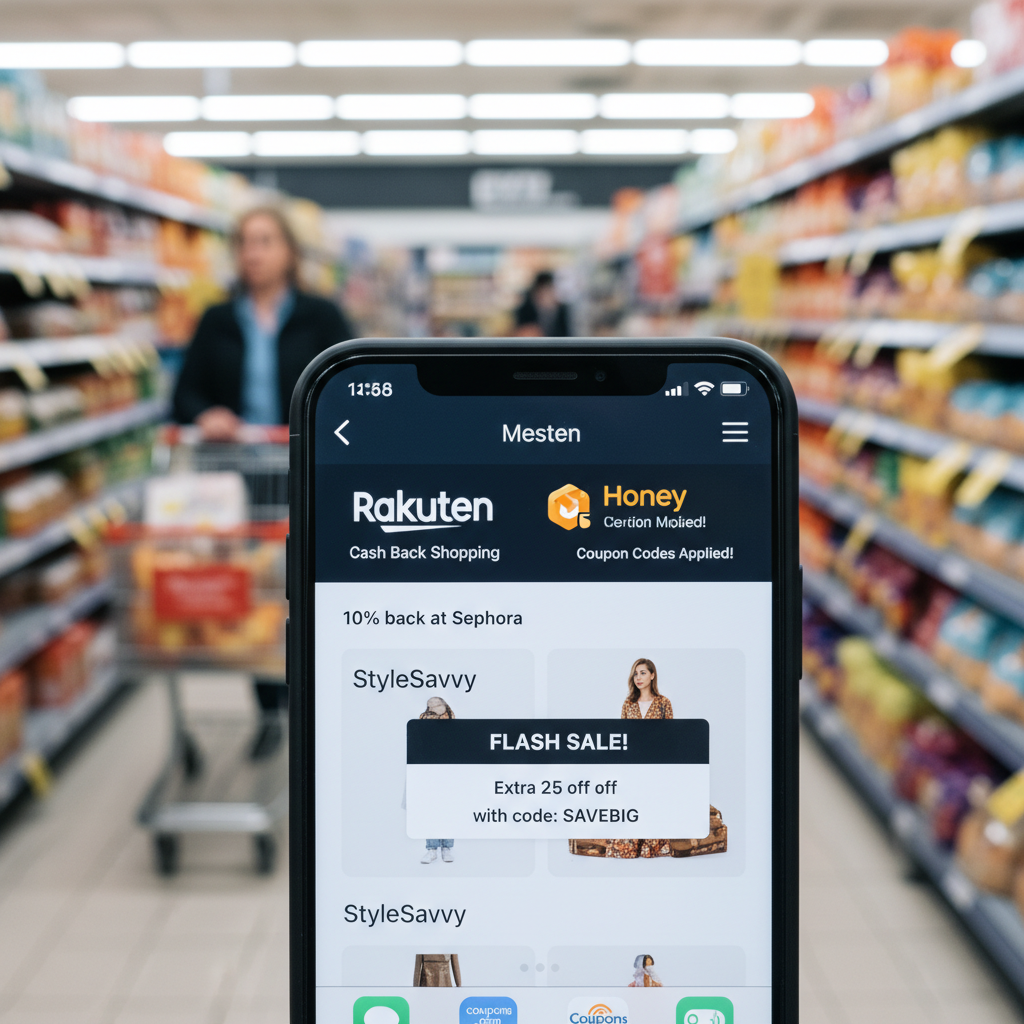
Your smartphone is the most powerful savings tool you own, but only if you load it with the right ammo. Forget mindlessly scrolling; it’s time to turn your device into a money-saving machine. The pros don’t just use one app; they stack deals like a financial Jenga master.
Your Must-Have App Stack
Download these now. They are non-negotiable for anyone serious about not paying full price.
- Cash-Back Portals (Rakuten, TopCashback): This is your first click, always. Before you go to a retailer’s website, you go through one of these portals. They get a commission for sending you to the store, and they share a piece of it with you as cash back. It’s free money for a single extra tap. We’re talking anywhere from 1% to 15% back on your entire purchase. Over a $300 shopping spree, 8% back is $24 back in your pocket for doing nothing.
- Browser Extensions (Honey, Capital One Shopping): Install these on your laptop or desktop. When you get to checkout, they automatically scan the entire internet for coupon codes and apply the best one to your cart. It’s like having a personal deal-hunter working for you, for free.
- Receipt Scanning Apps (Ibotta, Fetch Rewards): Your savings don’t stop after the purchase. These apps give you cash back or points for scanning your receipts. They have specific offers for items like bread, milk, and yes, even school supplies. It might seem like small potatoes ($0.25 here, $1.00 there), but it adds up to real money over time.
The Art of the Stack: A Real-World Example
Let’s say you need a $120 pair of durable sneakers from Nike.com.
- You open Rakuten and see they’re offering 8% cash back for Nike. You click through their link. (Savings: $9.60)
- You add the sneakers to your cart. At checkout, your Honey browser extension pops up and finds a 15% off code. (Savings: $18.00)
- You pay with a credit card that offers 2% cash back on all purchases. (Savings: $2.04 based on the new subtotal)
Your $120 sneakers now cost you $90.36. You just saved almost $30 by layering three automated tools. This is the system. This is how you win.
Step 3: Play the Calendar – Timing is Everything
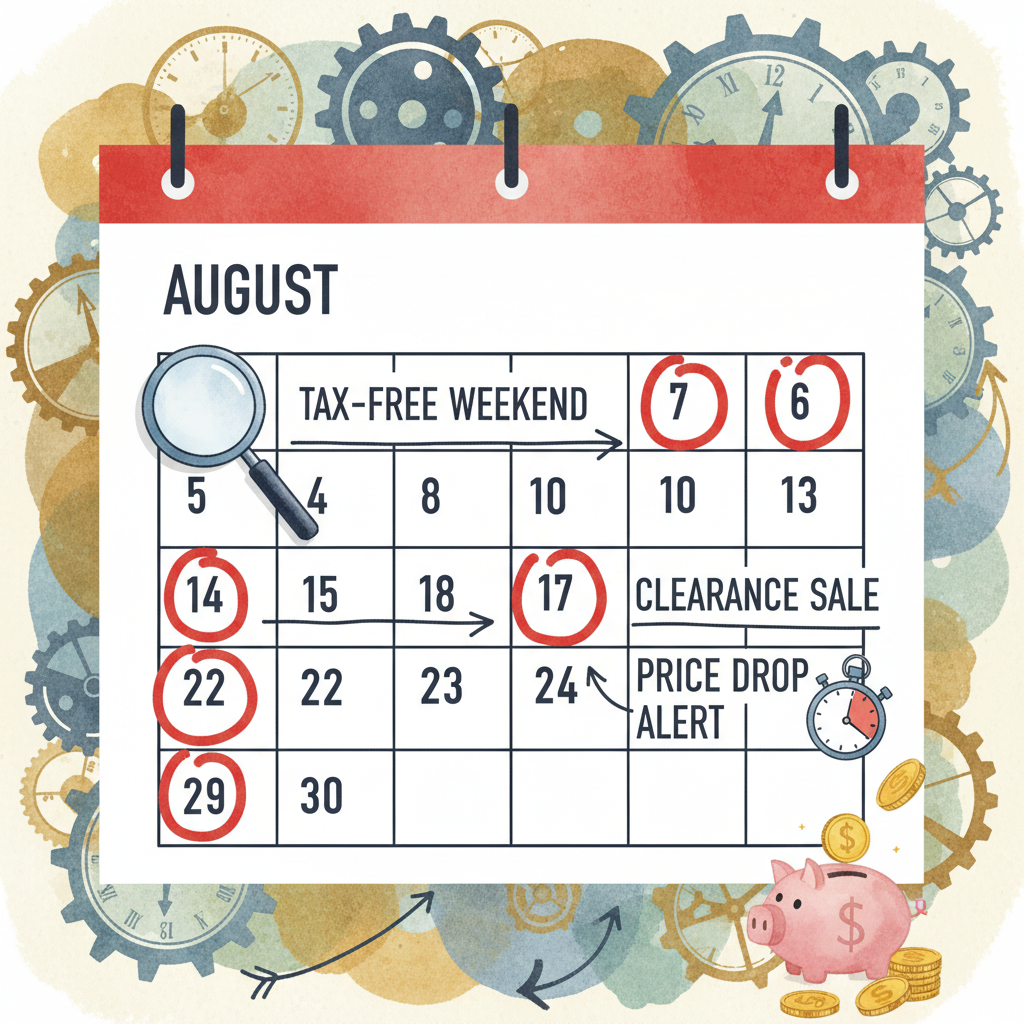
Amateurs buy all their back-to-school gear in the two weeks before school starts. That’s peak season, peak prices, and peak sucker behavior. The pros know that the price of an item has less to do with what it is and more to do with when you buy it. You need to think like a retail insider.
Key Dates for Your Savings Calendar
- State Tax-Free Weekends: Most states have a weekend in late July or early August where they waive sales tax on items like clothing, school supplies, and sometimes computers. This is an instant 6-10% discount depending on your state. Know your state’s date and plan a major shopping trip around it.
- Mid-July (The Early Bird): Retailers start rolling out ‘early bird’ back-to-school sales in July. These are often ‘loss leaders’—insanely cheap deals like $0.25 notebooks or $0.50 folders—designed to get you in the door. Go in, buy ONLY the loss leaders, and get out.
- Late September (The Patient Predator): This is the holy grail of clearance. Stores have to get rid of all that back-to-school inventory. Backpacks, lunchboxes, and character-themed folders get marked down 50-75%. This is when you buy the supplies for next year. Buying a $50 backpack for $12.50 in September is a boss move.
The Seasonal Mismatch Hack
Think outside the ‘back-to-school’ season entirely. When do you think a winter coat is cheapest? In the spring. The same logic applies to other items on your list.
- Laptops: The best deals are often around Black Friday or during specific tech events, not necessarily in August. If you can wait, you’ll save hundreds.
- Basic Clothing: Shop for shorts in the fall and sweaters in the spring. Buy clothes for the *upcoming* seasons when they hit the clearance rack, not when they first arrive in stores.
By treating your shopping list like a strategic calendar, you escape the inflated prices of peak demand and cherry-pick the best deals all year long.
Step 4: The Brand Name Showdown – Where to Splurge and Where to Save
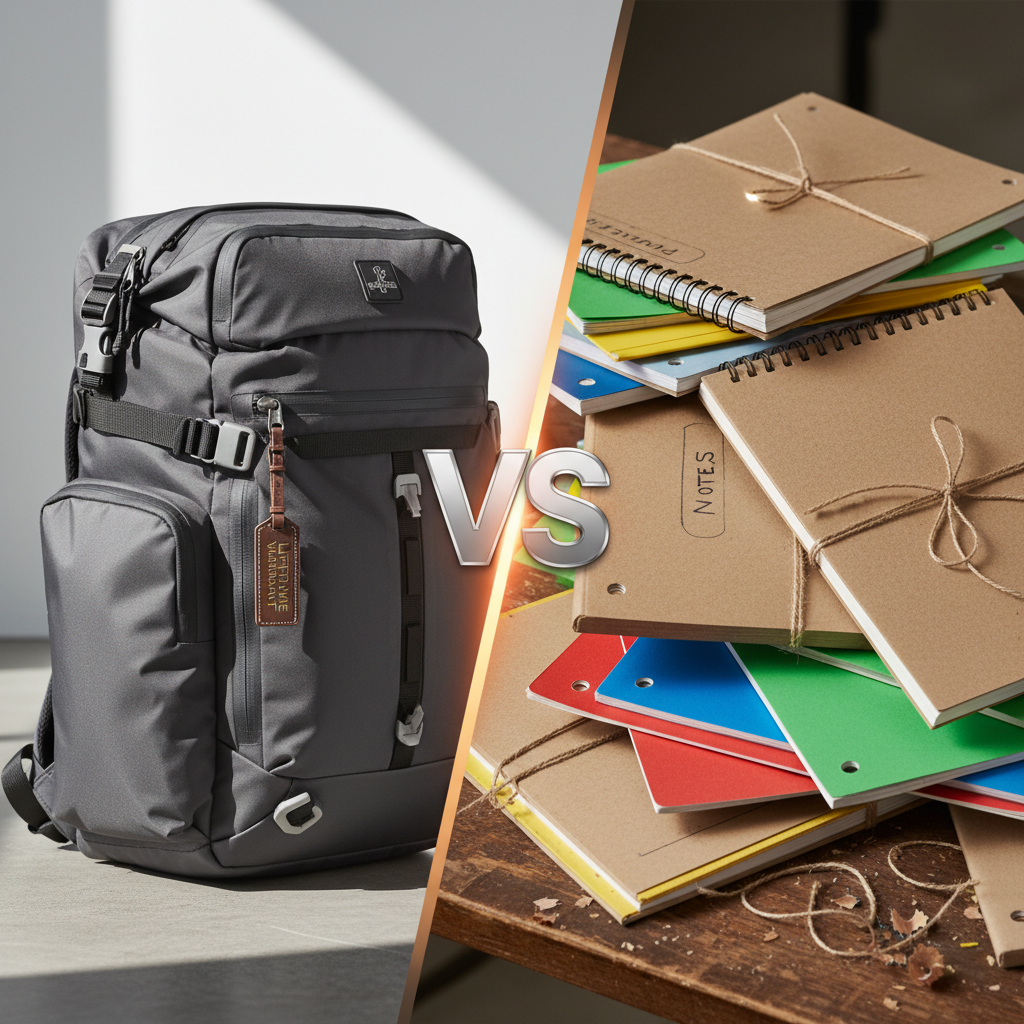
One of the biggest budget killers is brand loyalty. Marketers spend billions to convince you and your kids that their logo is worth an extra $10, $20, or even $50. Sometimes, it is. Most of the time, it’s a total scam. A smart shopper knows where quality matters and where you’re just paying for packaging. You need to be ruthless in your analysis.
The key is to focus on durability and function. Will paying more for the brand name product make it last significantly longer or perform a critical function better? If the answer is no, you go generic. Period.
| Item Category | Verdict | The Street-Smart Rationale |
|---|---|---|
| Backpacks | SPLURGE (Wisely) | A cheap backpack will tear by October. A quality one from a brand like JanSport or L.L. Bean often has a lifetime warranty. You buy it once, and they replace it for free if it breaks. That’s a smart investment, not an expense. |
| Basic Supplies (Folders, Notebooks, Binders) | SAVE (Go Generic) | A $0.50 store-brand folder holds paper just as well as a $3.00 one with a cartoon character on it. This is the easiest category to save big. You’re paying for ink on cardboard, not function. Don’t fall for it. |
| Writing Tools (Pens, Pencils, Highlighters) | SAVE (Mostly) | For basic pencils and blue/black pens, generic is fine. Buy in bulk. The one exception might be for specific art classes or if a student genuinely prefers a certain pen (like a Pilot G2) that helps their handwriting. Test a small pack first. |
| Crayons & Markers | SPLURGE (Slightly) | This is one area where the brand name often means better quality. Crayola crayons break less and have better pigment than most off-brands. For markers, especially dry-erase, the cheap ones dry out in a week. It’s a frustrating waste of money. |
| Electronics (Calculators, Headphones) | SAVE (By Buying Used/Refurbished) | Don’t pay full price for a brand-new TI-84 calculator. Buy a used or refurbished one online for a fraction of the cost. Same goes for headphones. The brand might matter for quality, but the condition doesn’t have to be ‘brand new in box’. |
| Lunchboxes | SAVE | As long as it’s insulated and zips, it works. Kids lose them or get tired of the design quickly. Don’t overspend here. Focus on function over flashy characters. |
By making these strategic choices, you can redirect the money saved from generic folders and notebooks towards a backpack that will last for years. It’s not about being cheap; it’s about being efficient with your money.
Step 5: The Unconventional Plays – Think Outside the Big Box
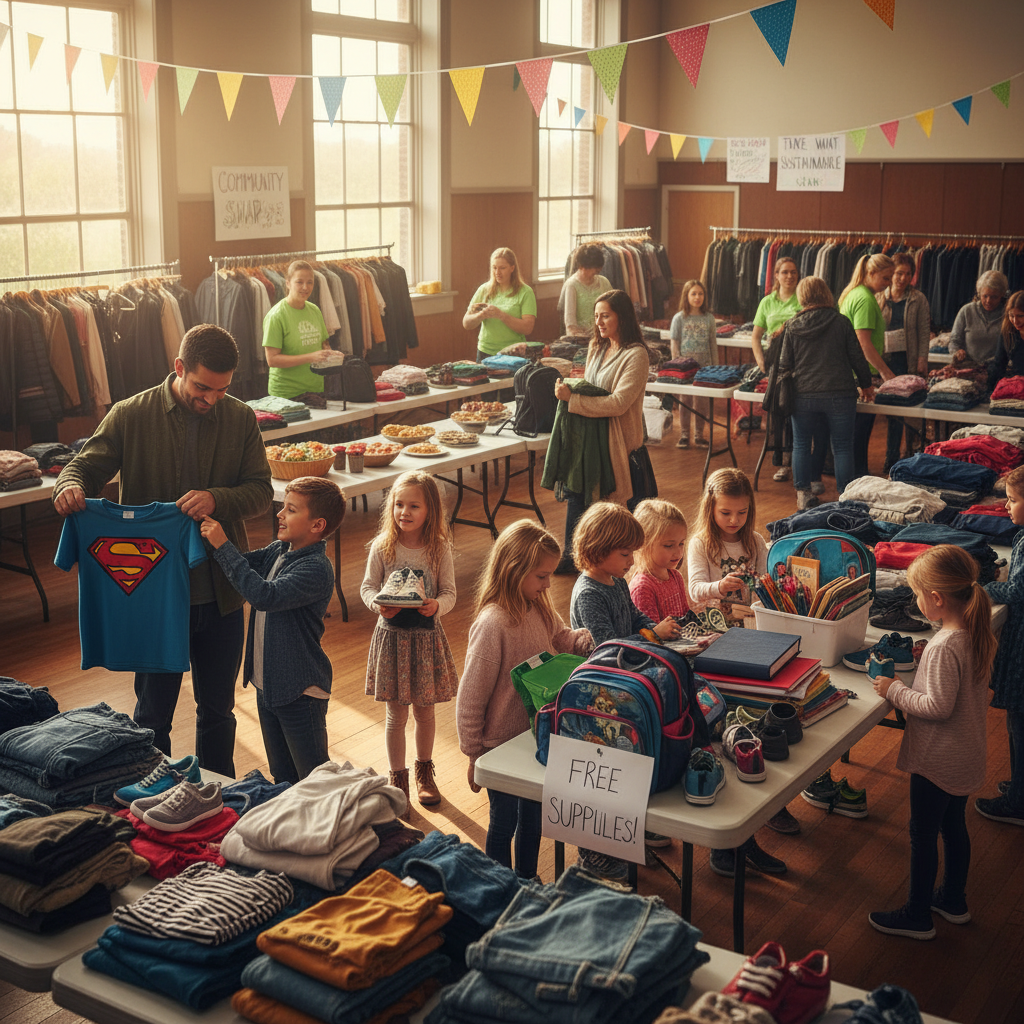
The biggest savings are found where most people refuse to look. If your entire back-to-school shopping plan involves Target and Walmart, you’re leaving a massive amount of cash on the table. To truly crush your budget, you have to get creative and look beyond the obvious.
The Secondhand Hustle
The ‘used’ market is your secret goldmine, especially for items that have a high retail price and are quickly outgrown.
- Thrift & Consignment Stores: This is your number one stop for clothing, especially if uniforms are required. You can often find pristine-condition polo shirts, khaki pants, and gym shorts for $3-$5 instead of $20-$30 new. Look for brands you know are durable.
- Facebook Marketplace & Craigslist: The ultimate source for big-ticket items. Scientific calculators, musical instruments for band class, sports equipment—parents of recent graduates are practically giving this stuff away. Why pay $120 for a new calculator when you can get the exact same model for $40 from a college student who no longer needs it?
- Library of Things: A growing number of public libraries now lend out more than books. Some have ‘Libraries of Things’ where you can borrow items like sewing machines (for quick clothing repairs), laminators, or even specialized calculators for a short period. Check if your local library has a program like this.
The Community Connection
Leverage the power of your network. You’re not the only parent trying to save money.
- Organize a Supply Swap: Get together with a few other families in your neighborhood or school district before the shopping season begins. Everyone brings their ‘Keepers’ pile of surplus supplies. You might have extra binders, while another parent has a dozen unused notebooks. Trade for what you need. It’s a free, community-based way to slash your list.
- Buy in Bulk and Split: Warehouse clubs sell items like pencils, pens, and paper in massive quantities at a low per-unit cost. Find another family or two to go in on a bulk purchase and split the items and the cost. You get the low price without having to store 500 pencils in your closet.
Scam Warning: When buying used electronics online, always insist on testing the item before paying. Meet in a safe, public place and turn the device on. For calculators, run a few calculations. For headphones, plug them in. ‘As-is’ often means ‘broken.’ Don’t get hustled.
Conclusion
You’re now armed with a playbook that puts you in control. Back-to-school shopping isn’t a chore to be dreaded; it’s a game, and you just learned how to win. It’s about being smarter, more strategic, and more resourceful than the average shopper who just walks in and pays whatever the price tag says. From auditing your home and setting a rock-solid budget to mastering the digital hustle and timing the market, you have the tools to make this the most affordable school year ever. Stop leaving money on the table. Use these hacks, stack your savings, and walk away with everything your kids need and cash to spare. You’re not just a shopper; you’re a Frugal Hacker. Now go get those deals.