

Let’s cut the crap. For too long, the world of investing has felt like a members-only club for the rich and ruthless. The message is clear: to get ahead, you have to check your conscience at the door. You’re a side hustler, a budget hawk, someone who knows the value of a hard-earned dollar. The idea of that dollar going to a mega-corp that pollutes rivers or uses shady labor practices probably makes your stomach turn. But what’s the alternative? Keeping your cash stuffed under a mattress where it loses value every single day? Hell no.
There’s a smarter way. A way to build real, long-term wealth that doesn’t force you to sell your soul. It’s called ethical investing, and it’s not just for hippies and billionaires anymore. It’s for us. It’s about aligning your money with your values and proving that you can do good and do well at the same time. This isn’t some fluffy, feel-good theory. This is a practical, street-smart guide to making your money grow in a way you can actually be proud of. You’re in the driver’s seat of your financial future—it’s time to steer it in a direction that matters.
Cut the Jargon: What Ethical Investing *Actually* Means

Forget the confusing acronyms and Wall Street buzzwords for a second. At its core, ethical investing is simple: it’s about voting with your dollars on a massive scale. Every time you buy a stock or invest in a fund, you’re becoming a tiny owner of those companies. Ethical investing is just being intentional about which companies you want to own.
You’ll hear terms like ESG and SRI thrown around. They’re just different labels for the same core idea.
- SRI (Socially Responsible Investing): This is the OG of ethical investing. It usually started with ‘negative screening’—basically, making a list of industries you want to avoid, like tobacco, weapons, or gambling. It’s about drawing a line in the sand.
- ESG (Environmental, Social, and Governance): This is the more modern, data-driven approach. Instead of just avoiding the ‘bad’, it’s about actively looking for the ‘good’. It’s a scorecard for companies:
- Environmental (E): How does the company treat the planet? Are they a polluter or are they investing in green energy? Think carbon emissions, waste management, and resource conservation.
- Social (S): How does the company treat people? This covers everything from employee relations and diversity and inclusion to customer privacy and whether they use child labor in their supply chain.
- Governance (G): How is the company run? Is the leadership team transparent? Is there a history of corruption or shady accounting? Are executives getting paid insane bonuses while the company tanks?
Think of it like this: You’re a frugal shopper. You wouldn’t keep buying a product that breaks every week, right? You’d look for something well-made that lasts. ESG is the same principle applied to investing. You’re looking for well-run companies that are built for the long haul, not just a quick, dirty profit. Companies that treat the planet and people with respect are often less risky and more innovative—and that’s good for your bottom line.
Finding Your Flavor: The Different Ways to Invest with a Conscience

Ethical investing isn’t a one-size-fits-all deal. You get to decide what matters most to you. It’s like customizing your coffee order—you pick the blend that fits your taste. There are three main strategies people use to align their portfolio with their principles.
The Main Approaches
- Negative Screening (The Exclusion Method): This is the most straightforward approach. You simply exclude companies or entire industries that clash with your values. Common exclusions include fossil fuels, tobacco, firearms, and gambling. It’s about saying, “Not with my money, you don’t.”
- Positive Screening (The Best-in-Class Method): Instead of just avoiding the worst offenders, this strategy involves actively seeking out the best performers on ESG metrics. You might look for the tech company with the best data privacy policies or the clothing brand with the most transparent supply chain. You’re rewarding the good guys.
- Impact Investing (The Direct Action Method): This is the most hands-on approach. Impact investors put their money into companies, organizations, and funds with the specific intention to generate a measurable, beneficial social or environmental impact alongside a financial return. This could mean funding affordable housing projects, clean water initiatives in developing countries, or micro-loan programs.
Which one is right for you? It depends on your goals and how deep you want to go. Most beginners start with a strategy that combines negative and positive screening, which is easy to do through ESG-focused funds.
| Strategy | What It Is | Best For… |
|---|---|---|
| Negative Screening | Avoiding specific ‘sin’ stocks or industries (e.g., tobacco, weapons). | Investors with clear ethical lines they won’t cross. |
| Positive Screening | Actively choosing companies that lead in ESG performance. | Investors who want to proactively support corporate responsibility. |
| Impact Investing | Directly funding projects with measurable positive outcomes. | Investors who want their money to solve a specific problem. |
The Hustler’s Toolkit: Platforms and Funds to Get Started
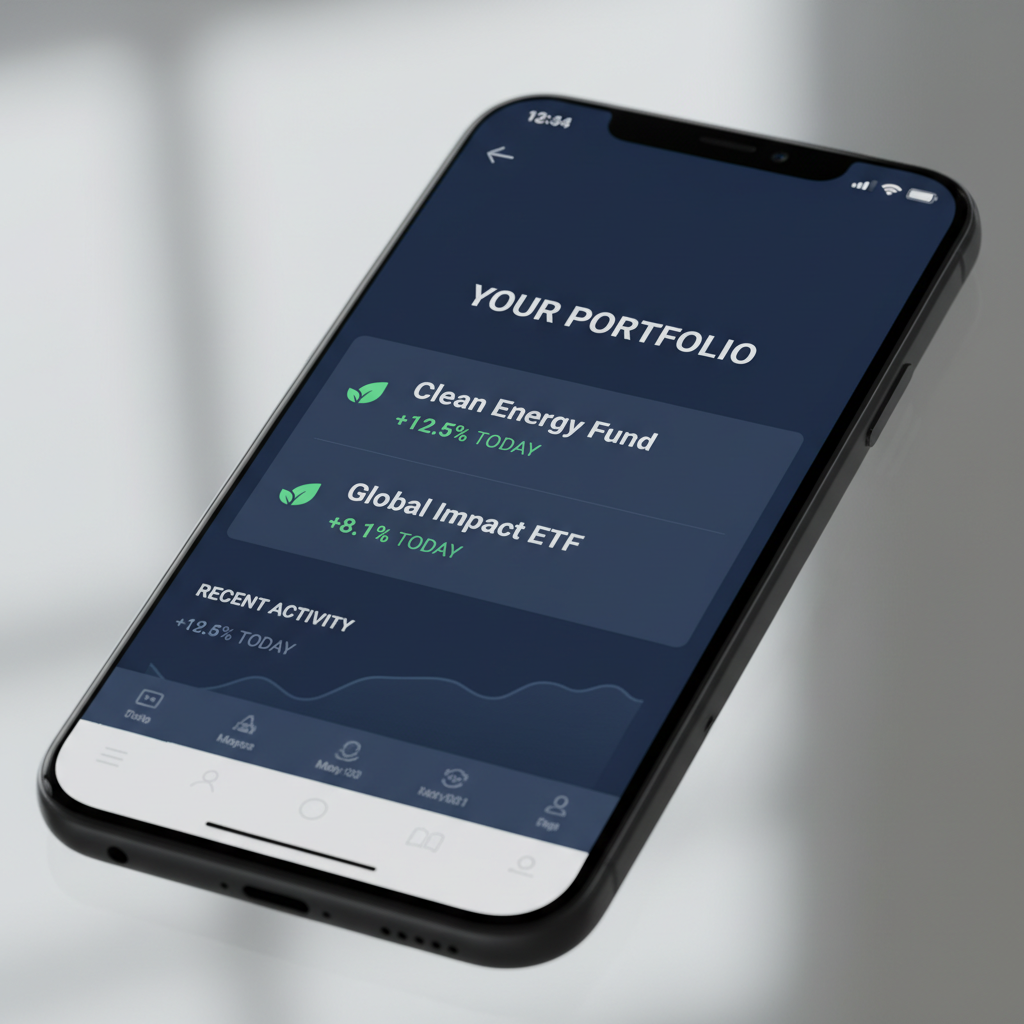
Okay, theory is great, but where do you actually put your money? The good news is, you don’t need a fancy financial advisor or a million-dollar portfolio. You can do this right from your phone with platforms you might already be using.
Platforms That Make It Easy
Many modern brokerage apps and robo-advisors now have built-in features for ethical investing. Look for options like:
- Robo-advisors (e.g., Betterment, Wealthfront): These platforms often have specific “Socially Responsible Investing” portfolio options you can select with a single click. They do the hard work of picking the funds for you based on ESG criteria.
- Micro-investing Apps (e.g., Acorns): These are great for beginners. Acorns, for instance, offers an ESG-focused portfolio composed of sustainable funds, letting you invest your spare change ethically.
- Traditional Brokerages (e.g., Fidelity, Vanguard, Charles Schwab): These giants now have powerful screening tools that let you filter thousands of mutual funds and ETFs by their ESG ratings. You can search for funds that focus on clean energy, low carbon, or gender diversity.
ETFs and Mutual Funds: Your Secret Weapon
For 99% of us, the easiest way to get started is with ETFs (Exchange-Traded Funds) and Mutual Funds. Think of these as baskets of stocks. Instead of trying to research hundreds of individual companies, you buy one share of an ESG fund, and you instantly own small pieces of dozens or hundreds of companies that have already been vetted for their ethical standards. Look for funds with names that include terms like “ESG,” “SRI,” “Sustainable,” or “Conscious.”
The Frugal Hacker’s Key Rule: Always check the Expense Ratio! This is the fee the fund charges you every year. A lower number is better. There’s no point in being an ethical investor if you’re getting ripped off by high fees. Look for expense ratios under 0.50%, and ideally under 0.20%.
The Bottom Line: Does Ethical Investing Actually Make You Money?

This is the million-dollar question, isn’t it? For years, the big myth was that you had to accept lower returns to invest ethically. It was seen as a donation, not an investment. That myth is officially busted.
Study after study has shown that companies with strong ESG practices are often better-run, more innovative, and less likely to get hit with massive fines, lawsuits, or scandals that can tank a stock price. Think about it: a company that dumps toxic waste is at risk of huge government penalties. A company with a toxic work culture is going to lose its best talent. These aren’t just ethical risks; they are financial risks.
Because of this, many ESG funds have performed just as well as, and in some cases even better than, their traditional, non-ESG counterparts over the long term. You are not sacrificing returns; you are investing in a more resilient, forward-thinking type of company.
The Math Doesn’t Lie
Let’s imagine you start a side hustle and decide to invest $150 a month. Let’s compare a standard index fund and an ESG index fund, assuming a hypothetical (and historically average) 7% annual return for both, just to show you’re not losing out.
| Time Period | Total Invested | Potential Value (Standard Fund) | Potential Value (ESG Fund) |
|---|---|---|---|
| 5 Years | $9,000 | ~$10,850 | ~$10,850 |
| 10 Years | $18,000 | ~$25,900 | ~$25,900 |
| 20 Years | $36,000 | ~$78,200 | ~$78,200 |
The takeaway is clear: The cost of aligning your investments with your values can be zero. You can build significant wealth over time without having to support companies you fundamentally disagree with. The power is in your hands to choose resilience and responsibility without compromising on your financial goals.
Scam Alert: How to Spot ‘Greenwashing’ Fakes

Now that ethical investing is popular, the big corporations are taking notice. And some of them are trying to cheat. The biggest scam you need to watch out for is called ‘greenwashing.’
Greenwashing is when a company or an investment fund markets itself as environmentally friendly or socially responsible, but its actual practices are shady or downright harmful. They slap a green leaf on the label, but they’re still polluting or using questionable labor. It’s false advertising, plain and simple.
Scam Warning: Just because a fund has ‘Sustainable’ or ‘Green’ in its name doesn’t mean it is. Some of these funds have major polluters, fast-food giants, or ethically questionable tech companies in their top holdings. You have to look under the hood.
Your Greenwashing Detection Checklist:
- Check the Top 10 Holdings: This is the fastest way to spot a fake. Every fund is required to list its biggest investments. If you see a company you know is a major polluter or has a terrible social track record in the top 10 of a ‘Green’ fund, that’s a massive red flag. You can usually find this list on the brokerage’s website or on sites like Yahoo Finance.
- Use Third-Party Ratings: Don’t just trust the fund’s marketing. Use independent resources to check a fund’s real ESG score. Websites like MSCI and Morningstar (with its sustainability ratings) provide in-depth analysis of what’s actually inside a fund.
- Read the Prospectus: Yes, it’s long and boring. But the fund’s prospectus is a legal document that outlines its investment strategy. Skim it to see how strictly they define ‘ESG’. Is it a core part of their strategy, or just a marketing afterthought?
Being a smart investor means being a skeptical one. A few minutes of due diligence can save you from accidentally investing in a company that goes against everything you believe in.
Conclusion
Building wealth doesn’t have to feel dirty. You don’t have to turn off your brain and your heart to get ahead financially. Ethical investing is the ultimate frugal hack: it’s about maximizing the impact of every single dollar you invest. You’re not just buying a stock; you’re funding the kind of world you want to live in. You’re supporting companies that are innovating for the future, treating people fairly, and respecting the planet.
Don’t be intimidated by the terminology or the idea that it’s too complicated. Start small. Use a micro-investing app to invest $20 in an ESG fund. Do your own research. The point isn’t to be a perfect investor overnight. The point is to start. By putting your money where your values are, you’re taking back control and writing a new story about what it means to be wealthy.
Disclaimer: I am not a financial advisor, and this article is for informational and educational purposes only. It should not be considered financial or investment advice. Please consult with a licensed financial professional before making any investment decisions. All investing involves risk, including the possible loss of principal.


Makenzie is the founder and lead writer at MoneyHackTips.com — a personal finance blog dedicated to delivering street-smart financial wisdom for real people on real budgets. With 300+ published articles covering everything from debt management to investing fundamentals, Makenzie’s mission is to make every dollar work harder. When not writing about money hacks, Makenzie is testing frugal living strategies, optimizing side hustles, and helping readers build financial freedom from scratch.