The Silent Money Killer: 10 Phantom Energy Vampires to Unplug Now
Listen up. You think you’re in control of your money, but there’s a silent killer bleeding your bank account dry, 24/7. It’s not a subscription you forgot about or a late fee. It’s hiding in plain sight, plugged into your walls. They’re called phantom energy vampires, and they feast on your electricity—and your cash—even when your gadgets are turned ‘off.’
This isn’t some minor leak. We’re talking about a significant chunk of your utility bill, potentially adding up to $200 or more a year. That’s money you could be throwing at debt, investing in a side hustle, or stacking for a goal. Instead, you’re literally paying for nothing. It’s the ultimate financial scam, and you’re the target. But not anymore. Today, we’re going on a hunt. This guide is your weapon. We’re going to expose the 10 biggest energy vampires lurking in your home and show you exactly how to slay them, one plug at a time. It’s time to stop the bleed and reclaim your hard-earned money.
Vampire #1: The Entertainment Center Lair
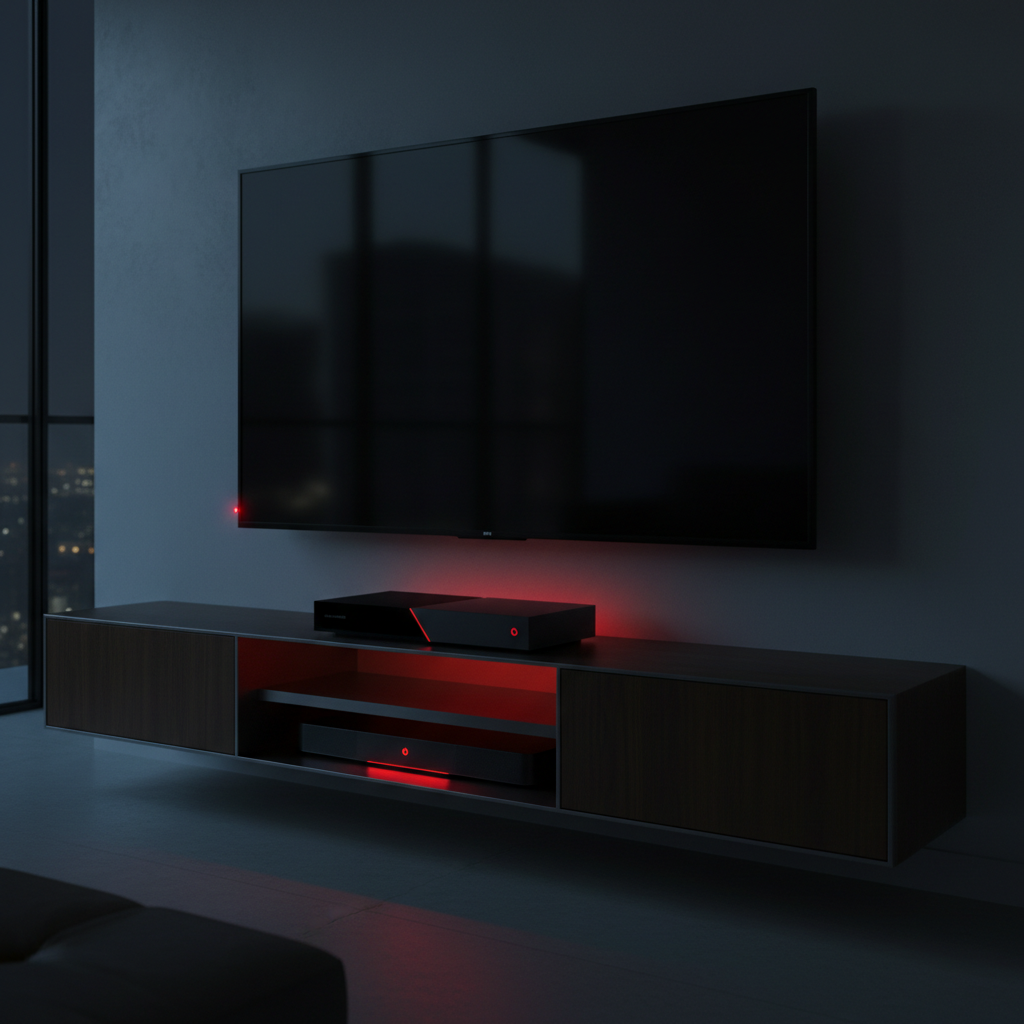
Your living room is ground zero. That massive TV, the surround sound system, the game console, the streaming box—they create a powerful vampire nest. Even when you power them down with the remote, they’re not truly off. They’re in standby mode, waiting, listening, and sipping electricity so they can power on a fraction of a second faster. That convenience is costing you a premium.
The Breakdown:
- The Culprits: Smart TVs (especially with ‘Quick Start’ enabled), cable/satellite boxes, DVRs, gaming consoles (Xbox, PlayStation), soundbars, and Blu-ray players.
- The Reason: These devices need power to receive remote signals, download updates in the background, and maintain network connections. Your DVR is constantly ready to record, and your game console is pre-loading games. It’s a 24/7 power draw.
The Math:
A typical entertainment setup can pull 20-40 watts continuously in standby mode. That might not sound like much, but it never stops. Over a year, that’s a constant drain. Let’s be conservative and say it’s 25 watts. At the average US electricity rate of $0.17 per kWh, that single setup is costing you: 25W x 24 hours x 365 days / 1000 * $0.17 = $37.23 per year. That’s the price of a couple of nice meals out, just for the ‘convenience’ of not having to wait three extra seconds for your TV to turn on. It’s a bad trade.
Vampire #2: The Home Office Command Post
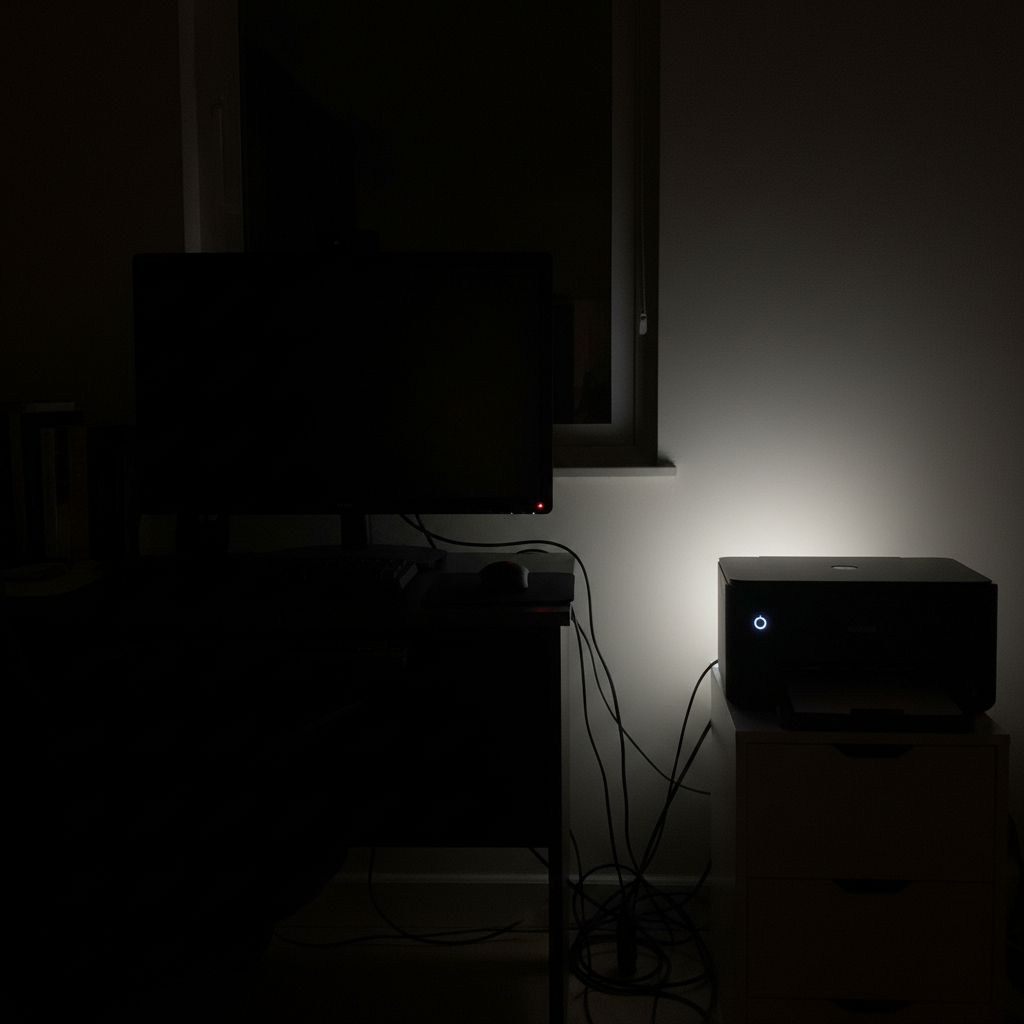
Your work-from-home setup or side hustle station is another major hotspot. You shut down your computer, but is everything else off? Your monitor, printer, scanner, and speakers often go into a low-power sleep mode that’s anything but free. That little blinking light on your monitor is a constant reminder that you’re still on the meter.
The Breakdown:
- The Culprits: Desktop computers (in sleep/hibernate), monitors, printers (especially ‘all-in-one’ models), powered speakers, and scanners.
- The Reason: Printers need to stay ready for a print job. Monitors need power to wake instantly. Even a computer in sleep mode is using RAM to hold your session, which requires a steady stream of electricity. They’re designed for speed, not for your budget.
The Math:
A desktop computer in sleep mode, a monitor, and a printer can easily pull a combined 15 watts. It’s a silent, steady drain while you’re sleeping, eating, or out of the house. Over a year, that’s another hit to your wallet: 15W x 24 hours x 365 days / 1000 * $0.17 = $22.34 per year. It’s found money, just waiting for you to claim it by pulling the plug.
Vampire #3: The Kitchen Counter Crew
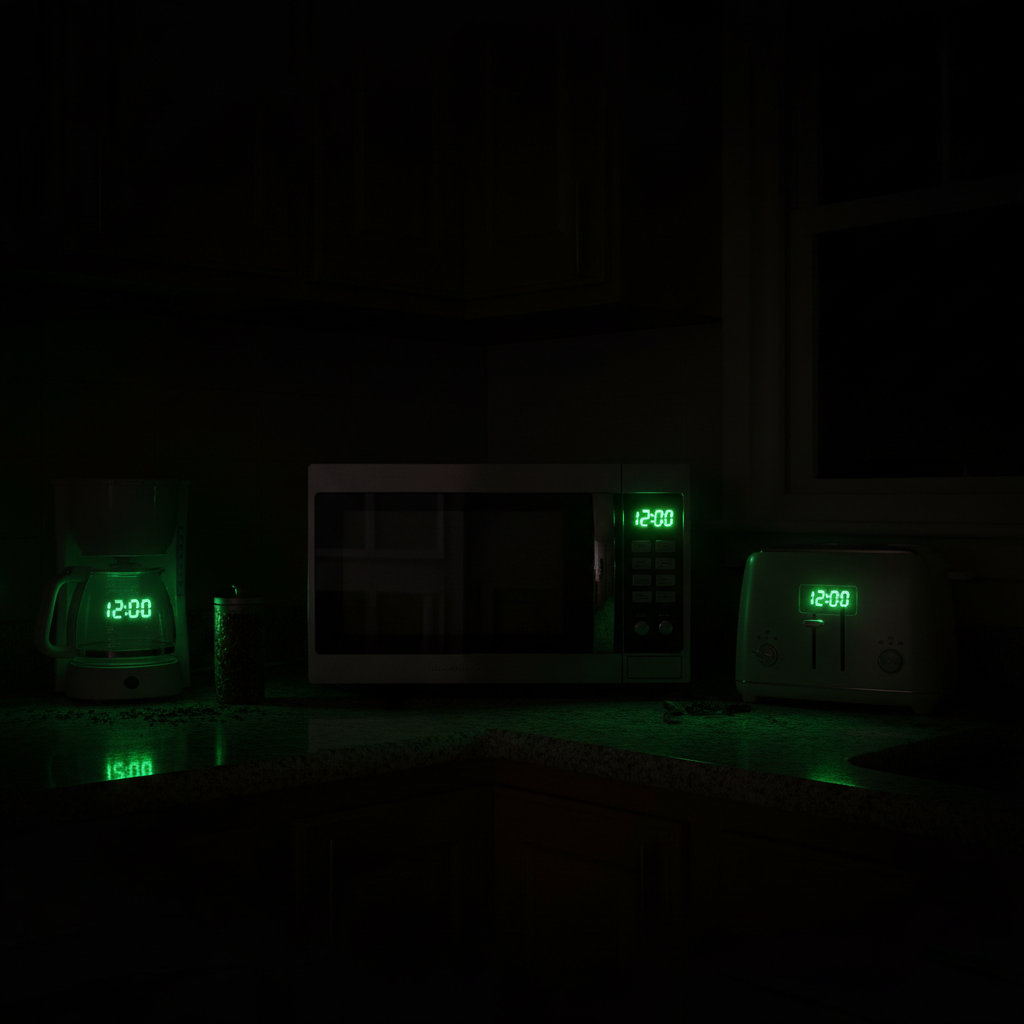
The kitchen is full of small-time vampires that team up to deliver a big bite to your budget. The biggest offenders are the ones with a digital clock or a constant display. That microwave clock? You’re paying to see it. That fancy coffee maker that’s always ready? You’re paying for its readiness.
The Breakdown:
- The Culprits: Microwaves, coffee makers with clocks or ‘keep warm’ features, toasters with digital displays, and smart ovens.
- The Reason: Any appliance with a clock, a digital display, or a memory function requires a constant trickle of electricity to keep those features running. Your coffee maker isn’t just a coffee maker; it’s a 24/7 clock that also makes coffee.
The Math:
Each of these devices might only pull 2-5 watts. But let’s say you have a microwave, a coffee maker, and a smart toaster. That’s a combined 9 watts of constant power. It seems tiny, but it’s relentless: 9W x 24 hours x 365 days / 1000 * $0.17 = $13.40 per year. It’s not a fortune, but it’s part of a larger problem. Slay enough of these small vampires, and the savings stack up fast.
Vampire #4: The Charger Army
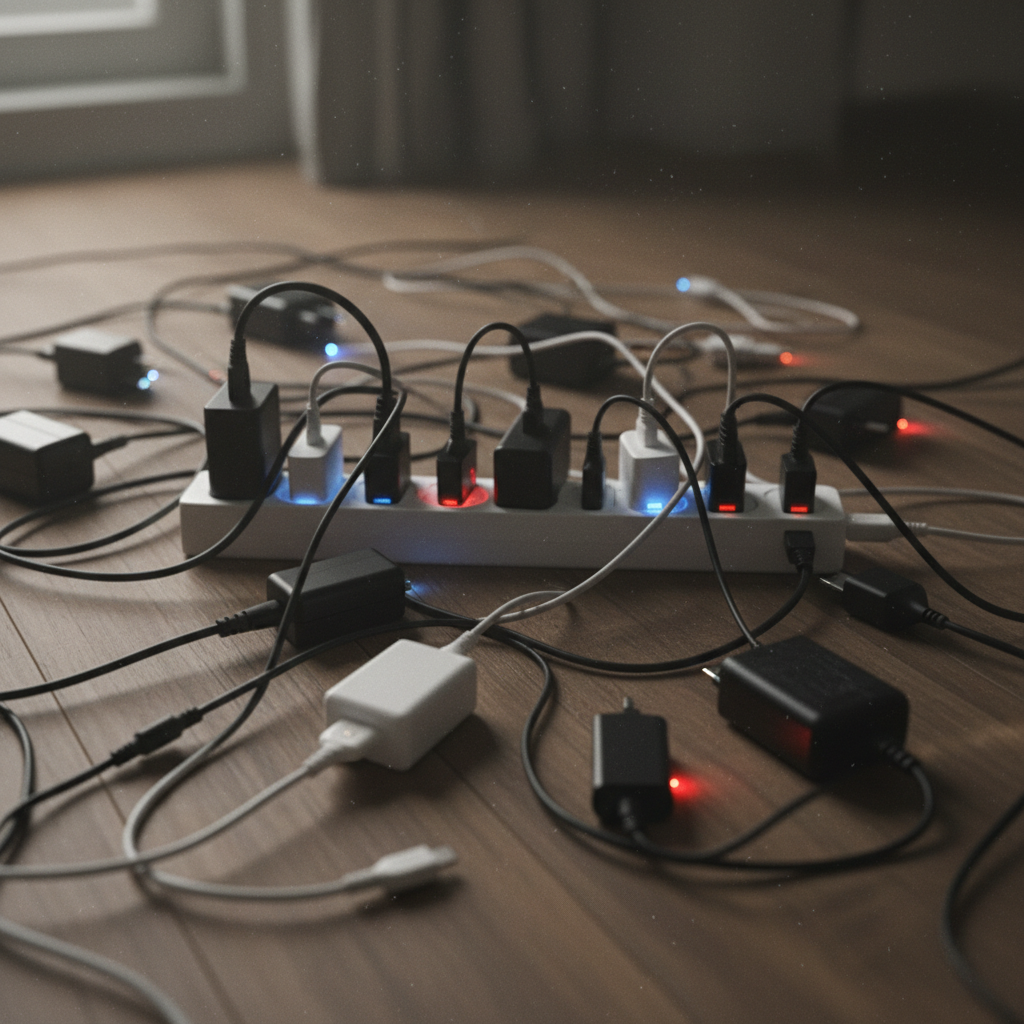
This is one of the most common and misunderstood energy vampires. We’re all guilty of it: leaving chargers plugged into the wall long after our devices are fully charged and disconnected. That little power brick, or ‘wall wart,’ continues to draw power even when it’s not connected to anything. It’s a slow, insidious drain that multiplies with every charger you own.
The Breakdown:
- The Culprits: Phone chargers, laptop chargers, tablet chargers, smartwatch chargers, and chargers for cordless vacuums or electric toothbrushes.
- The Reason: The transformer inside the charger block is always active, converting AC power from your outlet to DC power for your device. If it’s plugged in, it’s drawing a small amount of ‘no-load’ power. Feel the charger block when nothing is connected—if it’s warm, it’s using energy.
The Math:
An individual charger might only pull 0.5 to 1 watt when idle. But who has just one? Let’s say a household has five chargers constantly plugged in (phones, laptops, etc.). That’s a combined 5 watts. The annual cost: 5W x 24 hours x 365 days / 1000 * $0.17 = $7.45 per year. Again, not a game-changer on its own, but it’s part of the death-by-a-thousand-cuts that’s killing your budget.
Vampire #5: The ‘Always On’ Network Gear
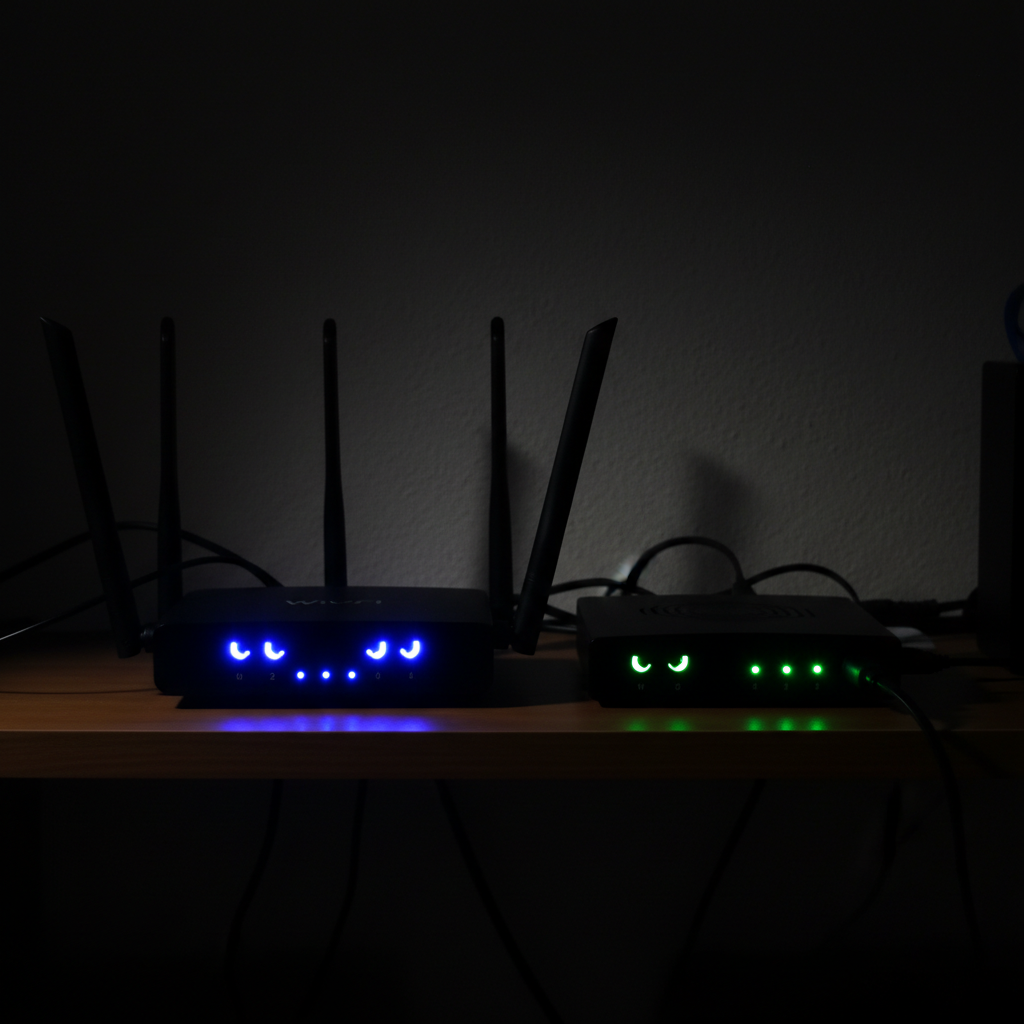
Your modem and Wi-Fi router are the unsung heroes of your digital life, but they are also voracious energy vampires. They are designed to run 24/7/365, constantly sending and receiving signals to keep you connected. While you can’t just unplug them whenever you want, you’re paying for them to run at full tilt even when everyone in the house is asleep.
The Breakdown:
- The Culprits: Internet modems, Wi-Fi routers, and network switches.
- The Reason: These devices are essentially small computers that never sleep. They require constant power to maintain your internet connection, manage network traffic, and broadcast a Wi-Fi signal.
The Math:
A modem and router combo can consume between 10 to 20 watts of power combined. Let’s take an average of 15 watts. Since they run all day, every day, the math is simple and painful: 15W x 24 hours x 365 days / 1000 * $0.17 = $22.34 per year. While you need them on most of the time, putting them on a simple timer to shut off for the 6-8 hours you’re asleep can cut that cost by 25-33% without any real inconvenience.
Your Vampire-Slaying Toolkit: The Strategy
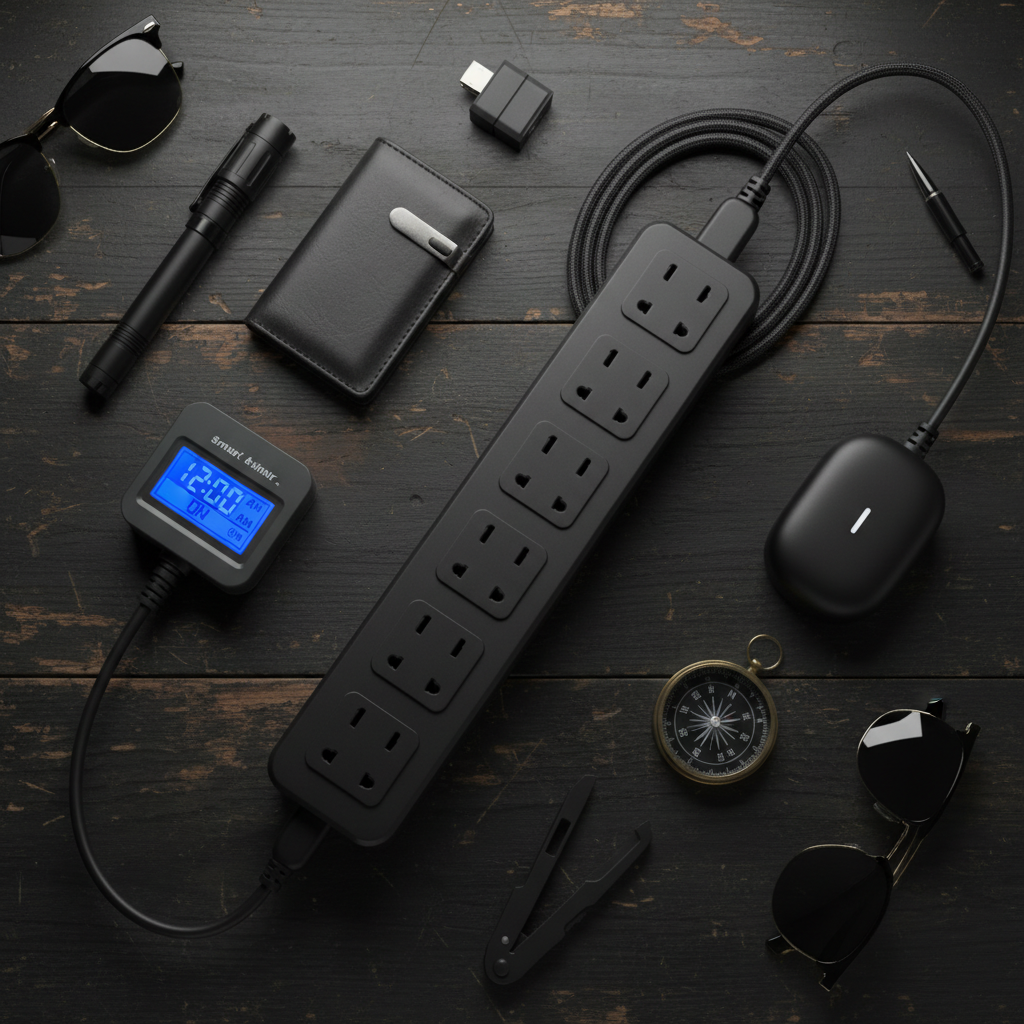
Knowing your enemy is half the battle. Now you need the weapons to fight back. You don’t need to run around your house unplugging dozens of cords every night. That’s a chore, and chores get skipped. You need a system. It’s time to get smart and strategic with your energy use. Here are the three key tools in your vampire-slaying arsenal.
1. The Power Strip: Your Vampire Nest Destroyer
This is your number one weapon. Instead of plugging your entire entertainment center or home office into the wall, plug everything into a single power strip. Now, you only have to flip one switch to kill the power to 5-10 devices at once. It turns a tedious task into a single, satisfying click.
2. The Smart Plug / Outlet Timer: The Automated Assassin
For things you can’t easily switch off, like your Wi-Fi router, automation is your friend. A simple outlet timer can be set to cut power during the hours you’re always asleep (e.g., 1 AM to 6 AM). A smart plug takes it to the next level, letting you control outlets from your phone and set complex schedules. Set it and forget it—the savings happen automatically.
3. The Habit of ‘The Sweep’: The Final Blow
For the lone vampires like chargers and kitchen appliances, build a simple habit. Before you go to bed, do a quick ‘sweep’ of the main rooms. Unplug your phone charger from the wall, check the kitchen counter. It takes 30 seconds, but doing it consistently turns small savings into a significant annual win.
Here’s how these tools stack up:
| Tool | Best For | Upfront Cost | Ease of Use |
|---|---|---|---|
| Standard Power Strip | Device clusters (TV setup, PC setup) | $10 – $25 | Super Easy (One switch) |
| Digital Outlet Timer | Single devices on a schedule (Router, lamps) | $15 – $30 | Easy (Set and forget) |
| Smart Plug | Remote control & advanced schedules | $20 – $50 (for a pack) | Moderate (Requires Wi-Fi and app setup) |
| Manual Unplugging | Lone devices (Chargers, kitchen gadgets) | $0 | Requires building a habit |
The Real-World Payoff: Stacking Your Vampire Slayer Fund

Okay, let’s put it all together. We’ve been talking about $20 here, $30 there. It sounds like small potatoes. But this is where the frugal hacker mindset kicks in. You don’t see small numbers; you see streams of income you can redirect. Let’s tally up the potential savings from just the vampires we’ve exposed:
- Entertainment Center: $37.23/year
- Home Office: $22.34/year
- Kitchen Crew: $13.40/year
- Charger Army: $7.45/year
- Network Gear: $22.34/year
And that’s a conservative estimate on just five categories! When you add in the other lurkers like garage tool chargers, old stereos, and digital clocks, you can easily push that number higher.
Total Estimated Annual Savings: $102.76 (and likely much more)
Over $100 a year. What could you do with an extra $100? That’s not just a hundred bucks. That’s:
- Seed money for your new side hustle.
- An extra payment smashed against your credit card debt.
- A full tank of gas (or several, depending on your car).
- Your web hosting and domain name paid for a year.
- Several shares of a low-cost index fund.
By spending a few minutes setting up some power strips and building a simple habit, you’ve essentially created a new, passive income stream funded by money you were already spending. You’re not cutting back; you’re cutting waste. That’s the smartest money move there is. You’ve stopped the silent killer and turned its power into your profit.
Conclusion
The game is rigged against you. Companies design products for convenience and speed, not your financial well-being. They count on you not noticing the slow, steady drain of phantom power. But now you know the secret. You’ve seen how these silent money killers operate and, more importantly, you have the simple, effective toolkit to fight back.
This isn’t about becoming an energy miser and living in the dark. It’s about being smart, strategic, and intentional with your money. It’s about recognizing that every dollar you save from waste is a dollar you can put to work for your future. The $100, $150, or even $200 a year you reclaim is a victory. It’s proof that you’re in control. So tonight, take a walk around your house. See the blinking lights and glowing clocks not as features, but as targets. Flip that power strip switch. Unplug that charger. Start your vampire hunt now and turn their power into your financial freedom.