

Credit Freeze vs Lock: The One Security Step You Must Take Today
Listen up. You work hard for your money. Whether you’re grinding on a side hustle, pinching pennies, or just trying to build a solid future, the last thing you need is some faceless thief wrecking your finances overnight. Identity theft isn’t just a headline; it’s a silent wallet-drainer that can cost you thousands of dollars and hundreds of hours of stress. The good news? You have two heavyweight bodyguards for your credit report: the Credit Freeze and the Credit Lock. They sound similar, but in the street-smart world of financial protection, one is a seasoned professional, and the other is a pricey intern. Today, we’re cutting through the corporate jargon to show you which one is the undisputed champion for protecting your hustle and how you can put it to work for $0. This isn’t just advice; it’s a financial power move you need to make right now.
The Fort Knox Method: What Exactly is a Credit Freeze?

Think of a credit freeze as putting your financial identity inside Fort Knox. It’s the highest level of security you can get, and best of all, it’s your right. A credit freeze, also known as a security freeze, restricts access to your credit report. When it’s in place, most third parties—like lenders or credit card companies—can’t pull your file to approve a new account. If they can’t see your report, they can’t issue credit. Simple as that. A fraudster can have your Social Security number, your mother’s maiden name, and your dog’s birthday, but if your credit is frozen, they’ll hit a brick wall when they try to open a new line of credit in your name.
Here’s the most important part for any frugal enthusiast or budget-conscious shopper: thanks to federal law, placing, temporarily lifting, and permanently removing a credit freeze is 100% FREE. You have to do it with each of the three major credit bureaus—Equifax, Experian, and TransUnion—but it’s a one-and-done setup. When you need to apply for a loan, a new credit card, or even a new apartment, you simply ‘thaw’ your report for a specific period, and then it automatically freezes again. It’s a bit of a manual process, but the security is airtight and the cost is zero. This is not a ‘service’; it’s a federally protected right you have as a consumer.
The Bouncer at the Club Door: Understanding the Credit Lock

Now let’s talk about the credit lock. If a freeze is Fort Knox, a credit lock is like a bouncer at a club. It does a similar job—it blocks unauthorized access to your credit report—but it operates differently. Credit locks are services sold by the credit bureaus themselves. Their main selling point is convenience. You can usually lock and unlock your credit report instantly through a mobile app with the swipe of a finger. No PINs to remember, no formal requests to make. Just tap a button, and you’re done.
Sounds great, right? Here’s the catch, and it’s a big one for anyone watching their budget: credit locks are almost always part of a paid subscription service. These services often bundle the lock with other features like credit monitoring or identity theft insurance, with monthly fees ranging from $10 to $30 or more. That’s up to $360 a year for a function you can get for free with a freeze! Furthermore, credit locks are governed by the terms of your contract with the bureau, not by federal law. This means you don’t have the same legal protections you get with a freeze. It’s a convenience product, designed to be an easy upsell, not the ultimate security tool.
The Main Event: Freeze vs. Lock Showdown

Alright, it’s time to put these two contenders in the ring and see who comes out on top. When you’re managing your money, every dollar and every ounce of security counts. This isn’t about fancy features; it’s about what gives you the most robust protection for the least amount of cash. Let’s break it down, no fluff.
| Feature | Credit Freeze (The Champ) | Credit Lock (The Contender) |
|---|---|---|
| Cost | 100% FREE. By federal law, it costs you nothing to place, lift, or remove a freeze. | PAID. Typically bundled in a monthly subscription service costing $10 – $30+ per month. |
| Security Level | Maximum Security. The strongest protection available to stop new accounts from being opened. | High Security. Generally effective, but the exact mechanism can be a proprietary ‘black box’. |
| Legal Protection | Legally Protected. Your rights are guaranteed by federal law. This gives you legal recourse if something goes wrong. | Contract-Based. Governed by the user agreement you sign with the credit bureau. Less legal muscle behind it. |
| Convenience | Good. Requires you to contact each bureau and use a PIN to thaw. It takes a few minutes but is straightforward. | Excellent. Instant lock/unlock via a mobile app. Designed for maximum ease-of-use. |
| Who Is It For? | Everyone. Especially frugal shoppers, side hustlers, and anyone who wants maximum security without a monthly fee. It’s the ultimate set-it-and-forget-it tool. | Someone who values instant convenience above all else and is willing to pay a premium for it. |
The verdict is clear. For the vast majority of people, especially those in our community of savvy savers and hustlers, the credit freeze is the undisputed winner. It offers the same, if not better, level of protection as a lock, but it costs nothing. Why pay a monthly subscription for a bouncer when you can have Fort Knox for free?
Your Step-by-Step Playbook: How to Freeze Your Credit Today

Talk is cheap. It’s time for action. Freezing your credit at all three bureaus is a power move that takes less than 15 minutes. Stop what you’re doing, grab your laptop, and let’s get this done. Here is your no-excuses guide:
- Gather Your Intel: You’ll need your basic personal information: full name, address, date of birth, and Social Security number. Have it ready so you can move quickly.
- Target the Big Three: You must freeze your credit with each of the three major credit bureaus separately. A freeze at one doesn’t cover the others. Go directly to their dedicated security freeze pages online. Don’t just Google it; go to their official sites: Equifax, Experian, and TransUnion.
- Execute the Freeze: Each site will walk you through the process. You’ll create an account and verify your identity. Follow the on-screen prompts to place the security freeze. It’s usually a big, clear button.
- Secure Your PIN or Password: When you place a freeze, each bureau will give you a way to ‘thaw’ it later. This might be a PIN (for phone-based thaws) or simply managed through your online account password. This is critical.
KEY RULE: Guard your login information or PIN like it’s cash. Store it somewhere safe and memorable, like a password manager or a secure physical location. Losing it will cause a major headache when you need to apply for credit later.
That’s it. Once you’ve done this for all three bureaus, your credit report is on lockdown. You’ve just built a fortress around your financial identity for free.
The Bottom Line: The Real Cost of Doing Nothing
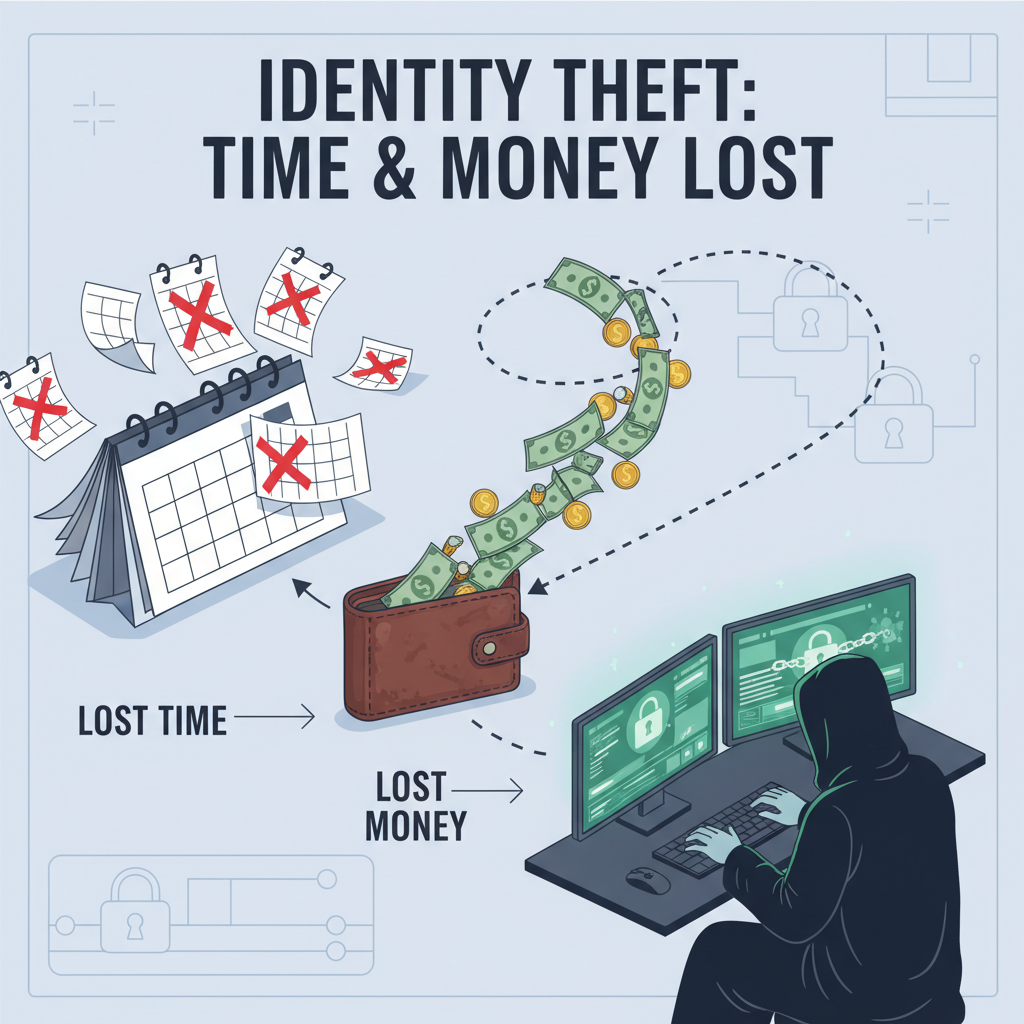
Some people might think this is overkill. “I’ve never had a problem before,” they say. That’s like leaving your front door unlocked because you’ve never been robbed. In today’s world of massive data breaches, your personal information is almost certainly floating around on the dark web. It’s not a matter of if it will be used, but when.
Let’s look at the cold, hard math. According to the Federal Trade Commission (FTC), identity theft victims can spend months or even years cleaning up the mess. The out-of-pocket costs for victims who experienced financial loss average around $500. But the real cost is your time. Victims can spend over 40 hours on average dealing with fraudulent accounts, making phone calls, and filing reports. What’s your time worth? If you value your side hustle time at just $20/hour, that’s $800 of lost earning potential, bringing the total potential loss to over $1,300.
So, the calculation is simple:
- Option A (Freeze): Spend 15 minutes and $0 to secure your credit.
- Option B (Do Nothing): Risk losing $500+ in cash and over 40 hours of your valuable time.
For anyone focused on building wealth and saving money, a credit freeze isn’t just a good idea—it’s one of the highest-return investments you can make. You are investing 15 minutes to protect yourself from thousands of dollars in potential losses and endless frustration.
Conclusion
You now have the intel. A credit lock is a paid convenience, a subscription service that preys on the idea that security should be as easy as ordering a pizza. A credit freeze is a free, federally protected right that puts a steel wall around your financial identity. In the battle for your wallet, the choice is a no-brainer. The credit freeze delivers superior, legally-backed protection for the unbeatable price of zero. Don’t pay a monthly fee for something you are entitled to for free. This is one of the simplest, most powerful steps you can take to protect your hard-earned money and your future. Your hustle is too important to leave exposed. Go freeze your credit. Not tomorrow, not next week. Right now.
Disclaimer: I am not a financial advisor, and this article is for informational and educational purposes only. Please consult with a qualified professional for advice tailored to your specific financial situation.