


Let’s be real: a bad credit score feels like a ball and chain. It dictates what car you can buy, where you can live, and how much you’ll pay for the privilege. It’s a game that feels rigged against you. But what if I told you there’s a cheat code? A simple, powerful rule that the credit bureaus weigh heavily but most people completely overlook. It’s called the 30% Rule, and it’s your key to hacking your credit score in the next 30 days.
Forget waiting years for negative marks to fall off. This is an active strategy, a financial power move. We’re not just talking about paying bills on time—that’s basic. We’re talking about manipulating the system, legally and ethically, to get the score you deserve. In this guide, we’ll break down the what, the why, and the step-by-step how. Get ready to take control, because your financial freedom is on the line.
Decoding the 30% Rule: What the Banks Don’t Shout About
Decoding the 30% Rule: What the Banks Don’t Shout About
Before you can play the game, you gotta know the rules. The most important one you were probably never taught is Credit Utilization Ratio (CUR). Forget the fancy name. All it means is how much of your available credit you’re actually using. This single factor accounts for a massive 30% of your entire FICO score—second only to payment history.
The 30% Rule is the gold standard: Aim to use no more than 30% of your credit limit on any single credit card, and across all your cards combined.
Why does this matter so much? Because to lenders, a high utilization ratio screams risk. If you have a $5,000 credit limit and you’ve charged $4,500 (that’s 90% utilization), you look like you’re in financial distress. You look like you’re living on the edge, relying on credit to stay afloat. But if you have that same $5,000 limit and only owe $1,000 (20% utilization), you look like a boss. You look responsible, in control, and like someone who can be trusted with more credit. It’s a perception game, and the 30% Rule is how you win.
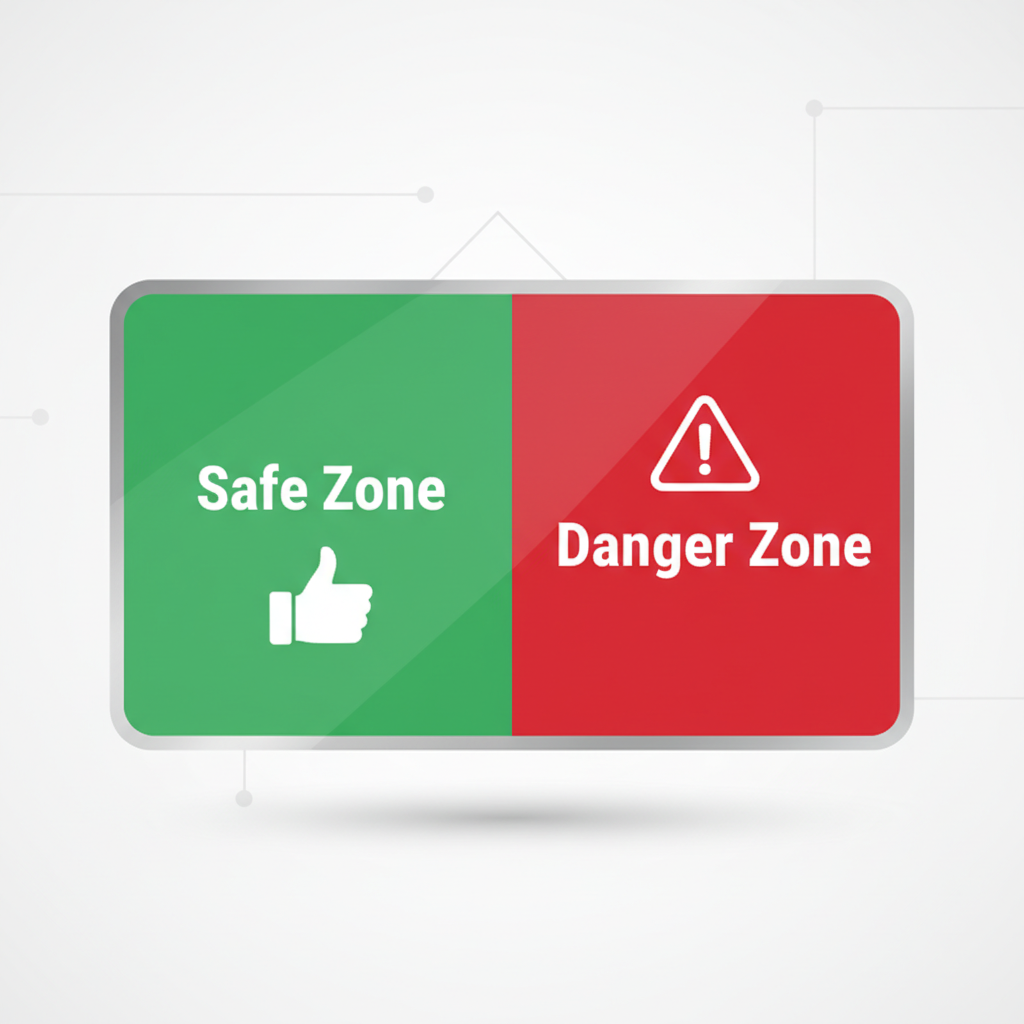
- Under 10% Utilization: You’re a credit god. Lenders love you.
- 10% – 29% Utilization: You’re in the green zone. This is responsible credit management.
- 30% – 49% Utilization: The yellow flag zone. Your score is likely taking a hit.
- 50%+ Utilization: Red alert. Lenders see you as a high risk, and your score is being dragged down significantly.
Think of it as a trust meter. Keeping your balances low proves you don’t *need* the credit, which, paradoxically, makes everyone want to give it to you. This is the foundation of our 30-day hack.
The 30-Day Takedown: Your Week-by-Week Action Plan
The 30-Day Takedown: Your Week-by-Week Action Plan
Alright, time to get to work. This isn’t theory; it’s a battle plan. Follow these steps for the next four weeks and watch what happens. No excuses.
-
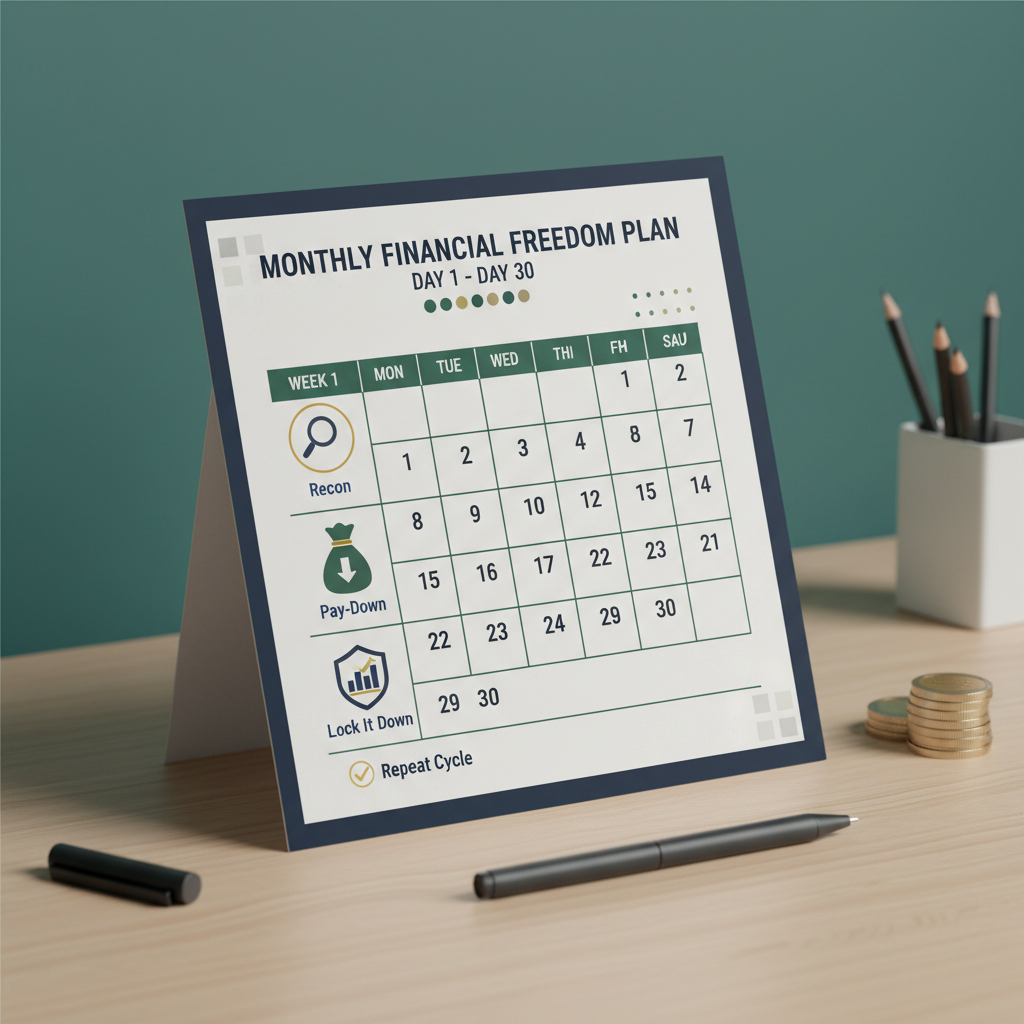
Week 1: Recon & Intel Gathering
You can’t win a war without a map. First, you need to know exactly where you stand. Pull your free credit reports from AnnualCreditReport.com. Then, grab a notebook or open a spreadsheet and create your command center. List every single revolving credit account (credit cards, store cards). For each one, write down:
- The Name of the Card (e.g., Chase Freedom)
- The Current Balance
- The Total Credit Limit
Now, do the math. Divide the balance by the limit for each card to find its individual utilization ratio. Then, add up all your balances and all your limits to find your overall utilization. This is your starting line.
-
Week 2: The ‘Pay-Down’ Offensive
This is where the hustle comes in. Your mission is to throw every spare dollar at your credit card balances, but strategically. Target the card with the highest utilization percentage first. Getting that one card under 30% will often give you a bigger score boost than spreading your money around. For example, paying down a card from 90% to 25% is a more powerful signal than paying two cards from 50% to 40%. Where do you get the cash? Sell stuff you don’t need on Facebook Marketplace. Pick up a few DoorDash shifts. Cancel a subscription. Find the money. A small sacrifice for a few weeks can pay off for years.
The Math: Let’s say you have a card with a $1,000 limit and an $800 balance (80% utilization). To get under 30%, you need the balance to be below $300. That means you need to pay down $501. That single payment could rocket your score up.
-
Week 3: The ‘Limit-Up’ Maneuver
This is the sneaky part of the hack. You can lower your utilization ratio in two ways: decrease the numerator (your balance) or increase the denominator (your limit). While you’re paying down the balance, you can also ask for a credit limit increase. Many banks let you do this right from their app or website with a ‘soft pull,’ which doesn’t affect your credit score. If you have to call, use this script:
The Script: ‘Hi, I’ve been a customer for [X] years and have maintained a great payment history. I’m working on improving my credit utilization ratio and would like to request a credit limit increase. Can you please let me know if this can be done without a hard inquiry on my credit report?’
If they raise your limit from $2,000 to $4,000, your $1,000 balance just went from 50% utilization to 25% utilization—instantly, without you paying a dime.
-
Week 4: Lock It Down & Monitor
This is the final, critical step. Most people think paying by the due date is enough. It’s not. Your credit card company reports your balance to the credit bureaus on your statement closing date. You need to make your big pay-down *before* this date. Log in to your account and find it. If your statement closes on the 25th, paying the balance down on the 24th ensures the new, lower balance is what gets reported. After you’ve made the payment, set up alerts on free apps like Credit Karma or Experian. Within a few days of your new balance being reported, you should see your score jump. Mission accomplished.
The Math Doesn’t Lie: Before & After The Hack

The Math Doesn’t Lie: Before & After The Hack
Talk is cheap. Let’s look at the numbers. Here’s a typical scenario for someone we’ll call Alex. Before the hack, Alex was making payments on time but wasn’t paying attention to utilization. The score was stuck in the low 600s.
Alex’s Situation: Before the 30-Day Hack
| Card | Balance | Credit Limit | Utilization % |
|---|---|---|---|
| Bank Card A | $900 | $1,000 | 90% |
| Store Card B | $600 | $1,500 | 40% |
| Gas Card C | $250 | $500 | 50% |
| TOTAL | $1,750 | $3,000 | 58.3% |
Alex’s overall utilization is a whopping 58.3%, with one card nearly maxed out. This is a huge red flag for lenders. Now, let’s see what happens after Alex applies our 30-day plan: paying down $750 total (focused on Card A) and getting a $1,000 limit increase on Card B.
Alex’s Situation: After the 30-Day Hack
| Card | Balance | Credit Limit | Utilization % |
|---|---|---|---|
| Bank Card A | $200 | $1,000 | 20% |
| Store Card B | $550 | $2,500 | 22% |
| Gas Card C | $250 | $500 | 50% |
| TOTAL | $1,000 | $4,000 | 25% |
Look at that transformation. The overall utilization plummeted from 58.3% to a healthy 25%. The most dangerous card went from 90% down to 20%. This single month of focused effort could easily result in a 50-100 point increase in Alex’s credit score. That’s the difference between getting denied for a car loan and getting approved with a great interest rate, potentially saving thousands of dollars over the life of the loan. This isn’t just about a number; it’s about real money back in your pocket.
Common Traps & Pro-Level Tips

Common Traps & Pro-Level Tips
You have the plan, now avoid the pitfalls. The credit game has a few unwritten rules that can trip you up. Here’s how to stay ahead.
Trap #1: The ‘Zero Percent’ Myth
You might think paying every card down to $0 is the ultimate goal. Wrong. Credit bureaus want to see that you are actively and responsibly using credit. When all your cards report a zero balance, it can sometimes cause a small, temporary score dip. It’s weird, but it’s true. The pro move is to let one, and only one, of your cards report a very small balance—like $10 or 1-5% of the limit. This is known as AZEO (All Zero Except One) in the credit world. It shows you’re active without carrying debt.
Trap #2: Closing Old Cards
You paid off that old store card you never use. Your first instinct might be to close the account to ‘simplify’ things. Don’t do it. Closing a credit card does two negative things: it reduces your total available credit (which can instantly increase your overall utilization ratio) and it can lower the average age of your accounts, another key scoring factor. Keep old, no-annual-fee cards open, even if you only use them once a year for a small purchase to keep them active.
Pro-Tip: Automate Your Success
Once you’ve done the hard work of getting your utilization down, keep it there. Set up balance alerts on your credit card apps to notify you if your balance goes over, say, 25% of your limit. This way, you can make a mid-cycle payment to bring it back down before it ever gets reported to the bureaus.
Scam Warning: Be wary of any ‘credit repair’ company that promises to erase legitimate debt or guarantees a specific score increase for a high upfront fee. Everything we’ve discussed here you can do yourself, for free. You are your own best advocate. Don’t pay someone hundreds of dollars to make a few phone calls you can make yourself.
Conclusion
Your credit score is not a lifelong sentence. It’s a dynamic number that you have the power to influence, and the 30% Rule is your most powerful tool. For one month, you can focus your financial energy, execute a clear plan, and achieve a result that will open doors for years to come. You now have the playbook. You know the rules, the strategies, and the traps to avoid. The power has shifted back to you.
Stop letting a three-digit number control your life. Start your 30-day takedown today. Calculate your numbers, make a plan, and execute. Unlock the car loan, the mortgage, the financial peace of mind you deserve. The hustle starts now.
Disclaimer: I am not a financial advisor. This content is for informational and educational purposes only and does not constitute financial advice. Consult with a certified professional before making any major financial decisions.


Makenzie is the founder and lead writer at MoneyHackTips.com — a personal finance blog dedicated to delivering street-smart financial wisdom for real people on real budgets. With 300+ published articles covering everything from debt management to investing fundamentals, Makenzie’s mission is to make every dollar work harder. When not writing about money hacks, Makenzie is testing frugal living strategies, optimizing side hustles, and helping readers build financial freedom from scratch.