Stop Throwing Money Away: 10 Genius Hacks To Keep Produce Fresh
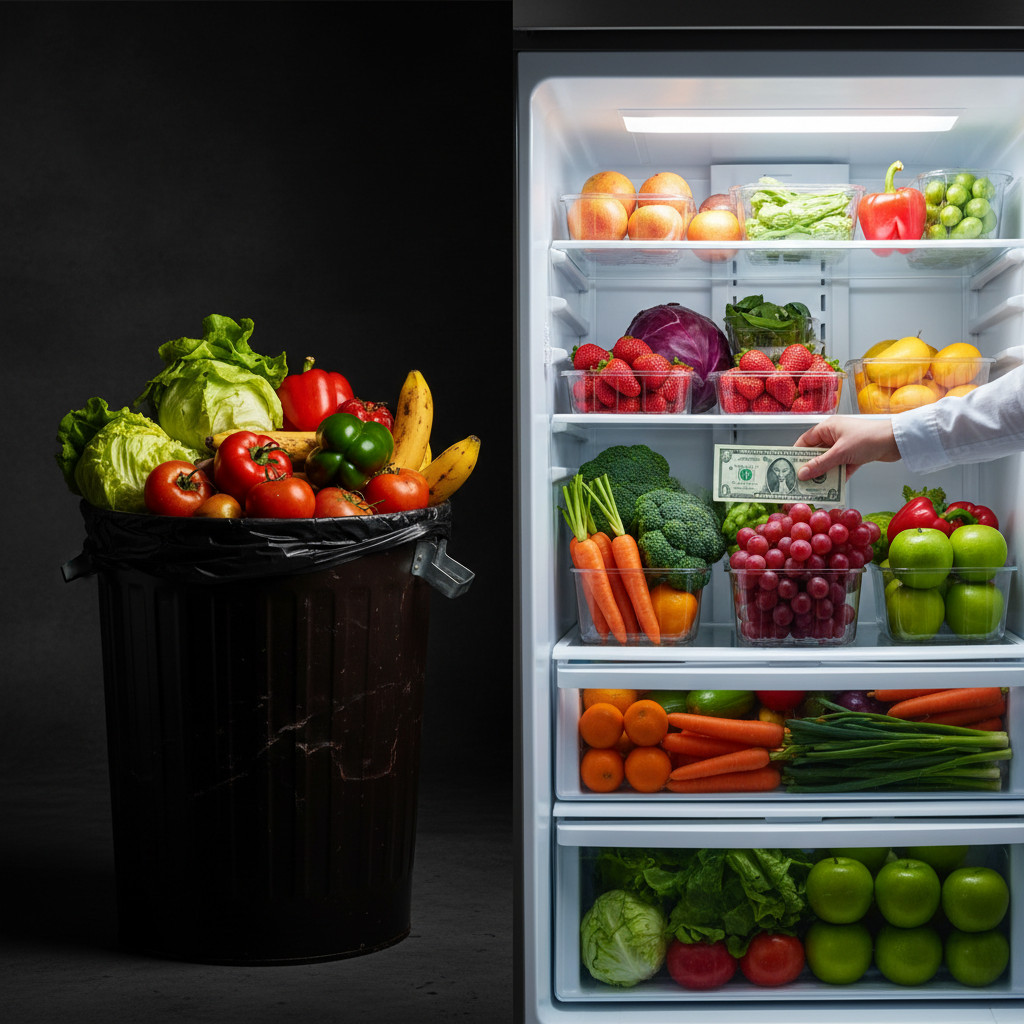
Let’s talk about the graveyard in your fridge. You know the one—that crisper drawer where good intentions and expensive organic produce go to die. You buy beautiful, healthy fruits and vegetables, and days later, they’re a slimy, wilted, unrecognizable mess. Every bag of spinach you toss is like setting a $5 bill on fire. It’s not just frustrating; it’s a direct attack on your wallet.
The average American family throws away about $1,500 a year on unused food. Think about that. That’s a vacation. That’s a serious debt payment. That’s your side hustle profit vanishing into the trash. It’s time to stop the madness. These aren’t your grandma’s fussy, time-consuming tips. These are 10 genius, street-smart hacks to reclaim your cash, outsmart spoilage, and take control of your grocery budget once and for all.
Hack #1: The Anti-Slime Maneuver for Leafy Greens
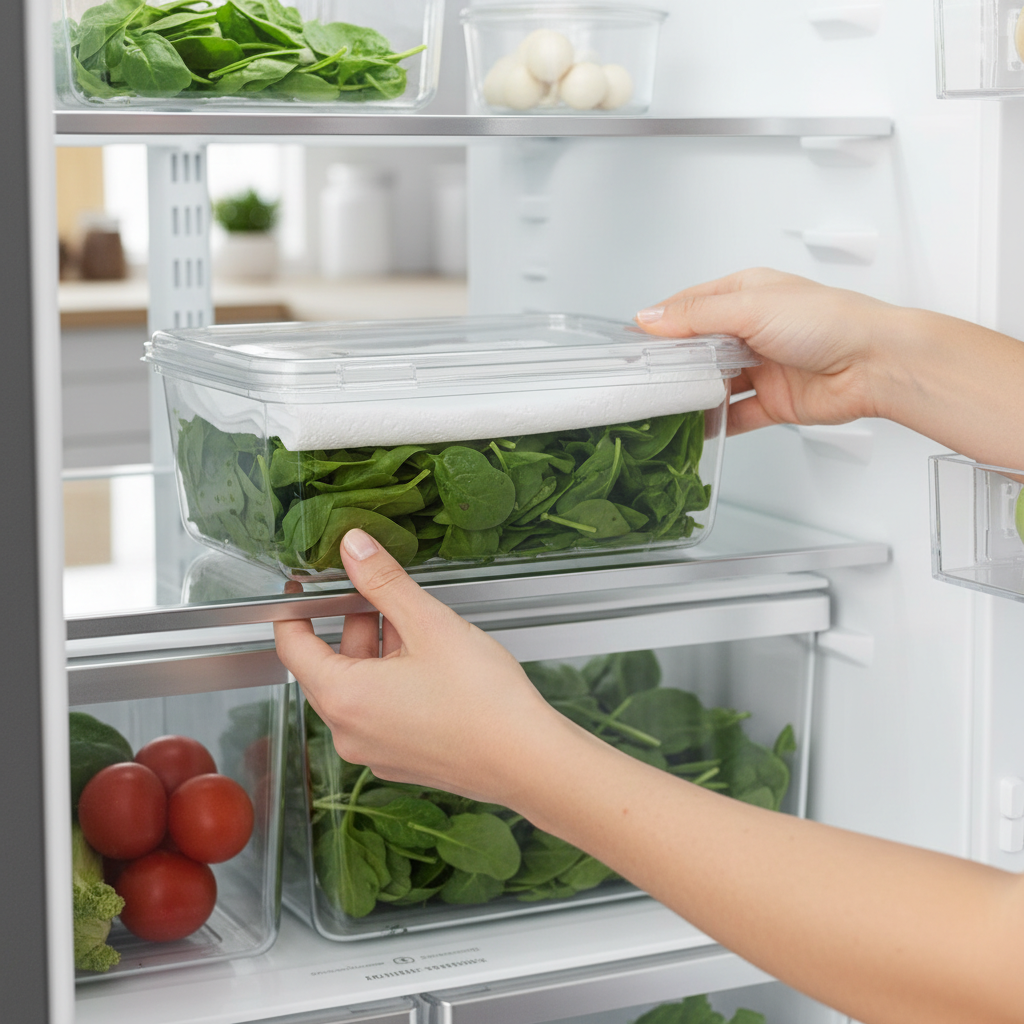
You know the drill. You buy a giant tub of organic spinach with dreams of healthy smoothies and salads. By Wednesday, it’s a bag of green goo. The enemy here is moisture, and it’s a relentless saboteur of your healthy ambitions. Here’s how you fight back and win.
The Play-by-Play:
- As soon as you get home, empty your greens (spinach, arugula, mixed lettuces) into a large, clean, airtight container.
- Lay a single, dry paper towel flat on top of the greens, making sure it’s directly touching them.
- Seal the container and pop it in the fridge. For extra credit, you can place a paper towel at the bottom, too.
- Check the paper towel every couple of days. If it feels damp, swap it out for a fresh, dry one.
Why It Works: The paper towel acts like a sponge, wicking away the excess moisture that causes delicate leaves to break down and rot. It’s a ridiculously simple trick that doubles, or even triples, the life of your greens.
The Math:
Let’s say you toss one $5 bag of salad greens every week because it goes bad. That’s a $260 annual bonfire of your cash. By making those greens last twice as long, you cut that waste in half, instantly saving yourself $130 a year. That’s found money.
Hack #2: The Vinegar Bath for Berries
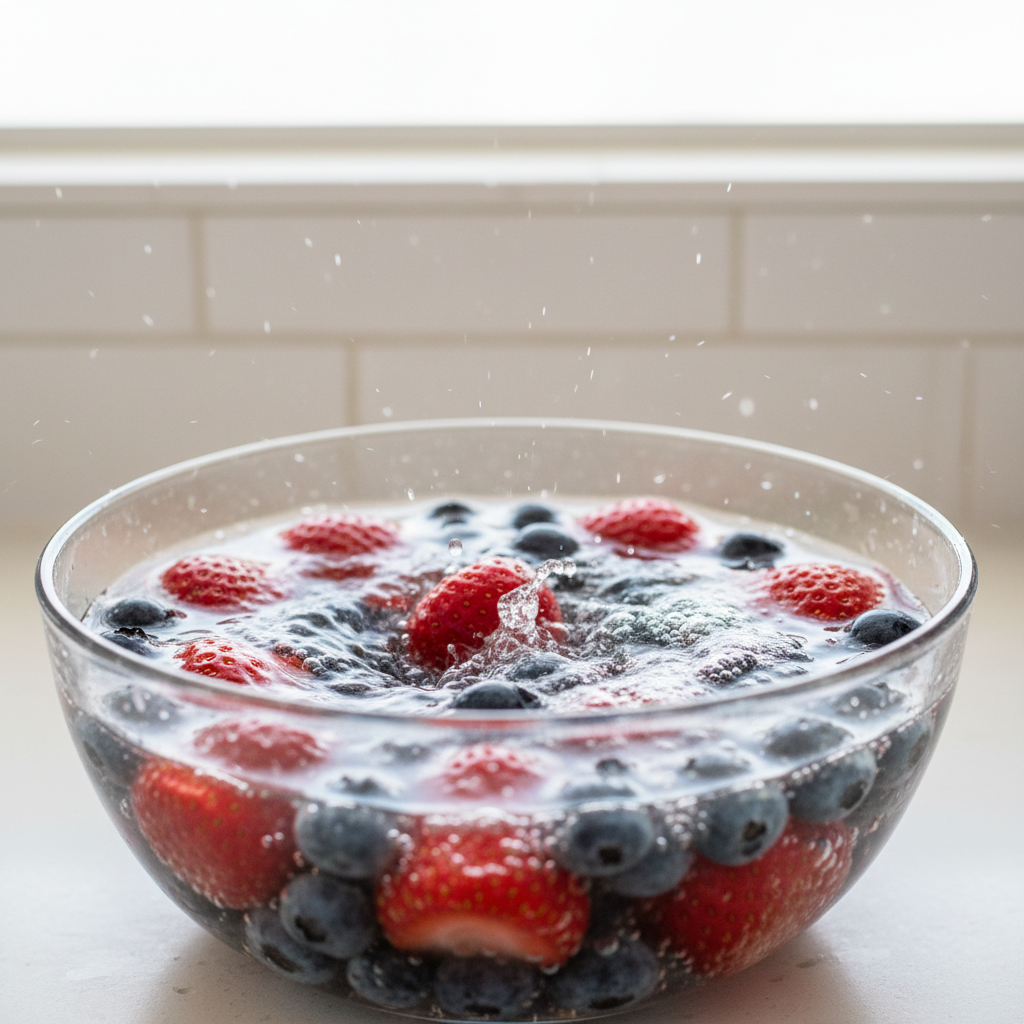
Berries are the divas of the produce world. They look gorgeous, cost a fortune, and can turn into a moldy disaster at a moment’s notice. You blink, and that beautiful pint of raspberries has grown a fuzzy white coat. Don’t accept defeat; give them a spa day.
The Play-by-Play:
- Create a solution of one part white vinegar to three parts cool water in a large bowl.
- Gently submerge your berries (strawberries, blueberries, raspberries, blackberries) in the bath for about 5-10 minutes. Swish them around a bit.
- Drain the berries and rinse them thoroughly under cold water to remove any vinegar taste.
- This is the most critical step: Dry them completely. Spread them out on a clean towel or paper towels and let them air dry, or gently pat them. Moisture is the enemy.
- Store them in a breathable container in the fridge. You can even line the container with a paper towel.
Why It Works: The vinegar is a natural disinfectant that kills the mold spores and bacteria that are already on the surface of the berries, waiting for their chance to strike. A thorough drying prevents new moisture from creating a breeding ground.
The Math:
A single container of organic raspberries can cost $6. If you lose just one container a month to mold, that’s $72 down the drain each year. This hack can make them last for a week or more, easily saving you that money and then some.
Hack #3: Keep Your Herbs Fresh Like a Bouquet
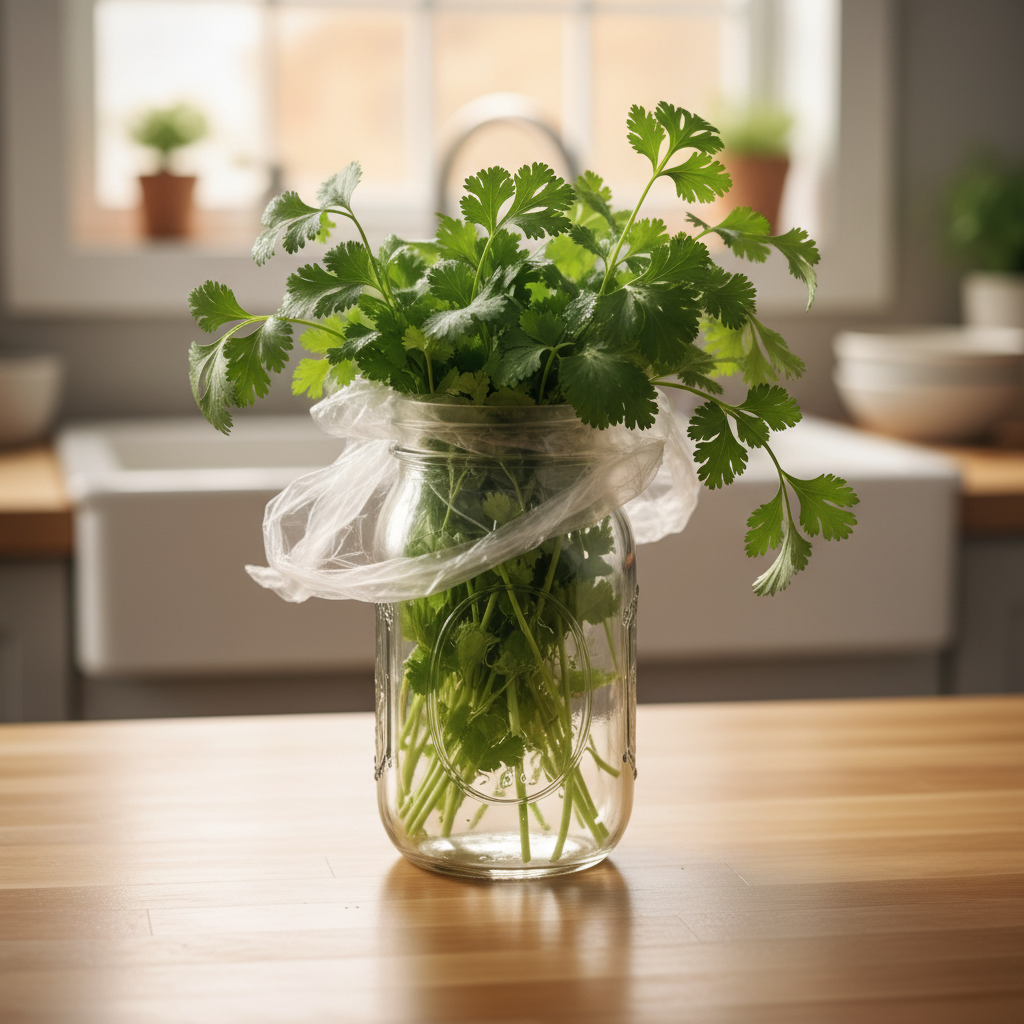
Fresh herbs can elevate a budget meal into something special, but they often wilt and turn black before you can use them all. Treating them like the delicate plants they are is the key to keeping them green and flavorful.
The Play-by-Play (For soft herbs like cilantro, parsley, mint):
- Trim the ends of the stems, just like you would for a bouquet of flowers.
- Place them in a glass or jar with about an inch of water at the bottom.
- Loosely cover the leaves with a plastic bag (a reused grocery produce bag is perfect).
- Store them in the refrigerator. Change the water every few days.
The Play-by-Play (For woody herbs like rosemary, thyme):
- Gently wrap the herbs in a slightly damp paper towel.
- Place the wrapped bundle inside a zip-top bag or airtight container.
- Store in the fridge.
Why It Works: Soft herbs need hydration, which the water provides, while the bag creates a mini-greenhouse effect. Woody herbs just need to be kept from drying out, which the damp towel accomplishes.
The Math:
A bunch of fresh cilantro or parsley costs about $2. If you throw half of it away each week, you’re wasting $52 a year. This method makes them last for weeks, meaning you use what you buy and keep that cash in your pocket.
Hack #4: The Stem-Wrap Trick for Bananas
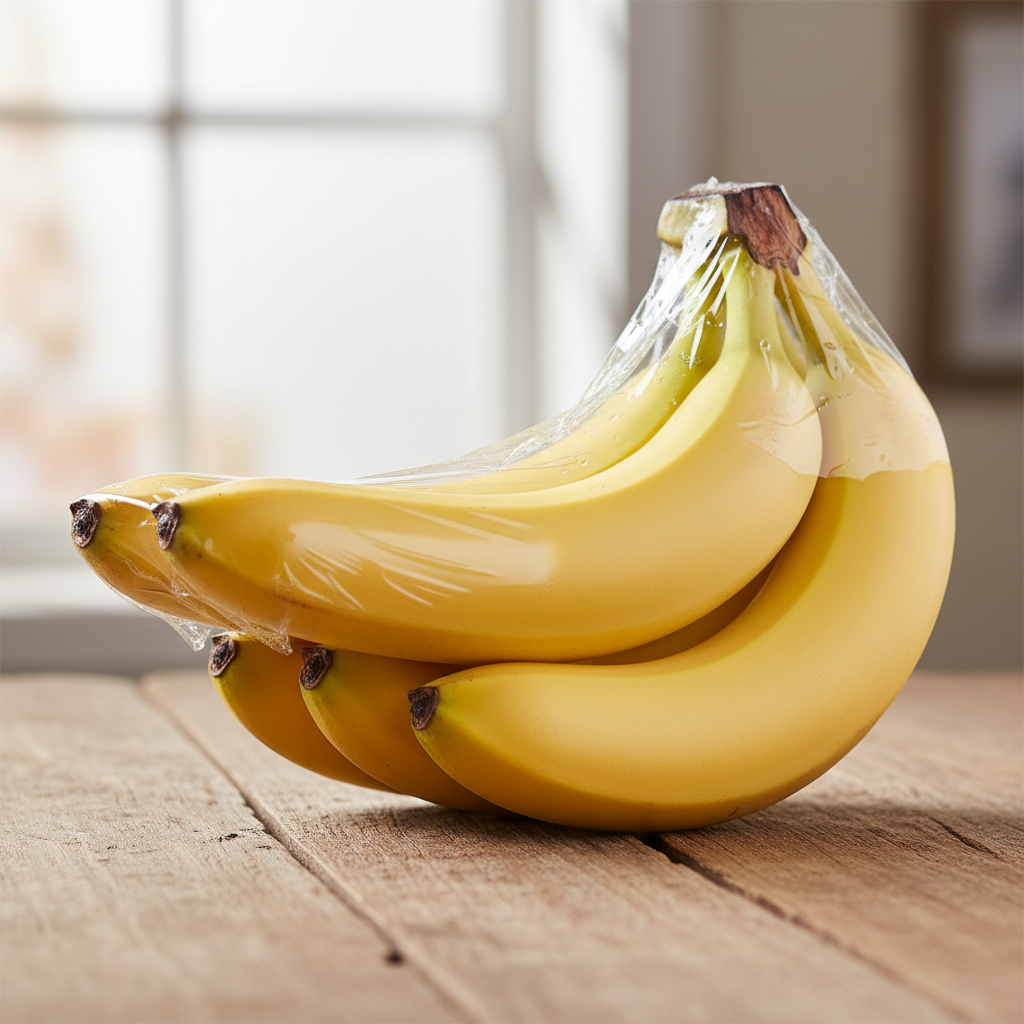
Bananas have a built-in self-destruct timer. They go from perfectly yellow to a spotty, brown, fruit-fly magnet in what feels like minutes. You can slow down the clock with a simple piece of plastic wrap.
The Play-by-Play:
- Take a small piece of plastic wrap.
- Tightly wrap it around the crown of the banana bunch—the black, woody part where they are all connected.
- That’s it. Store them on the counter as usual, away from other fruits.
Why It Works: Bananas release ethylene gas (more on that later) primarily from their stems. By wrapping the stems, you trap a significant portion of the gas, dramatically slowing the ripening process for the entire bunch.
The Math:
If your family goes through a bunch of bananas ($2) a week, but you end up tossing the last two because they got too ripe, you’re wasting about $0.80 a week. That’s over $40 a year just on bananas you didn’t eat. This simple wrap keeps them yellow longer, so you have time to use them all.
Hack #5: Store Celery and Broccoli in Aluminum Foil
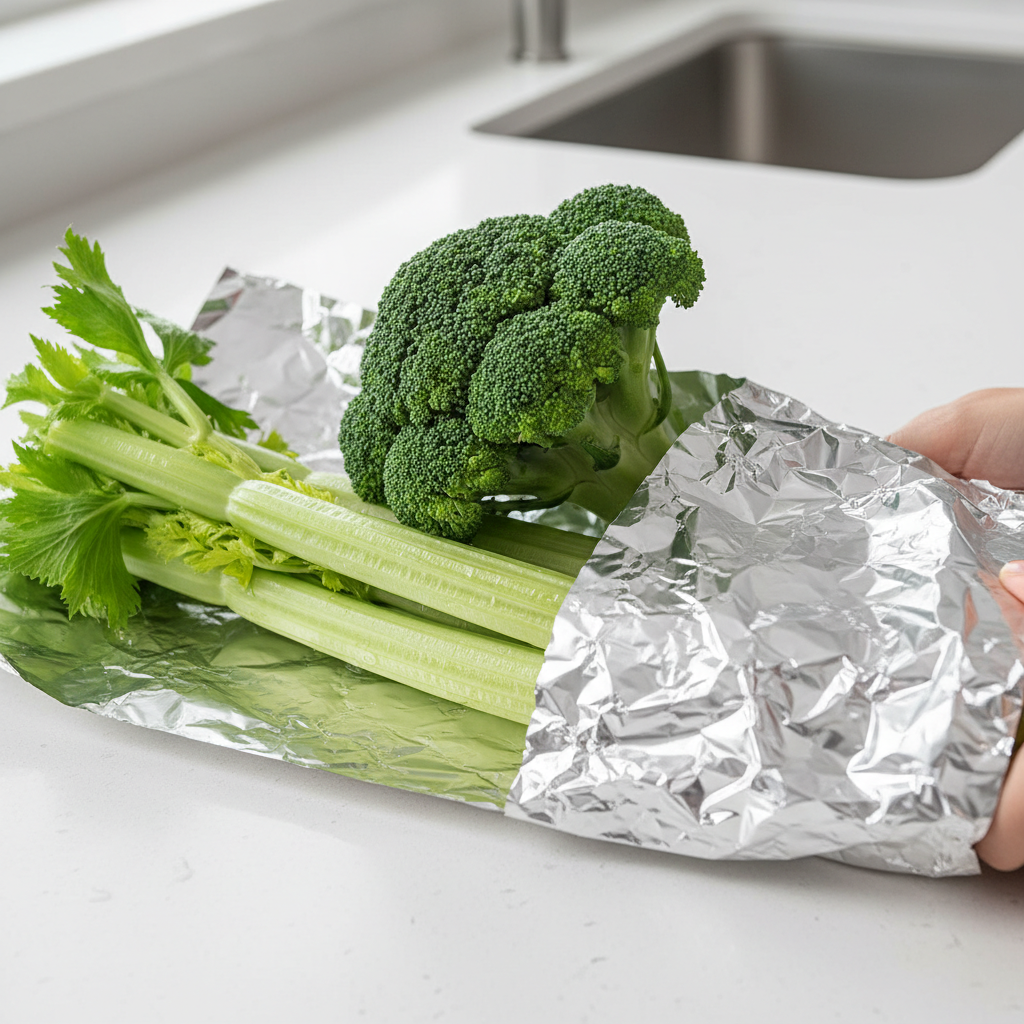
Limp celery is one of the saddest sights in a kitchen. That crisp, crunchy snack turns into a floppy, rubbery mess. The same goes for broccoli crowns that lose their firmness. The surprising savior isn’t a plastic bag; it’s aluminum foil.
The Play-by-Play:
- Tear off a large sheet of aluminum foil.
- Tightly wrap the entire head of broccoli or the whole bunch of celery in the foil. Make sure it’s sealed well.
- Store it in your refrigerator’s crisper drawer.
Why It Works: Unlike a plastic bag which traps moisture and ethylene gas, foil is porous enough to allow the ethylene gas to escape while still keeping the vegetable hydrated and crisp. It strikes the perfect balance, keeping them crunchy for weeks.
The Math:
A head of broccoli ($3) and a bunch of celery ($2.50) that go limp have to be thrown out. If this happens just once a month, you’re losing $66 a year. This foil hack ensures you use every last stalk and floret.
Hack #6: Stop Suffocating Your Mushrooms
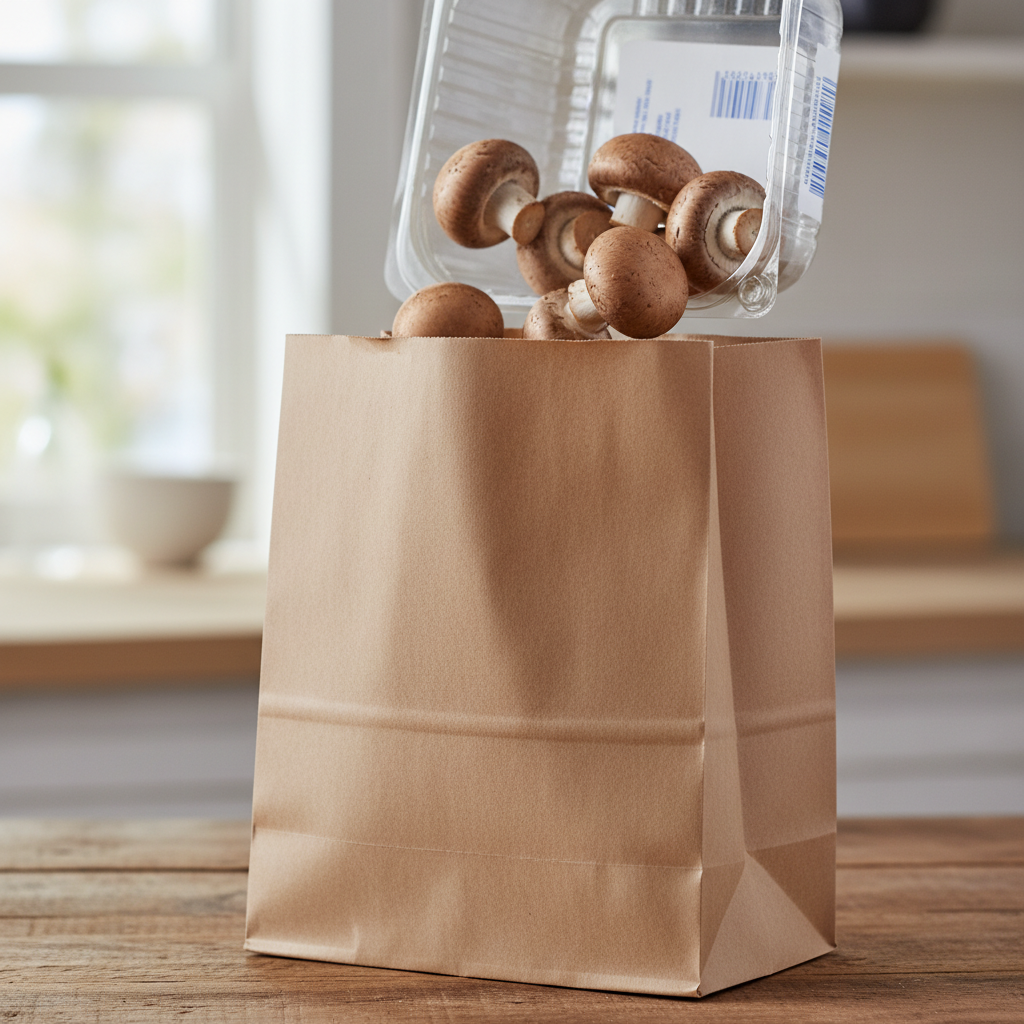
Mushrooms are fungi, and they behave differently than vegetables. Storing them in the plastic-wrapped container they came in is a recipe for a slimy, brown disaster. They need to breathe.
The Play-by-Play:
- Remove the mushrooms from their original packaging.
- Place them unwashed into a brown paper bag.
- Fold the top of the bag over loosely and store it in the main compartment of your fridge (not the crisper, which is too moist).
Why It Works: The paper bag is porous. It absorbs excess moisture, preventing the mushrooms from getting slimy, but it also allows for air circulation, which keeps them from shriveling. It’s the perfect environment.
The Math:
A package of cremini mushrooms costs around $4. If half of them go slimy before you use them, you’re wasting $2 each time. Do that twice a month, and you’ve thrown away $48 in a year. The paper bag method keeps them fresh and firm, protecting your investment.
Hack #7: Give Your Onions and Potatoes a Divorce
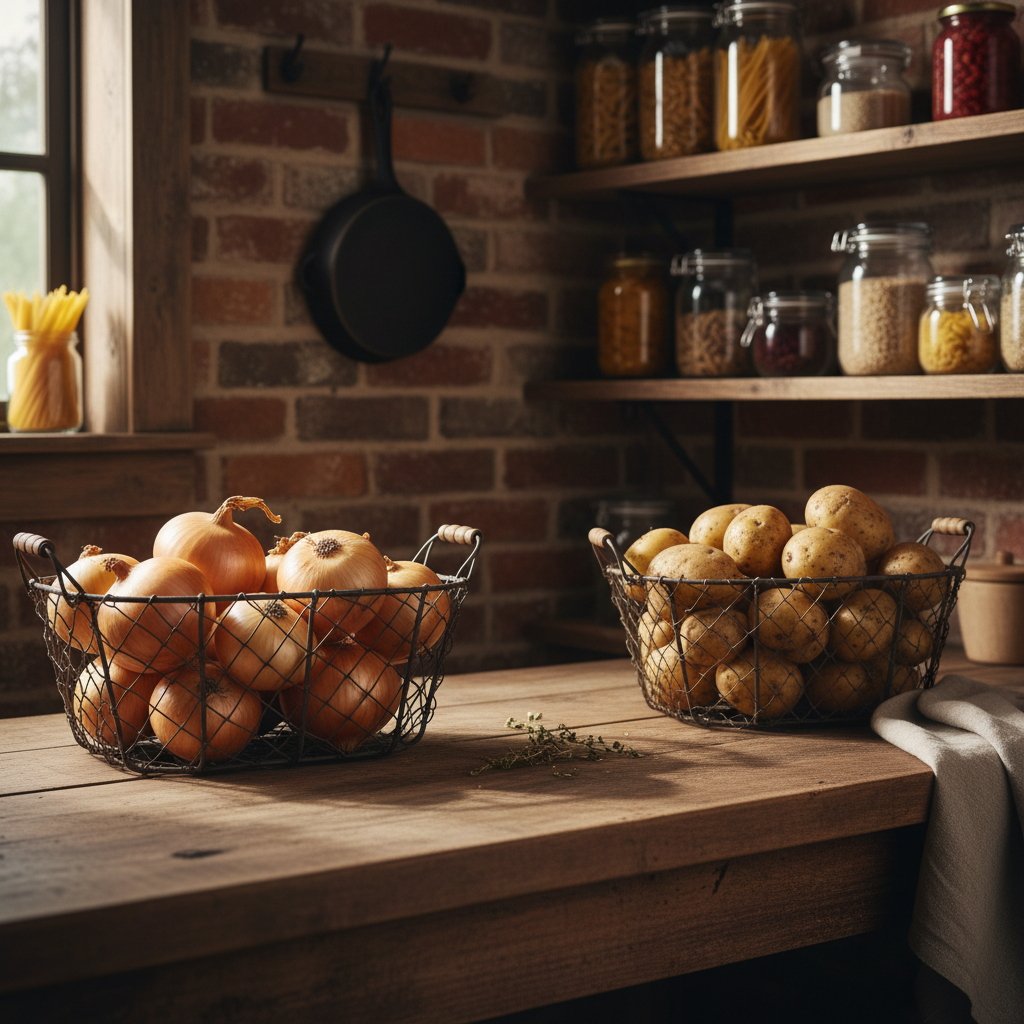
It seems natural to store all your root vegetables together, but keeping onions and potatoes in the same space is a huge mistake. It’s a toxic relationship where the potatoes are the victims, sprouting and spoiling way too fast.
Key Rule: Potatoes and onions must be stored separately. No exceptions.
The Play-by-Play:
- Find a cool, dark, well-ventilated space for your potatoes (a pantry, a cabinet, a basket). A mesh or paper bag is ideal.
- Find a *different* cool, dark, well-ventilated space for your onions.
- Store garlic in a similar, separate spot.
Why It Works: Onions release high levels of ethylene gas and moisture, which encourages potatoes to sprout and rot. Separating them breaks this destructive cycle and extends the life of both vegetables significantly.
The Math:
A 5-lb bag of potatoes is about $4. If they sprout and go soft halfway through, you’re losing $2. If this happens every month, that’s $24 wasted. Keeping them away from onions can easily double their shelf life, saving you that cash.
Hack #8: Treat Your Tomatoes with Respect (No Fridge!)
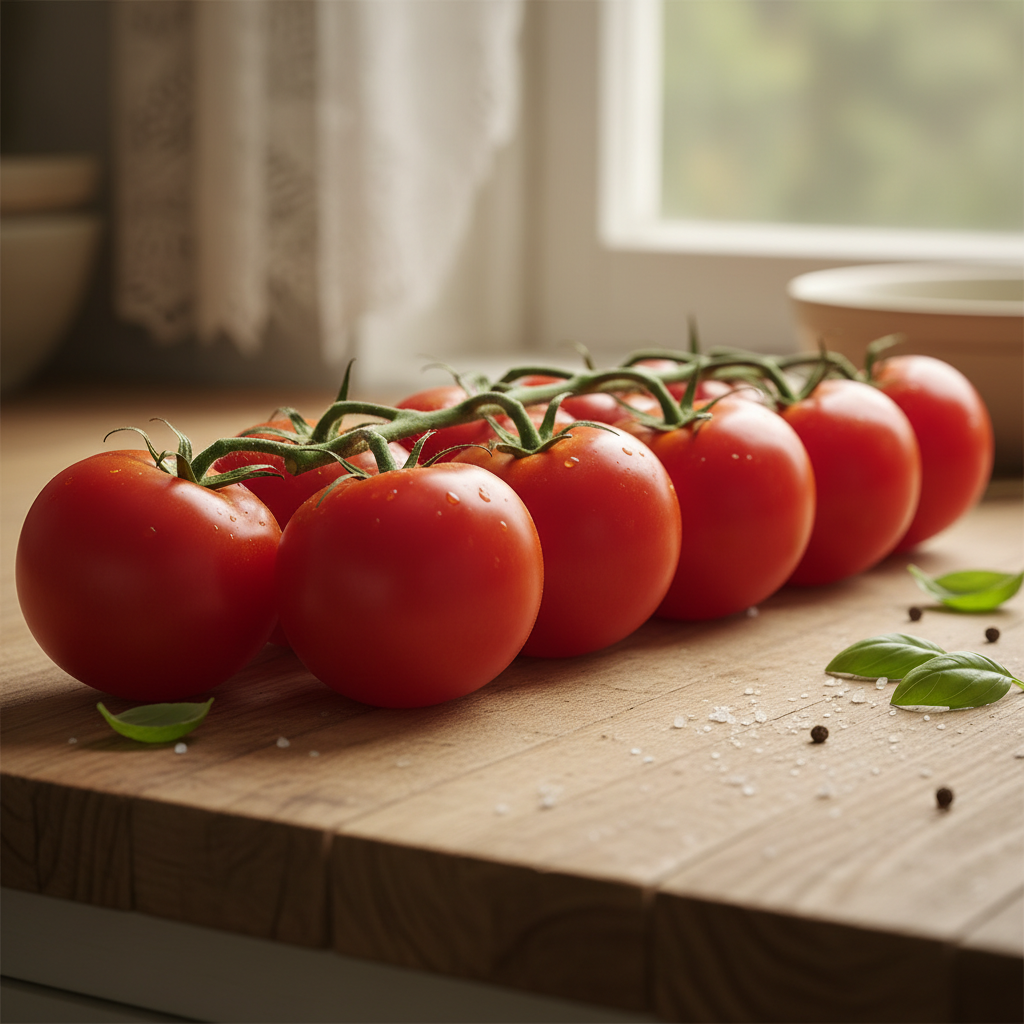
Putting a fresh, beautiful tomato in the refrigerator is a cardinal sin of food storage. The cold temperature destroys its texture and kills its flavor, turning it into a mealy, tasteless orb. Your counter is where they belong.
The Play-by-Play:
- Store whole, uncut tomatoes on your kitchen counter at room temperature.
- Place them stem-side down. This prevents moisture from escaping through the stem scar and air from getting in, keeping them fresher longer.
- Keep them out of direct sunlight.
Why It Works: Cold temperatures halt the ripening process that gives tomatoes their flavor and turns their starches to sugar. The cold also damages the cell membranes, resulting in that dreaded mealy texture. Room temp is their happy place.
The Math:
Heirloom or on-the-vine tomatoes can be pricey, say $4 per pound. If you ruin their flavor and texture in the fridge, you’ve essentially wasted that money because you’re not getting the quality you paid for. Keeping them on the counter preserves the value of your purchase.
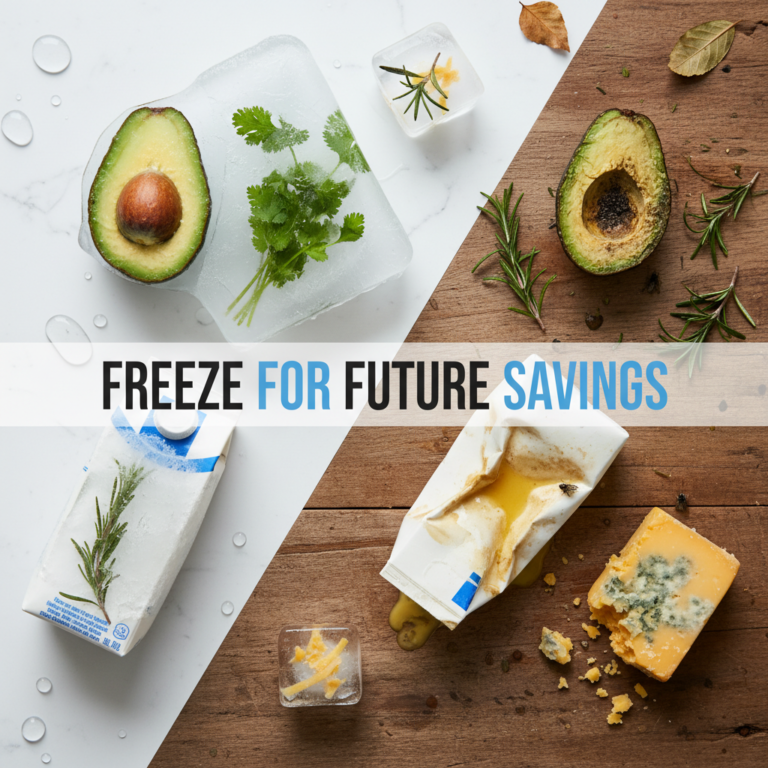
Hack #9: The Avocado Time Machine
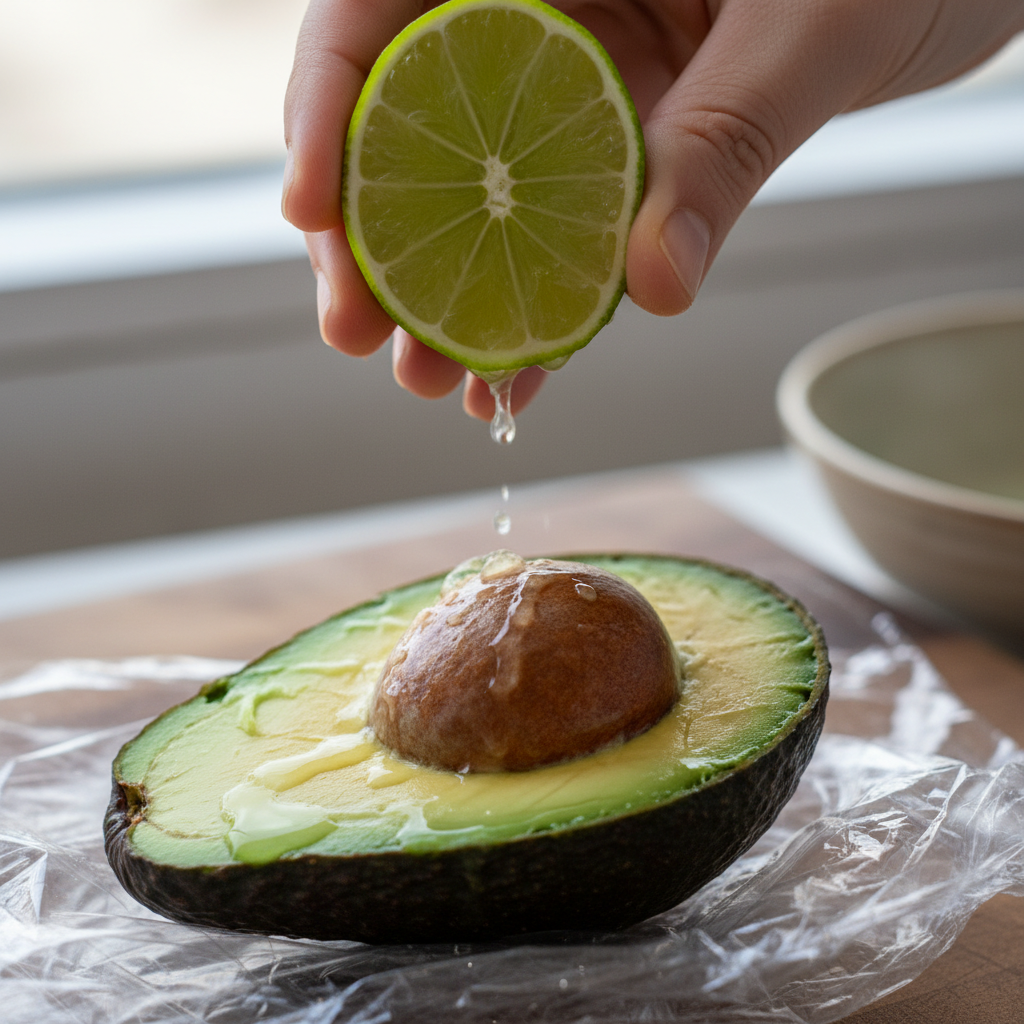
Avocados are the ultimate financial gamble. They’re rock hard for days, then perfectly ripe for about seven minutes, and then a brown, stringy mess. Once you cut one open, the clock starts ticking even faster. Here’s how to pause it.
The Play-by-Play (For a cut avocado):
- Leave the pit in the half you want to save. This helps a little by covering some surface area.
- Rub the exposed green flesh with a thin layer of lemon or lime juice.
- Press a piece of plastic wrap directly onto the surface of the flesh, ensuring there are no air bubbles.
- Store in the fridge.
Why It Works: The browning is caused by oxidation—the flesh reacting with air. The citrus juice’s acidity slows this chemical reaction, and the plastic wrap acts as a physical barrier against oxygen.
The Math:
Avocados can be $2 a pop. Tossing half an avocado is throwing $1 in the compost. If you do this twice a week, you’re trashing over $100 a year. This trick easily gives you an extra day or two to use it, saving that money.
Hack #10: Play Matchmaker with Ethylene Gas
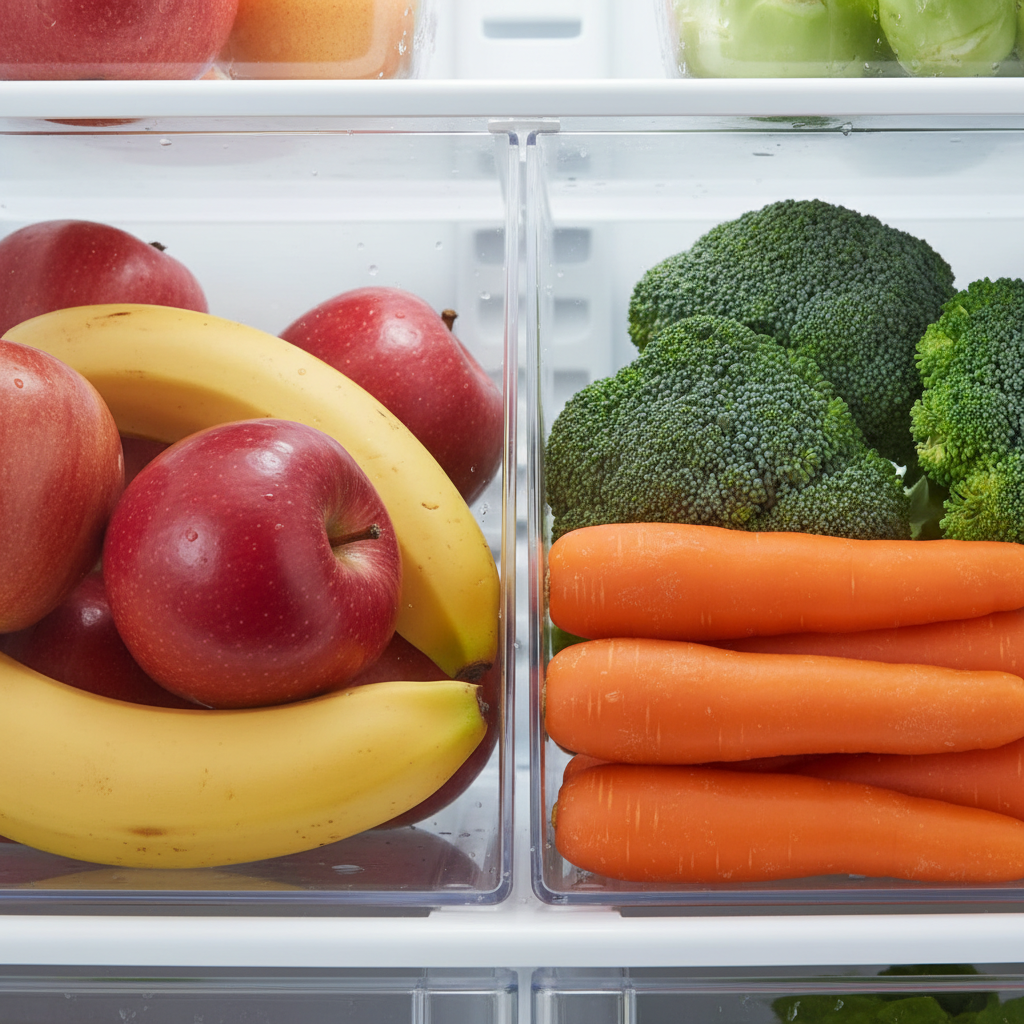
We’ve mentioned ethylene gas, the invisible ripening agent, a few times. Think of it as a social signal among fruits and veggies. Some are loud ‘producers’ of this gas, while others are highly ‘sensitive’ to it. Your job is to be the bouncer of your fridge and keep them separated.
The Rulebook:
Knowing who the producers are and keeping them away from the sensitives is a pro-level move that prevents a chain reaction of spoilage in your crisper drawer.
The Lineup: Producers vs. Sensitives
| High Ethylene Producers (The Gassy Crew) | Ethylene Sensitives (The Victims) |
|---|---|
| Apples, Avocados, Bananas, Peaches, Pears, Tomatoes | Broccoli, Carrots, Cucumbers, Leafy Greens, Peppers, Asparagus |
The Math:
This is a force multiplier for savings. Storing your $3 bag of apples next to your $2 head of lettuce and causing it to wilt prematurely is a $2 loss. Preventing these little tragedies across all your produce could easily save you $5-$10 a month, which adds up to $60-$120 a year.
Conclusion
There you have it—10 no-nonsense ways to stop lighting your grocery money on fire. This isn’t about being cheap; it’s about being smart. It’s about respecting your hard-earned cash and the food you buy. When you throw away food, you’re throwing away the hours you worked to pay for it. Don’t do that to yourself.
You don’t have to implement all of these at once. Pick one or two hacks that address your biggest pain points—maybe it’s the slimy spinach or the moldy berries—and master them this week. Then add a few more. Before you know it, you’ll have an extra $50 or $100 in your pocket each month, all from outsmarting a bunch of vegetables. Now that’s taking control. That’s real financial power.