The Ultimate $50 Aldi Shopping List For Healthy Eating All Week
You’ve been sold a lie. The lie says you have to choose: either you eat healthy, or you save money. That eating clean, whole foods means your bank account has to starve. Forget that. That’s thinking for suckers. For those of us on the grind, building our empires from the ground up, every dollar has a job. Wasting it on overpriced kale at a fancy grocery store isn’t one of them.
This isn’t just another ‘budget meals’ article with sad-looking salads. This is your new playbook. Your secret weapon is a place you might have overlooked: Aldi. We’re about to break down the exact strategy, the precise shopping list, and the no-nonsense meal plan to feed yourself well—really well—for an entire week on just $50. Get ready to take control of your grocery bill and fuel your hustle without breaking the bank.
The Game Plan: Why Aldi is Your Secret Weapon for Crushing Grocery Bills

Before we hit the aisles, you need to understand the battlefield. Traditional grocery stores are designed to make you spend more. The end caps, the confusing layouts, the brand names yelling at you from every shelf—it’s a trap. Aldi is different. It’s a system built for efficiency, and if you know how to work the system, you win.
The Aldi Advantage
So, what’s their secret? It’s simple, and it’s brilliant. They cut out the fluff so you’re only paying for the food itself.
- No-Frills Approach: You won’t find massive displays or ten different brands of ketchup. They stock what’s good and what sells. This efficiency means lower overhead for them and lower prices for you.
- Private Label Power: About 90% of what Aldi sells is their own brand. Don’t let that fool you into thinking it’s lower quality. Many of their products are made by the same manufacturers as the big-name brands. You get the same product without paying for the multi-million dollar advertising budget. Think of it as the ultimate brand-name hack.
- BYOB (Bring Your Own Bag): You bag your own groceries. This saves them money on labor, and that saving is passed directly to you at the checkout. It’s a small task that adds up to big savings.
- The Quarter System: You ‘rent’ a cart for a quarter, and you get it back when you return it. This means they don’t have to pay employees to wrangle carts from the parking lot. Again, their savings become your savings.
Walking into Aldi isn’t just shopping; it’s a strategic move. You’re opting out of the traditional grocery store game and choosing a system designed to save you money. Embrace it. This is how you get ahead.
The Main Event: Your Ultimate $50 Aldi Shopping List
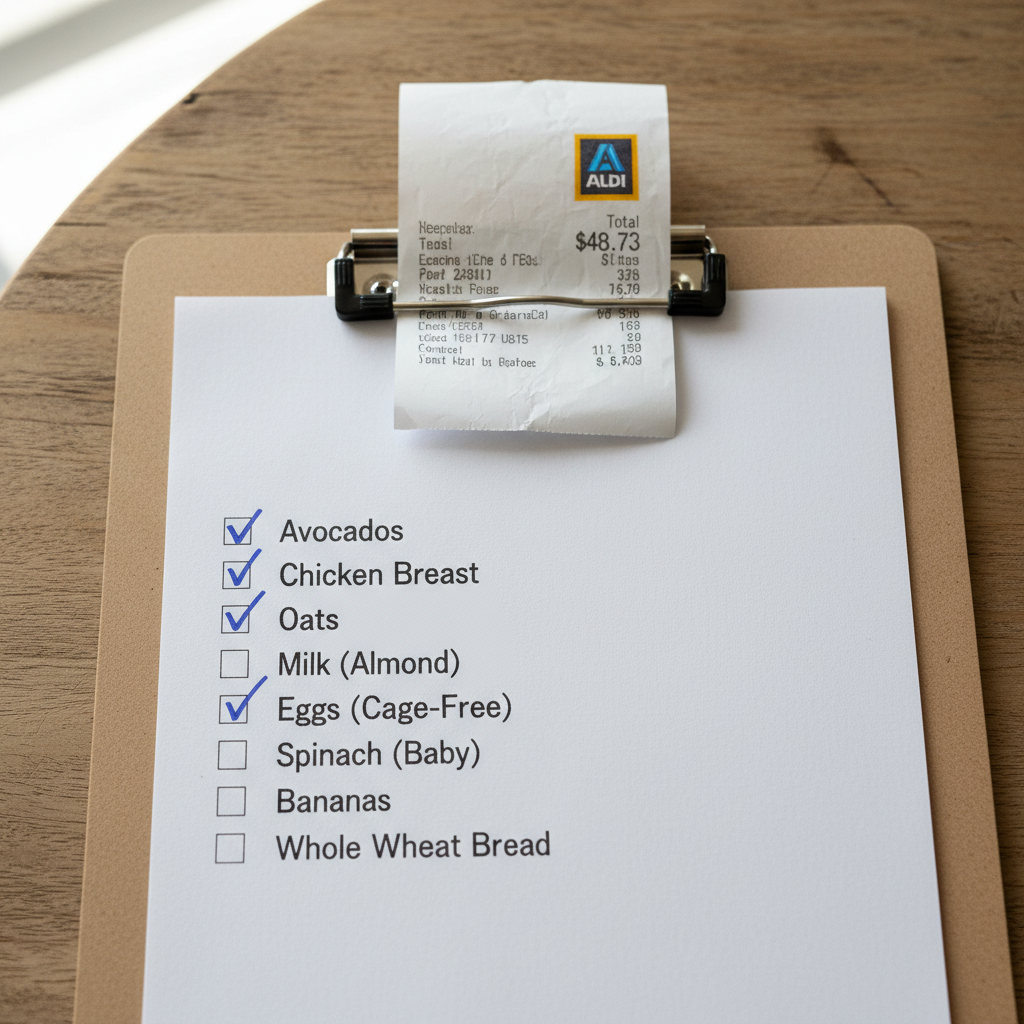
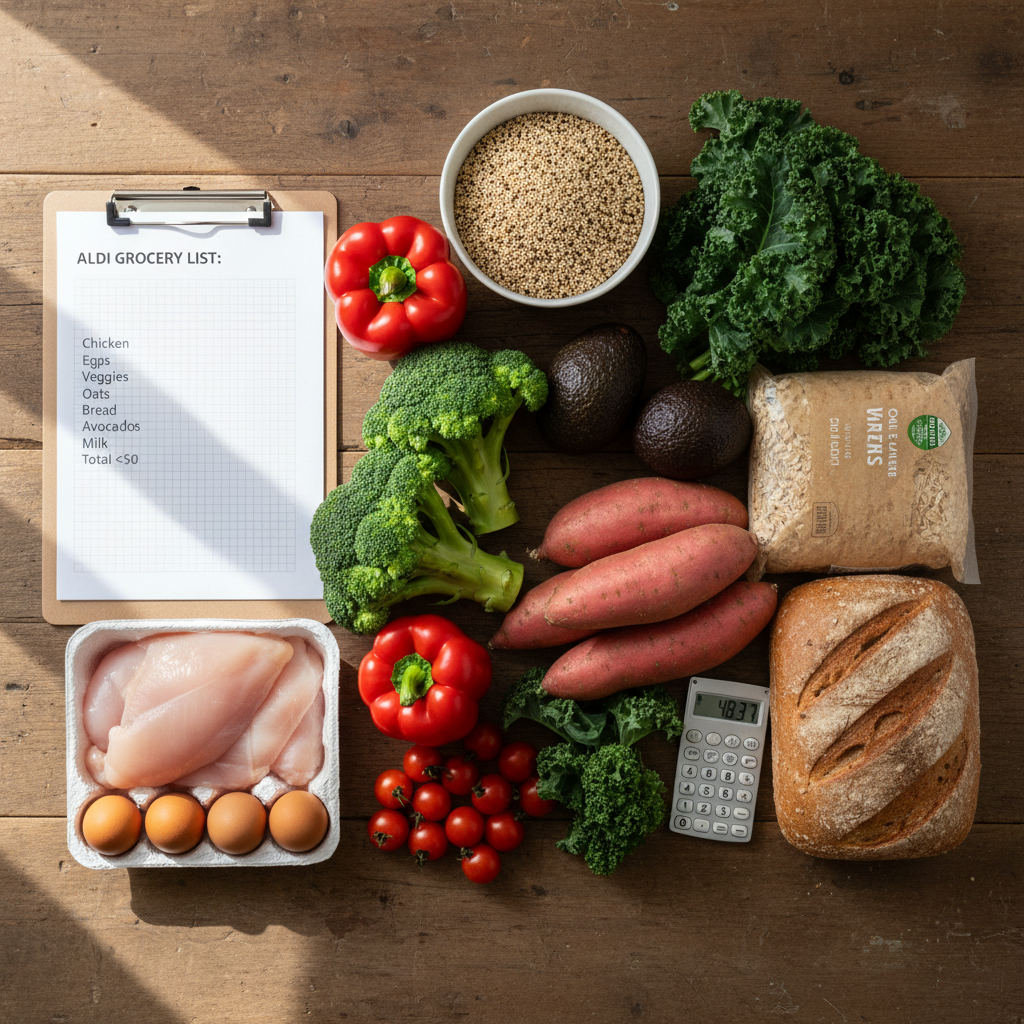
Alright, this is it. The list. This isn’t a suggestion; it’s a battle-tested plan. Prices at Aldi can vary slightly by location and season, but this list is designed to consistently come in at or under the $50 mark. Stick to the script.
| Category | Item | Estimated Cost |
|---|---|---|
| Produce | Bananas (2 lbs) | $1.10 |
| Yellow Onions (3 lbs) | $2.50 | |
| Garlic (3 pack) | $1.20 | |
| Sweet Potatoes (3 lbs) | $2.80 | |
| Bag of Spinach | $1.50 | |
| Roma Tomatoes (1 lb) | $1.70 | |
| Avocados (4-pack) | $3.00 | |
| Bag of Mini Carrots | $1.50 | |
| Protein | Large Eggs (1 dozen) | $2.50 |
| Chicken Breasts (approx. 2 lbs) | $6.00 | |
| Canned Black Beans (2 cans) | $1.60 | |
| Canned Tuna in Water (2 cans) | $1.80 | |
| Pantry Staples | Old Fashioned Oats (large container) | $3.50 |
| Brown Rice (2 lbs) | $2.00 | |
| Whole Wheat Bread | $1.80 | |
| Natural Peanut Butter | $2.00 | |
| Salsa | $2.00 | |
| Olive Oil (use what you have, or budget $4.00) | $4.00 | |
| Dairy & Alternatives | Unsweetened Almond Milk (half gallon) | $2.50 |
| Plain Greek Yogurt (large tub) | $3.50 | |
| TOTAL | ~$48.50 |
The Playbook: Your 7-Day Healthy Meal Plan
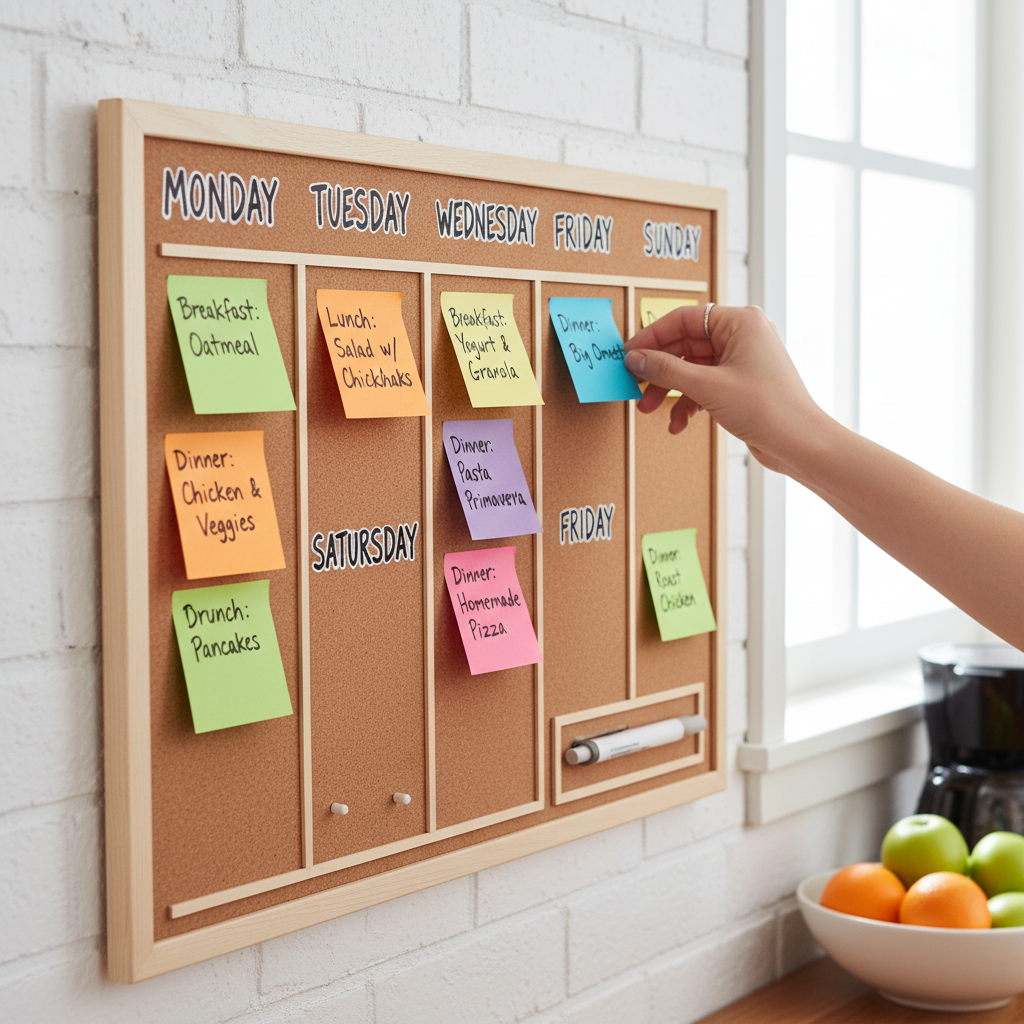
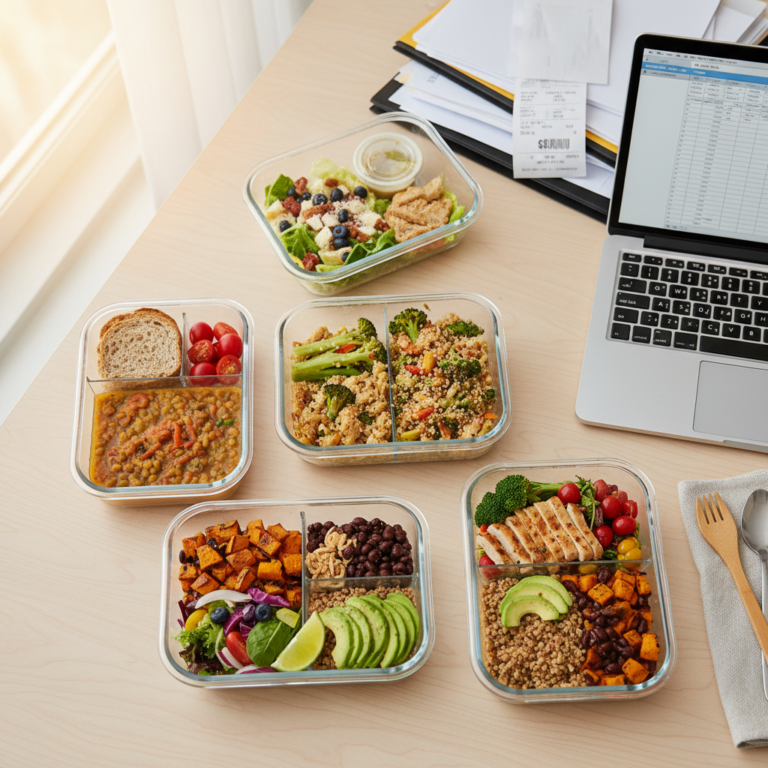
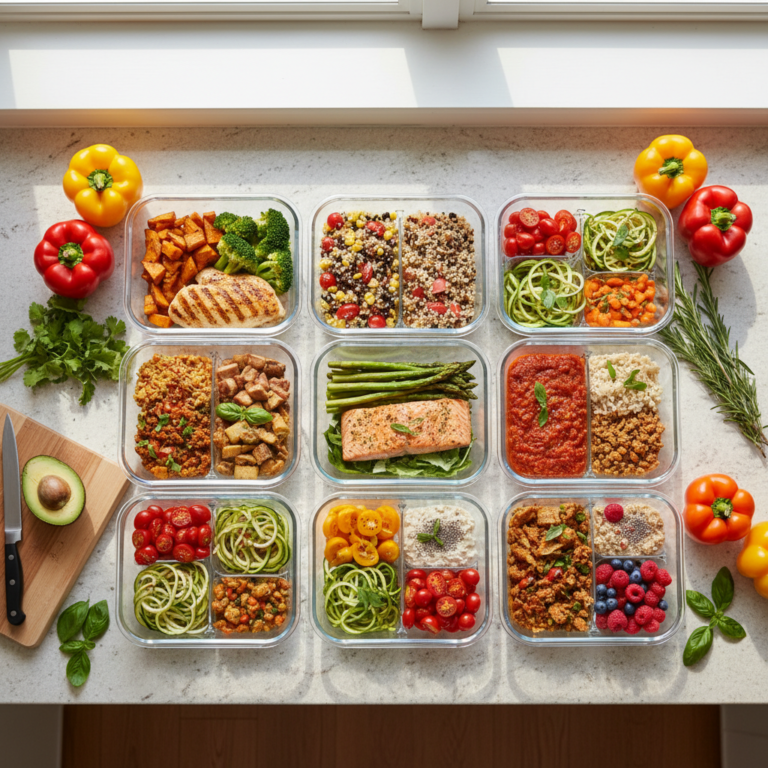
Having the ingredients is only half the battle. A true frugal hacker knows that a plan is what separates savings from waste. Here’s how you turn that $50 haul into a full week of delicious, healthy fuel. The key is to cook once, eat twice. Leftovers aren’t lazy; they’re efficient.
Monday
- Breakfast: Oatmeal with sliced banana and a spoonful of peanut butter.
- Lunch: Leftover Baked Chicken and Roasted Sweet Potatoes from Sunday night’s prep (see tip below).
- Dinner: Large spinach salad with diced tomatoes, carrots, a hard-boiled egg, and a scoop of tuna. Use olive oil and a splash of salsa as dressing.
Pro Tip: On Sunday, bake 2-3 chicken breasts and roast several sweet potatoes. This front-loads your week and makes lunch a no-brainer.
Tuesday
- Breakfast: Scrambled eggs (2) with a side of sautéed spinach and a slice of whole wheat toast.
- Lunch: Leftover spinach salad from Monday dinner.
- Dinner: Black Bean & Sweet Potato Bowls. Cube and roast a sweet potato, then mix with a can of black beans (rinsed), sautéed onions, and top with salsa and a dollop of Greek yogurt.
Wednesday
- Breakfast: Greek yogurt with sliced banana.
- Lunch: Leftover Black Bean & Sweet Potato Bowl.
- Dinner: Simple Chicken and Rice. Use one of your pre-cooked chicken breasts, shredded, over a bed of brown rice. Sauté some onions and spinach to mix in.
Thursday
- Breakfast: Oatmeal with a spoonful of peanut butter.
- Lunch: Tuna salad (tuna mixed with Greek yogurt instead of mayo) on whole wheat bread with carrot sticks.
- Dinner: Big Omelet. Whisk 3 eggs with chopped onion, tomato, and spinach. Serve with a slice of toast with avocado.
Friday
- Breakfast: Greek yogurt with sliced banana.
- Lunch: Leftover Chicken and Rice from Wednesday dinner.
- Dinner: ‘Deconstructed’ Avocado Toast. Two slices of whole wheat toast, each topped with half a mashed avocado, a sprinkle of salt/pepper, and a side of sliced tomatoes. Simple, fast, and satisfying.
Saturday
- Breakfast: Scrambled eggs with a side of sautéed spinach.
- Lunch: Use up leftovers! Make a ‘kitchen sink’ bowl with any remaining rice, beans, chicken, and veggies.
- Dinner: Healthy Chicken Tacos. Shred your last chicken breast. Serve in lettuce cups (or on a bed of spinach) with black beans, salsa, and diced avocado.
Sunday
- Breakfast: Oatmeal with peanut butter and banana.
- Lunch: Leftover chicken taco salad.
- Dinner: Prep day! Bake your chicken and sweet potatoes for the week ahead. Make a simple meal of one of the baked chicken breasts with a side of steamed carrots.
Level Up: Pro Hacks to Maximize Your Aldi Haul
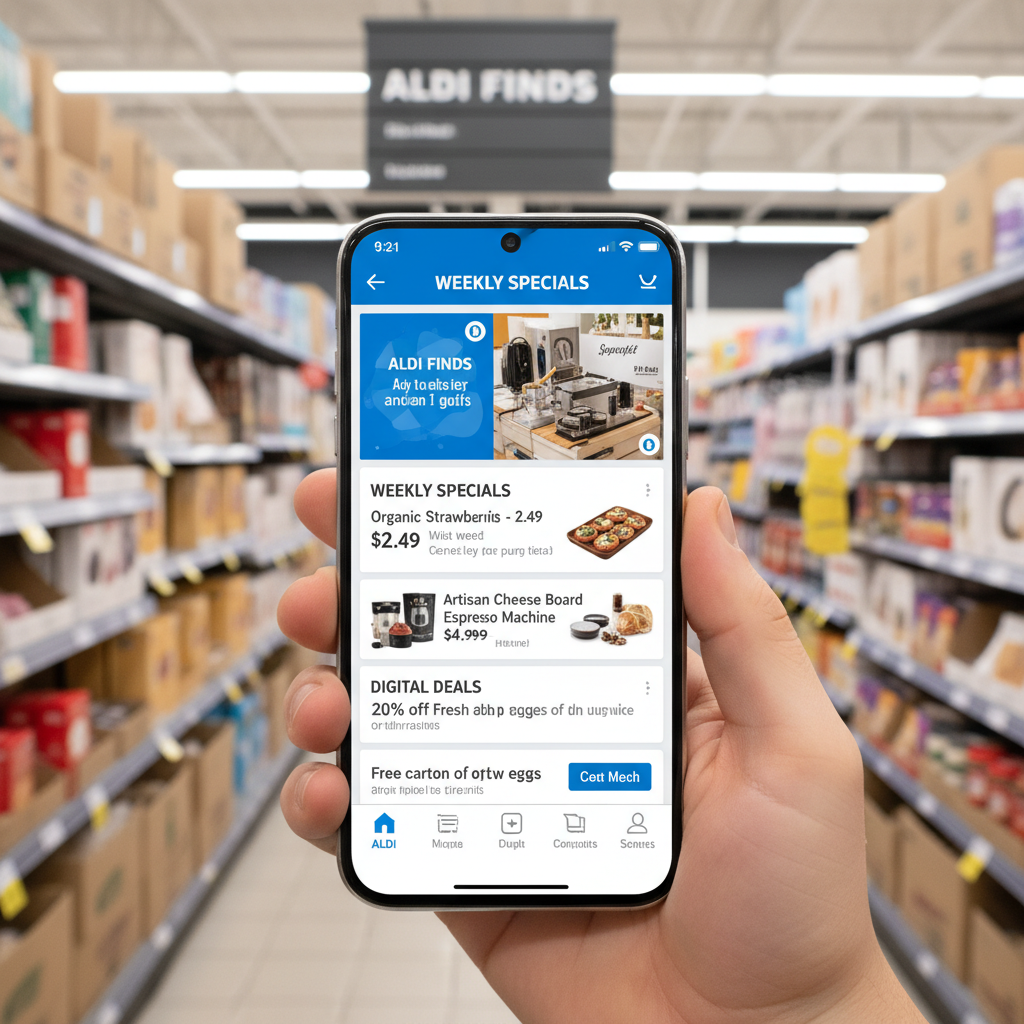
The list and the meal plan are your foundation. Now it’s time for the pro moves that will help you squeeze every last drop of value out of your Aldi trip.
Master the Middle Aisle
The ‘Aldi Finds’ aisle is a treasure hunt. This is where they put seasonal items, home goods, and specialty foods that are only available for a limited time. While it can be tempting to impulse buy, a smart shopper scans it for legitimate deals on pantry items or cooking tools that can save money in the long run. Just have a purpose; don’t get distracted by the shiny objects.
Use the App and Weekly Ad
Amateurs walk in blind. Pros check the weekly ad online or on the Aldi app before they even leave the house. See what produce is on special and be prepared to make a strategic swap. If bell peppers are cheaper than tomatoes this week, adjust your meal plan on the fly. This is next-level frugality.
The ‘Twice as Nice’ Guarantee
Aldi has one of the best return policies in the game. If you don’t like one of their products, they’ll not only replace it but also give you your money back. This means you can try a new product with zero risk. Don’t be afraid to branch out and test their private label versions of your favorite foods. You’ll likely find a new staple at half the price.
Shop the Seasons
This applies everywhere, but it’s especially powerful at Aldi. Their produce prices are already low, but when you buy what’s in season, they become ridiculously cheap. Build your meal plan around seasonal stars like berries in the summer or squash in the fall to slash your bill even further.
The Bottom Line: The Cold, Hard Cash You’re Saving
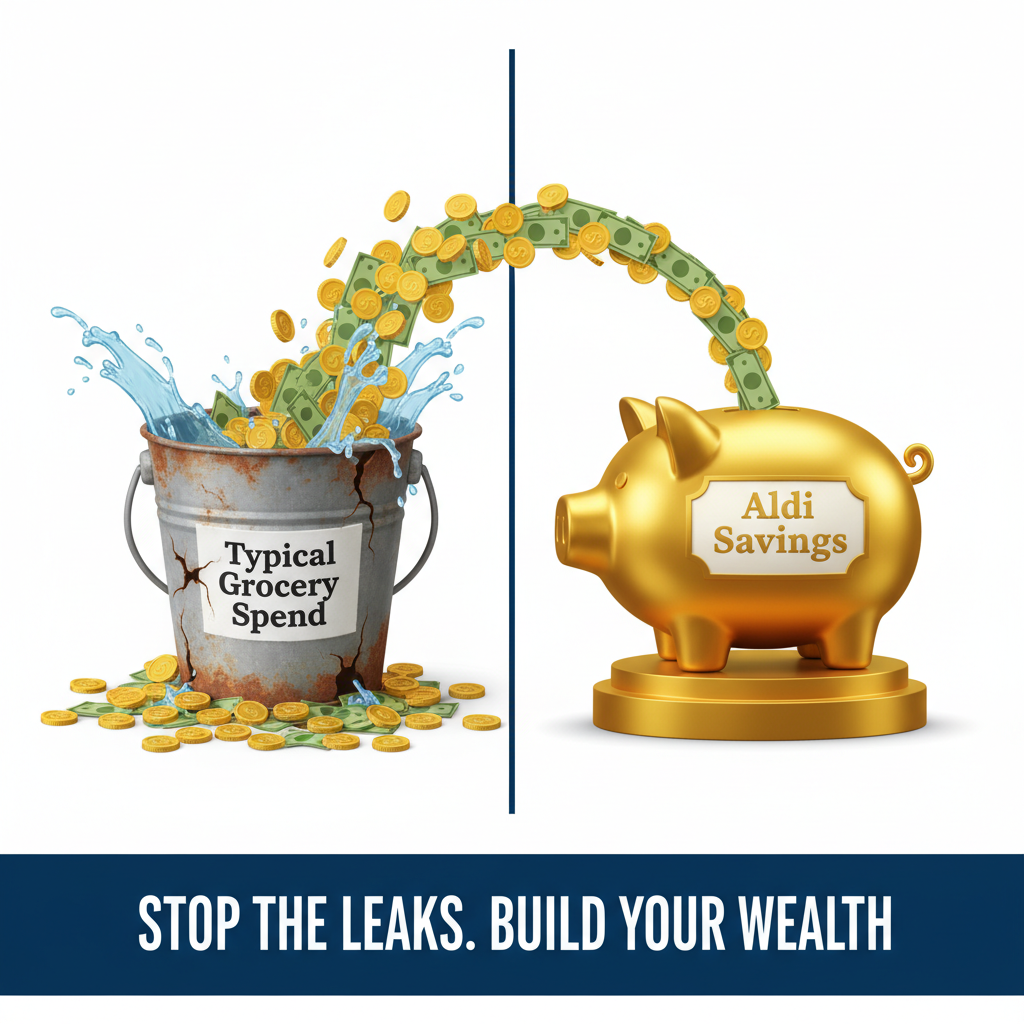
This all sounds great, but let’s talk numbers. The real, take-it-to-the-bank numbers. A plan is useless if it doesn’t have a measurable impact on your bottom line. Sticking to this $50 weekly budget isn’t just a cute challenge; it’s a serious financial strategy.
The average American spends significantly more on groceries per week, often without a plan, leading to food waste and budget bloat. Let’s see how your new hacker mindset stacks up.
| Metric | Average Shopper (per person) | The Aldi $50 Plan | Your Savings |
|---|---|---|---|
| Weekly Spend | $95 – $110 | $50 | $45 – $60 / Week |
| Monthly Spend | $380 – $440 | $200 | $180 – $240 / Month |
| Annual Spend | $4,560 – $5,280 | $2,400 | $2,160 – $2,880 / Year |
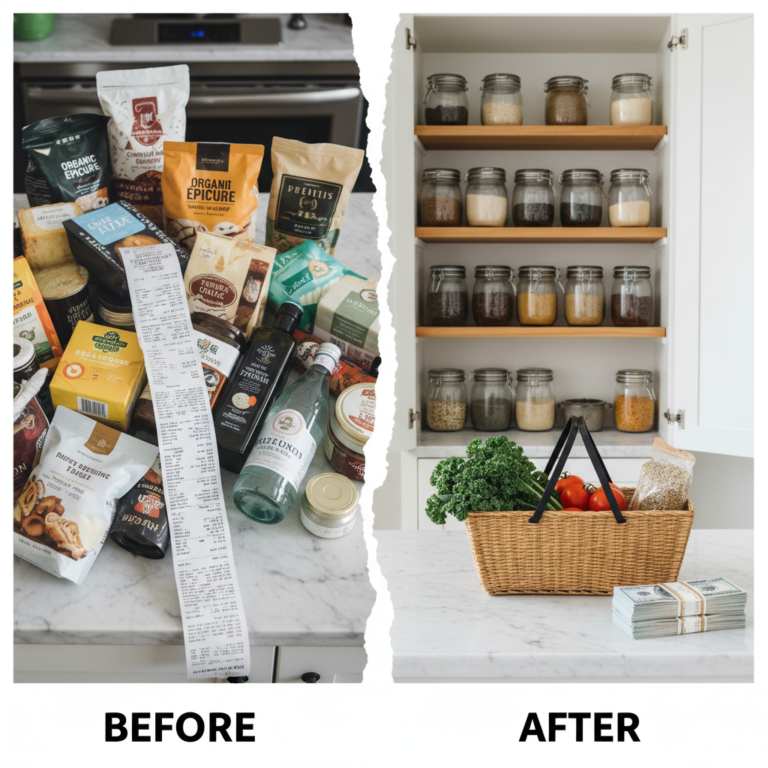
Look at that last row. By implementing this one simple system, you are putting over $2,000 back into your pocket every single year. That’s not pocket change. That’s money you can use to pay off debt, invest in your side hustle, or build up your emergency fund. This isn’t about deprivation; it’s about reallocation. You’re taking money that was being wasted and giving it a new, more powerful job. That’s how you build wealth.
Conclusion
There you have it. The myth that healthy eating is expensive is officially busted. With the right strategy, the right store, and the right mindset, you can fuel your body and your goals for just $50 a week. This isn’t about cutting corners; it’s about being smarter than the system designed to take your money.
You now have the list, the meal plan, and the pro-level hacks. The only thing left to do is execute. Take this plan, walk into Aldi with confidence, and reclaim control over your food budget. You work too hard for your money to just give it away. Now go get it.