
Protect Your Money: The Digital Detox Checklist Every Adult Needs Immediately
Listen up. Your phone, your laptop, your tablet—they’re not just tools anymore. They’re battlegrounds. Every notification, every targeted ad, every influencer post is a calculated attack on your focus and, more importantly, your wallet. You’re in a constant war for your own money, and you’re losing battles you don’t even know you’re fighting. We’re told a ‘digital detox’ is for mental clarity, but that’s only half the story. The real hustle is a financial one. It’s about unplugging the constant, invisible drain on your bank account that Big Tech has perfected. This isn’t about becoming a hermit; it’s about becoming a soldier. This is your checklist to take back control, plug the leaks, and fortify your finances against the digital noise designed to keep you broke. Let’s get smart and protect your money.
The Hidden Leaks: How Your Digital Life is Draining Your Bank Account
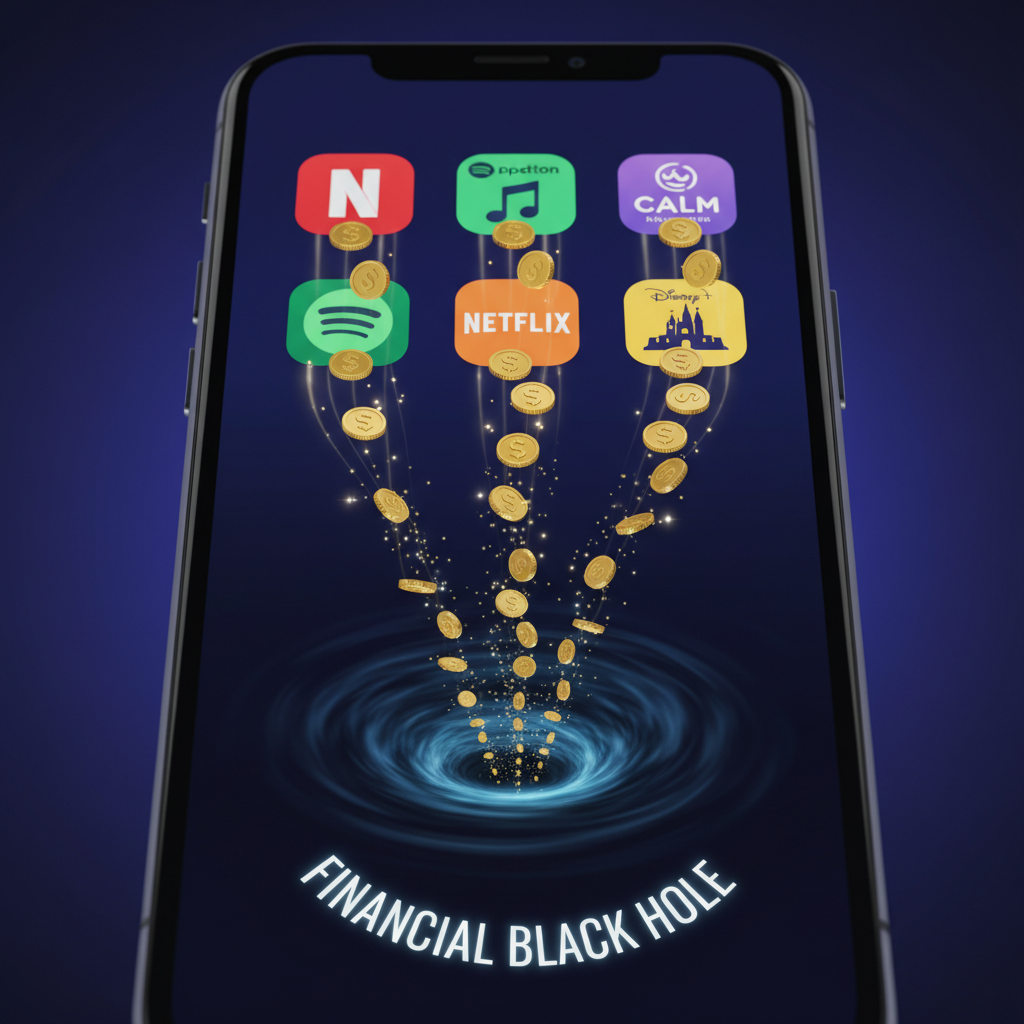
You think you’re in control of your spending, but the digital world is designed to make you slip. It’s a system of a thousand tiny cuts that bleed your budget dry. You’re not just paying for your internet; you’re paying for the ‘privilege’ of being constantly marketed to, manipulated, and nudged into spending money you never intended to.
The Subscription Creep
Remember that free trial you signed up for six months ago? It doesn’t remember you, but it sure remembers your credit card number. These auto-renewing subscriptions are the silent killers of a tight budget. That $9.99/month streaming service you never watch is $119.88 a year. The $14.99/month fitness app you opened twice is $179.88 a year. Find just three of these forgotten subscriptions, and you’ve just handed over nearly $500 for nothing. That’s money that could have paid off debt, funded a side hustle, or just been sitting in your emergency fund.
Impulse Buys Fueled by Algorithms
Social media isn’t free. You pay with your data. Every like, every search, every video you watch trains an algorithm to become the world’s most effective salesperson, tailored specifically to your weaknesses. It knows you’re stressed, so it shows you an ad for a ‘calming’ weighted blanket. It knows you’re feeling insecure, so it pushes a ‘miracle’ skincare product. These aren’t random ads; they are precision-guided financial missiles. That one-click checkout is the trigger. Resisting this constant, personalized temptation is exhausting, and giving in just once or twice a month can easily cost you an extra $100, or $1,200 a year.
The High Cost of Comparison
Your feed is a highlight reel of everyone else’s spending. Lavish vacations, new gadgets, designer clothes, perfect homes. This curated reality creates a powerful pressure to keep up, a phenomenon known as ‘lifestyle inflation’. You start believing you *need* what they have, leading to purchases driven by envy, not necessity. This is the most insidious leak of all because it doesn’t just cost you money; it messes with your values and your long-term goals. It makes you feel poor even when you’re not, pushing you towards debt to project an image that isn’t real.
Your Pre-Detox Audit: Find the Financial Black Holes

Alright, it’s time to go on the offensive. Before you can fix the leaks, you have to find them. This isn’t about guilt; it’s about gathering intelligence. You are now a forensic accountant for your own life. Get ready to uncover the truth about where your money is really going. Grab your bank and credit card statements from the last three months. We’re going in.
- Print and Highlight: Don’t just scan it on a screen. Print out your statements. Get a highlighter and mark every single recurring charge. Netflix, Spotify, Amazon Prime, that weird monthly charge you don’t recognize. Everything.
- Question Every Charge: For each highlighted item, ask yourself brutally honest questions. When was the last time I used this? Does this service bring me real value, or is it just a habit? Could I get this for free or cheaper elsewhere (like using the library’s digital app instead of buying audiobooks)?
- Investigate the Unknown: See a charge you don’t recognize? Don’t just shrug. Google the company name. It’s often a subscription you forgot you signed up for under a different business name. This is how they get you.
- Check Your App Stores: Go into your Google Play or Apple App Store settings and look at your active subscriptions. You will be shocked at what you find. These are the easiest to sign up for and the easiest to forget.
- Use a Watchdog App (Carefully): Services like Rocket Money or Trim can automatically scan your accounts for recurring subscriptions. They can be a powerful tool, but read the fine print. Some take a percentage of the savings they find for you. Use them for the initial audit, then decide if you want to keep them.
Your goal here is to create a ‘kill list’ of subscriptions and services that are not serving your financial goals. This audit is your roadmap. It shows you exactly where the enemy is hiding.
The Digital Detox Checklist: 7-Day Money Protection Plan

This is your one-week boot camp to reclaim your wallet. Follow these steps, and by the end of the week, you’ll have rewired your digital habits and fortified your finances. No excuses. Let’s go.
Day 1: The Great Unsubscribe
Your inbox is a warzone of temptation. Today, you disarm it. Open your email and mercilessly unsubscribe from every single retail, brand, and marketing list. Every ‘20% Off!’ email is a trap. Use a service like Unroll.Me to bulk unsubscribe if you have to. Then, go on social media and unfollow every influencer or brand that makes you feel like you need to buy something to be happy, successful, or worthy. Curate your feed for inspiration, not for consumption.
Day 2: The App Purge
Scroll through your phone. Be honest. Delete the apps that are designed to make you spend. This means most retail apps (Amazon, Target, etc.), all food delivery apps (DoorDash, Uber Eats), and especially ‘Buy Now, Pay Later’ apps (Klarna, Afterpay). If you need to buy something, use the website. The friction of having to log in will give you a crucial moment to reconsider the purchase. Removing the app removes the impulse.
Day 3: Payment Lockdown
Convenience is the enemy of budget-conscious shopping. Go into every browser on your phone and computer (Chrome, Safari, etc.) and delete your saved credit card information. Go to your major online shopping accounts and do the same. The goal is to make spending a conscious, deliberate act. If you have to get up, find your wallet, and manually type in your 16-digit card number, you’re far less likely to complete a mindless impulse buy.
Day 4: Notification Neutralization
Push notifications are not your friends. They are interruptions designed to pull you back into a spending environment. Go into your phone’s settings and turn off notifications for every single app that isn’t essential human communication (like texts or phone calls). No social media notifications. No email notifications. No news notifications. Silence the noise so you can hear yourself think.
Day 5: Social Media Curfew
Set a hard rule: no social media or online browsing after a certain time, like 8 PM. Late-night scrolling is when your willpower is lowest and you’re most vulnerable to targeted ads and ‘doomspending’. Use your phone’s built-in screen time or digital wellbeing features to enforce this. Lock yourself out if you have to. Replace that time with reading a book, talking to a real person, or planning your next side hustle.
Day 6: The 24-Hour Rule Gauntlet
This is the ultimate impulse-buy killer. From now on, you are not allowed to buy any non-essential item online instantly. You must add it to your cart and walk away for a full 24 hours.
The 24-Hour Rule: If you see something you want to buy online, add it to the cart, close the tab, and do not think about it for 24 hours. If you still genuinely need it a day later, then you can consider the purchase. 9 times out of 10, the urge will have passed.
Day 7: Review & Replace
Look back at your week. How much less time did you spend scrolling? How many potential impulse buys did you dodge? Now, make it stick. Take one of the hobbies you’ve always wanted to try—one that doesn’t cost much money—and dedicate the time you used to spend scrolling to that. Learning a skill, exercising, or building something is a far better investment than buying something you don’t need.
Fortify Your Defenses: Scam-Proofing Your Digital Wallet

Saving money is one thing; protecting it from being stolen is another. The digital world is full of predators, and your hard-earned cash is the prize. A detox isn’t complete without building a fortress around your accounts. This is non-negotiable.
Recognize the Phishing Hook
Phishing scams are emails, texts, or messages disguised to look like they’re from a legitimate company—your bank, a delivery service, the IRS—designed to trick you into giving up your login info or personal details. Look for the red flags: a sense of urgency (‘Your account will be suspended!’), generic greetings (‘Dear Customer’), weird links, and poor grammar. Never, ever click a link in a suspicious message. Go directly to the official website yourself and log in there to check for any real issues.
Scam Warning: If an offer seems too good to be true, it is. Nobody is giving away free money, a new iPhone, or a $500 gift card for clicking a link. Your bank will never text you asking for your password or PIN. These are always scams designed to empty your account.
The Power of 2FA
Two-Factor Authentication (2FA) is your single best defense. It means that even if a scammer steals your password, they can’t get into your account without a second piece of information—usually a code sent to your phone. Go to the security settings of every important account you have (email, banking, social media) and turn on 2FA right now. Yes, it’s a minor inconvenience. It’s also the digital equivalent of a deadbolt on your front door.
Password Strategy That Actually Works
Using the same password everywhere is like using the same key for your house, your car, and your safe. It’s a disaster waiting to happen. Your passwords need to be long, complex, and unique for every site. Can’t remember them all? You don’t have to. Use a trusted password manager like Bitwarden (free) or 1Password. They create and store uncrackable passwords for you, and all you have to remember is one master password. It’s the ultimate cheat code for digital security.
The Aftermath: Staying Lean & Mean in a Digital World

You survived the 7-day detox. You’ve canceled, deleted, and fortified. Now what? The goal isn’t to live offline forever; it’s to operate online with intelligence and intention. You need a long-term strategy to maintain your new financial edge.
Create a ‘Mindful Tech’ Budget
Just like you have a food budget, you need a tech budget. This includes your essential subscriptions (maybe one streaming service, not five), your phone bill, and a small, designated fund for ‘online fun money’. By giving every dollar a job, you prevent mindless leakage. When your $20 ‘app store’ budget for the month is gone, it’s gone. This creates conscious trade-offs instead of unconscious spending.
Embrace the Ad Blocker
Install a reputable ad blocker (like uBlock Origin) on your web browsers. This is one of the most powerful money-saving tools you can have. It doesn’t just block annoying pop-ups; it blocks the entire ecosystem of targeted ads that are designed to study and exploit your behavior. If you can’t see the ad for the new sneakers, you can’t be tempted to buy them. You’re removing the temptation at its source.
The Long-Term Math
Let’s run the numbers on your new habits. By implementing the 24-hour rule, you dodge just two $40 impulse buys a month. That’s $80 saved monthly. It might not sound like a revolution, but that’s $960 in a year. In five years, that’s $4,800. Add in the $30/month you saved from canceling unused subscriptions ($360/year), and your total annual savings are over $1,300. That’s a serious chunk of change that you can now point directly at your financial goals—whether it’s building an emergency fund, investing, or launching that side hustle you’ve been dreaming about. This is how you build wealth: not through one big win, but through hundreds of smart, disciplined decisions.
Conclusion
A digital detox is more than a wellness trend; it’s a financial strategy. It’s about recognizing that your attention is a currency and your data is a commodity. For too long, you’ve been giving both away for free, and it’s been costing you real money. By completing this checklist, you’ve done more than save a few bucks. You’ve taken back power. You’ve built a firewall not just around your data, but around your financial future. Stay vigilant. Keep your digital life clean, intentional, and aligned with your goals. Stop letting algorithms dictate your budget. It’s your money, your hustle, your life. Take control, and keep it.