


Let’s be real: that utility bill hitting your inbox every month feels less like a request and more like a demand. It’s a number you’re told to pay, no questions asked. But what if that’s exactly what the power and water companies want you to think? They’re running a business, and their bottom line looks a lot better when you’re paying top dollar without a peep. They count on you being too busy or too intimidated to dig into the details.
Well, the game is changing. You’re not just a passive customer; you’re a savvy consumer who knows their money is better off in their own bank account. This isn’t about sitting in the dark or taking cold showers. This is about strategy. It’s about knowing the rules of the game better than the people who made them. We’re about to arm you with seven potent secrets—the kind of insider knowledge that can dramatically shrink your monthly bills. Get ready to take control and flip the power dynamic for good.
Secret #1: Master the Clock with Time-of-Use (TOU) Rates
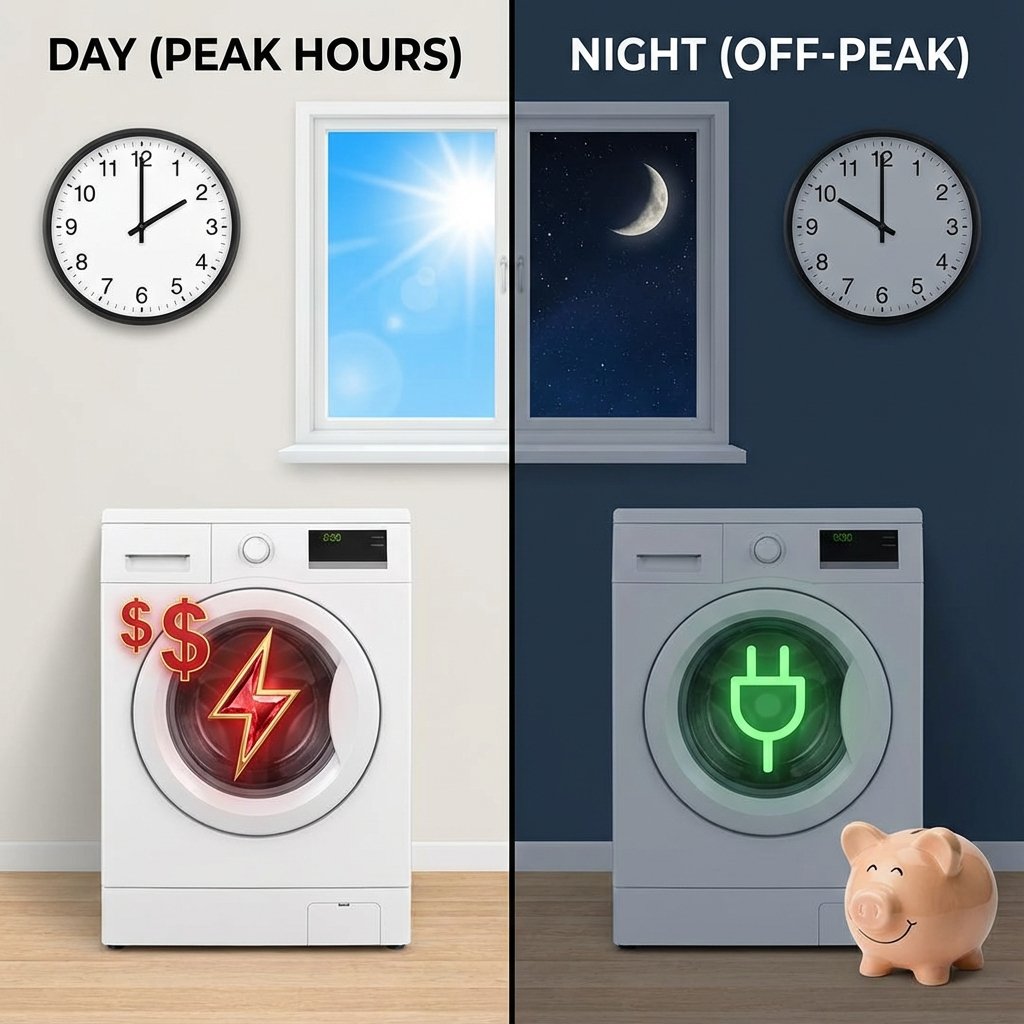
Most people are on a standard, flat-rate electricity plan. You pay the same price per kilowatt-hour (kWh) whether you’re using your AC at 2 PM on a sweltering Tuesday or running the dishwasher at 11 PM on a Saturday. Utility companies are perfectly happy with this because it’s simple and profitable. The secret? They often have alternative plans, like Time-of-Use (TOU) rates, that they don’t exactly shout about from the rooftops.
TOU plans are your golden ticket to savings if you can shift your energy consumption. Electricity costs more during ‘peak’ hours when demand is highest (usually late afternoon/early evening on weekdays) and significantly less during ‘off-peak’ hours (overnight, weekends, and holidays). By strategically timing your high-energy chores, you play the system to your advantage.
The Action Plan:
- Investigate: Call your utility company or log into your online account. Ask specifically, “Do you offer Time-of-Use or Tiered rating plans?” Get the exact peak and off-peak hours and rates in writing.
- Shift Your Chores: Make a new routine. Run your dishwasher, washing machine, and dryer late at night or first thing in the morning. If you have an electric vehicle, charge it exclusively overnight.
- Pre-Cool Your Home: During hot months, run your AC to cool the house down during the cheaper ‘shoulder’ or off-peak hours, then raise the thermostat during the expensive peak period. Your home will stay comfortable for hours.
The Math:
Let’s see how this simple shift turns into real cash. Imagine your utility’s rates are $0.25/kWh during peak hours but only $0.10/kWh during off-peak.
| Appliance | Peak Cost (5 loads/week) | Off-Peak Cost (5 loads/week) | Monthly Savings |
|---|---|---|---|
| Dishwasher (~1.5 kWh/load) | $1.88/week | $0.75/week | $4.87 |
| Dryer (~3 kWh/load) | $3.75/week | $1.50/week | $9.75 |
| Total | $22.52/month | $9.00/month | $13.52 |
Just by rescheduling two appliances, you’re saving over $13 a month. Add in other adjustments, and you could easily be looking at $30-$50 a month, which adds up to a massive $360-$600 a year. That’s a weekend trip, a significant debt payment, or a nice boost to your emergency fund—all for changing when you press a button.
Secret #2: Slay the ‘Phantom Load’ Vampires Draining Your Wallet
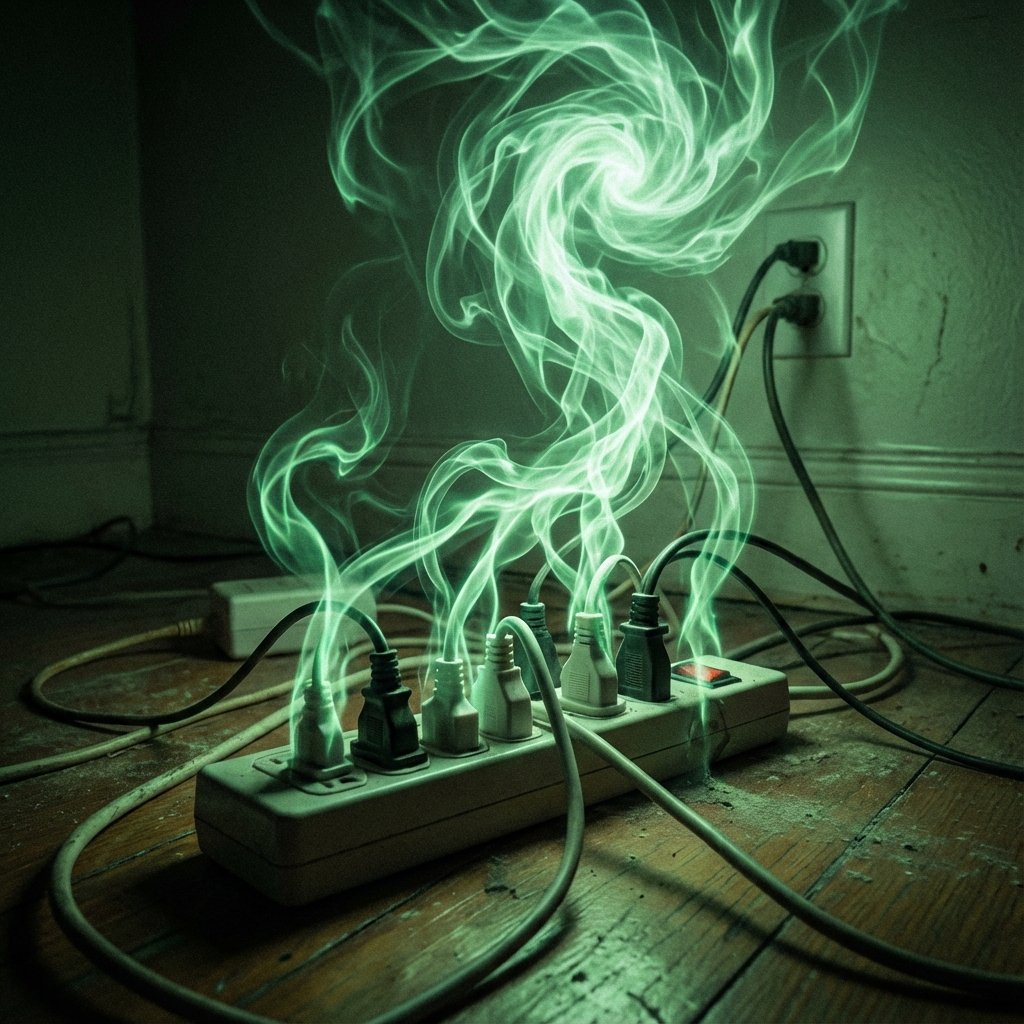
You turn off your TV, your computer, your coffee maker. They’re off, right? Wrong. Most modern electronics never truly power down. They enter a standby mode, sipping a constant stream of electricity to power things like internal clocks, remote control sensors, and network connections. This is called phantom load or vampire power, and it’s a silent killer of your budget.
Utility companies love phantom load. It’s free money for them—they get to charge you for electricity you aren’t even consciously using. A single device might not draw much, but when you add up every charger, TV, game console, and kitchen appliance in your home, it’s like leaving a 75-watt lightbulb on 24/7. You wouldn’t do that, so why let your electronics get away with it?
The Action Plan:
- Identify the Culprits: The worst offenders are devices with remote controls (TVs, stereos), instant-on features (game consoles, computers), continuous displays (clocks on microwaves), and chargers that stay plugged in (phone, laptop).
- Use Smart Power Strips: This is the ultimate weapon. A smart power strip has one ‘master’ outlet and several ‘controlled’ outlets. When you turn off the device in the master outlet (like your computer or TV), the strip automatically cuts power to all the controlled accessories (printer, speakers, game console).
- Unplug Mindfully: For things you don’t use daily, like a guest room TV or a specific kitchen gadget, just unplug it. It’s the most foolproof method.
The Math:
The U.S. Department of Energy estimates that phantom load can account for up to 10% of a household’s electricity usage. Let’s break that down. If your average monthly electric bill is $180, then a staggering $18 of that could be from devices that are supposedly ‘off’.
- Monthly waste: $18
- Annual waste: $18 x 12 = $216
A set of good smart power strips might cost you $40-$60 upfront. But with $216 in annual savings on the line, your investment pays for itself in just a few months. After that, it’s pure profit, year after year.
Secret #3: Decode the ‘Budget Billing’ Plan – Is It a Trap?

Your utility company sends you a cheerful offer for ‘Budget Billing’ or a ‘Level Payment Plan.’ The pitch is seductive: pay the same predictable amount every month, no more surprise high bills in the summer or winter! It sounds like a great way to save, but here’s the secret: it’s not a savings plan. It’s a cash flow management tool for them, and it can be a psychological trap for you.
Budget billing works by averaging your estimated annual usage into twelve equal payments. The problem? It masks your actual consumption. When you don’t see the immediate financial pain of cranking the AC, you’re less likely to be conservative with your usage. This can lead to a nasty surprise at the end of the year: the ‘true-up’ or ‘settlement’ bill. If you used more energy than they projected, you owe them the difference in one lump sum. Ouch.
The Action Plan:
- Know What It Is: Treat budget billing as a tool for predictable payments, NOT for saving money. It doesn’t reduce your bill; it just smooths it out.
- Keep Tracking: Even if you’re on a budget plan, you must continue to read your monthly statement. It will show your actual usage and how your payments are tracking against it. Don’t fly blind.
- Build Your Own Buffer: A smarter alternative is to create your own ‘budget billing’ system. Look at last year’s bills, find the average, but pay the actual amount each month. In low-usage months, take the difference and put it into a separate savings account. Use that fund to cover the higher bills in peak months. You stay in control, and you earn the interest, not them.
The Math:
Imagine your budget payment is $150/month. But over the summer, you’re actually using $220/month worth of electricity. For three months, you’ve racked up a $210 deficit ($70 x 3) that you’re not seeing. At the end of the year, that ‘true-up’ bill hits your mailbox, demanding $210 and wrecking your holiday budget. By contrast, if you consciously cut back your usage by just 10% because you’re seeing the real-time cost, you could save $22/month during those peak months, resulting in $66 of actual savings instead of a surprise debt.
Secret #4: Demand Your FREE (or Cheap) Energy Audit

Your house is leaking money. It’s seeping out of poorly sealed windows, an under-insulated attic, and inefficient old appliances. You might feel the draft, but you can’t see the full extent of the problem. Your utility company can. Many of them are required by state regulations or incentivized by the government to offer customers a professional home energy audit for free or at a steep discount.
This is one of their best-kept secrets. They’re not going to put it on a billboard because it empowers you to use less of their product. An audit is when a professional comes to your home with high-tech gear like thermal cameras and blower doors to pinpoint exactly where you’re losing energy. They give you a customized report showing you the most cost-effective fixes to make.
The Action Plan:
- Make the Call: Don’t wait for an invitation. Go to your utility’s website and search for “energy audit” or “home energy assessment.” If you can’t find it, call customer service and ask directly.
- Prepare for the Visit: Gather your last 12 months of utility bills so the auditor can see your usage patterns. Be ready to walk them through your home and talk about any problem areas (drafty rooms, high bills).
- Prioritize the Fixes: The audit report can be overwhelming. Focus on the ‘low-hanging fruit’—the fixes that offer the biggest bang for your buck. Often, this is adding attic insulation and sealing air leaks around windows, doors, and ducts.
The Math:
An energy audit is all about return on investment (ROI). Let’s look at a common scenario.
| Finding | Cost to Fix | Annual Energy Savings | Payback Period |
|---|---|---|---|
| Air Leaks Around Windows | $50 (DIY caulk/weatherstripping) | $100 – $150 | ~4 months |
| Under-Insulated Attic | $800 (Professional install) | $300 – $500 | ~2 years |
| Leaky Ductwork | $150 (DIY mastic sealant) | $200 | ~9 months |
As you can see, these fixes pay for themselves, often very quickly. After the payback period, it’s 100% pure savings that you’ll feel every single month for years to come. Getting that free audit is the catalyst for hundreds, if not thousands, of dollars in long-term savings.
Secret #5: Unlock Hidden Rebates and Incentives They Owe You
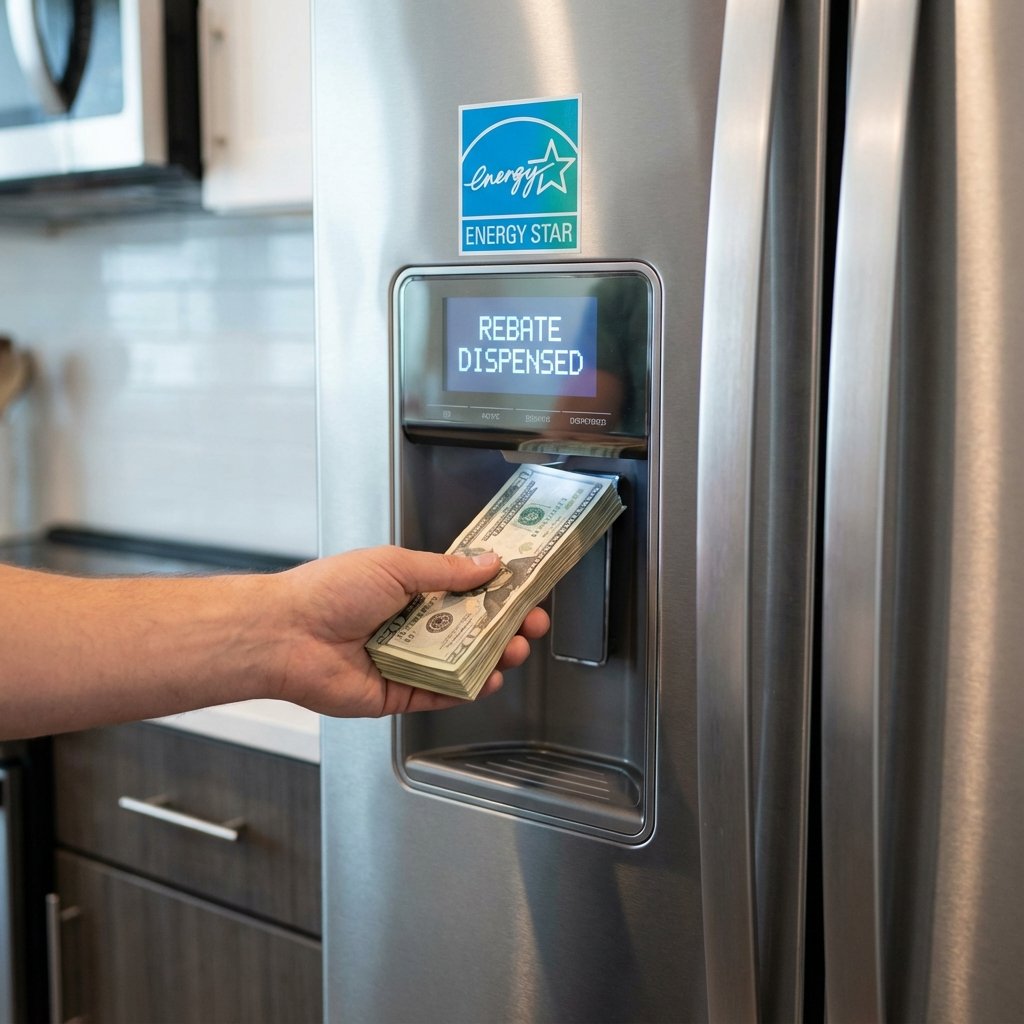
Planning on buying a new water heater, furnace, or even just a smart thermostat? Hold that credit card. Before you buy anything, you need to go on a treasure hunt. Utility companies and government agencies have mountains of cash set aside in the form of rebates, credits, and incentives to encourage you to buy energy-efficient products. But they often make you do the digging to find it.
This isn’t a random lottery; it’s a system. They get benefits for meeting energy conservation goals, so they offer you cash back to help them do it. They’re counting on you not knowing or not wanting to bother with the paperwork. That’s a costly mistake. We’re talking about instant cash back, from $50 for a smart thermostat to over $1,000 for a new HVAC system.
The Action Plan:
- Start at the Source: Before you shop, go directly to your utility company’s website. They almost always have a ‘Rebates’ or ‘Energy Savings’ section. It will list eligible products and the exact rebate amounts.
- Check the Database: Use the nationwide Energy Star Rebate Finder tool. Just enter your zip code, and it will pull up a list of offers in your area from both utilities and local governments.
- Read the Fine Print: Pay close attention to the requirements. You usually need to buy a specific model with a certain efficiency rating (like an Energy Star certified product). Make sure you get the right one.
- File Immediately: Don’t procrastinate. Fill out the rebate form and mail it in with a copy of your receipt as soon as you make the purchase. Set a calendar reminder to follow up if you don’t receive your check within the stated timeframe.
The Math:
Let’s say you need a new washing machine. Your old one is an energy hog. You’re looking at a new, efficient model for $900.
- Upfront Cost: $900
- Utility Rebate for Energy Star Model: –$125
- Local Government Incentive: –$50
- Your Actual Cost: $725
But it gets better. The new model saves you an estimated $80 per year in electricity and water costs compared to your old machine. In five years, you’ll have saved an additional $400, bringing your total effective cost down to just $325. That’s the power of ‘stacking’ your savings.
Secret #6: Navigate the Third-Party Supplier Shell Game

In many states, the energy market is ‘deregulated.’ This means the old monopoly is broken up. The company that owns the poles and wires (the ‘utility’) is separate from the company that actually generates and sells you the electricity (the ‘supplier’). The secret? You don’t have to buy your power from the utility’s default supplier. You have the right to shop around for a better deal from a third-party supplier, and the competition can save you a bundle.
Your utility company is your default provider, also known as the ‘Standard Offer Service.’ They’re easy and convenient, but rarely the cheapest. It’s like only shopping at the corner store instead of checking prices at the big supermarket down the street. However, this market can be the Wild West, filled with tricky ‘teaser’ rates and confusing contracts. You have to be street-smart to win.
The Action Plan:
- Find Your State’s Marketplace: Search for “[Your State] electric choice” or “energy supplier marketplace.” Most states have an official government-run website where you can compare the rates of all licensed suppliers.
- Look for Fixed Rates: This is the golden rule. A fixed rate locks in your price per kWh for a specific term (usually 6, 12, or 24 months). This protects you from price spikes.
- Beware the Variable Rate Trap: Many suppliers lure you in with a super-low introductory variable rate. But after a month or two, that rate can skyrocket, wiping out any savings.
Scam Warning: Never sign up with a door-to-door salesperson or a telemarketer offering a low rate without reading every single word of the contract. Look for the term length, the rate type (fixed or variable), and especially the early termination fee (ETF). A high ETF can trap you in a bad deal.
The Math:
Let’s say your default utility supplier charges a fixed rate of $0.15/kWh. You shop the marketplace and find a reputable third-party supplier offering a 12-month fixed rate of $0.12/kWh. For a family that uses 900 kWh per month:
| Supplier | Rate per kWh | Monthly Cost (900 kWh) | Annual Cost |
|---|---|---|---|
| Default Utility | $0.15 | $135 | $1,620 |
| Third-Party Choice | $0.12 | $108 | $1,296 |
By spending 30 minutes shopping online, you just saved yourself $27 a month, which comes out to $324 a year. That’s real money back in your budget for doing nothing more than making an informed choice.
Secret #7: You Can Negotiate (And Access Programs They Keep Quiet)

We’re trained to see our utility bill as an absolute, non-negotiable fact. This is the biggest secret of all: it’s not. You have more power than you think. From questioning errors to accessing unadvertised assistance programs, a single phone call can save you serious money.
Utility companies are massive bureaucracies, and they make mistakes. Billing errors happen. Furthermore, they are often mandated to provide a safety net for customers, but they don’t exactly send out flyers about it. These programs are there for people who are low-income, seniors, disabled, or just facing a temporary, unexpected hardship. You have to be your own advocate.
The Action Plan:
- Audit Your Own Bill: Don’t just look at the total. Look at the meter readings. Does your usage graph show a sudden, unexplainable spike? If something looks fishy, call them immediately and ask for a ‘billing review’ or a ‘meter check’.
- Use the Magic Words: When you call, don’t be aggressive. Be calm, firm, and inquisitive. Use a script to keep you on track.
The Script to Use: “Hi, my name is [Your Name] and my account number is [Number]. I’m calling about my most recent bill. The usage seems unusually high compared to my history, and I’d like to review it with you to check for any potential errors. While I have you on the line, I’m also actively looking for ways to manage my energy costs. Could you please tell me about any and all payment plans, level-payment options, or financial assistance programs that I might be eligible for?”
- Ask About Assistance: Specifically mention programs like LIHEAP (Low Income Home Energy Assistance Program). Many utilities also have their own private funds to help customers, often funded by small donations from other ratepayers. You won’t know unless you ask.
The Math:
The savings here can be life-changing. Finding a billing error could reverse a $150 overcharge instantly. Getting approved for a state assistance program could cap your utility bills at a certain percentage of your income, potentially saving a low-income family $50-$100 every single month. Even just getting on a deferred payment plan to handle a high winter heating bill can prevent late fees and service disconnection, saving you hundreds in penalties and reconnection charges.
Conclusion
The days of passively accepting your utility bill are over. You now have the playbook. You know that you can master the clock with Time-of-Use rates, slay phantom power, see through the budget billing trap, demand an energy audit, hunt down rebates, shop for a better supplier, and negotiate your bill. This isn’t about pinching pennies; it’s about stopping the leaks and redirecting your hard-earned money toward your own goals, not the utility company’s profit margin.
Don’t get overwhelmed. Pick one. Just one of these seven secrets. Will you spend 30 minutes this week researching TOU rates? Will you order a smart power strip tonight? Choose your first move and take action. Every dollar you save is a win, a step toward financial freedom, and proof that you are smarter than the system. Now go get your money back.


Makenzie is the founder and lead writer at MoneyHackTips.com — a personal finance blog dedicated to delivering street-smart financial wisdom for real people on real budgets. With 300+ published articles covering everything from debt management to investing fundamentals, Makenzie’s mission is to make every dollar work harder. When not writing about money hacks, Makenzie is testing frugal living strategies, optimizing side hustles, and helping readers build financial freedom from scratch.