
The ‘Lazy’ Money Method: How To Automate Your Finances In Under 1 Hour
Let’s be real. You grind hard for your cash. The last thing you want to do after a long day is sit down with a clunky spreadsheet and figure out where every single dollar went. Budgeting feels like a chore, tracking expenses is a drag, and saving money often feels like a guessing game. You end up stressed, maybe missing a bill, and wondering why your bank account isn’t growing despite all your hard work. It’s a broken system.
What if you could build a financial system that runs itself? A system that pays your bills on time, every time, funnels cash into your savings, and even invests for your future—all on autopilot. This isn’t some billionaire fantasy. This is the ‘Lazy’ Money Method, and you can set up the entire thing in less time than it takes to watch a movie. This guide is your no-fluff action plan to take back control, eliminate money stress, and put your wealth-building on cruise control. Forget the daily grind of manual money management. It’s time to get smart, get ‘lazy,’ and let the system do the work.
The Blueprint: Your ‘Lazy’ Money Flowchart
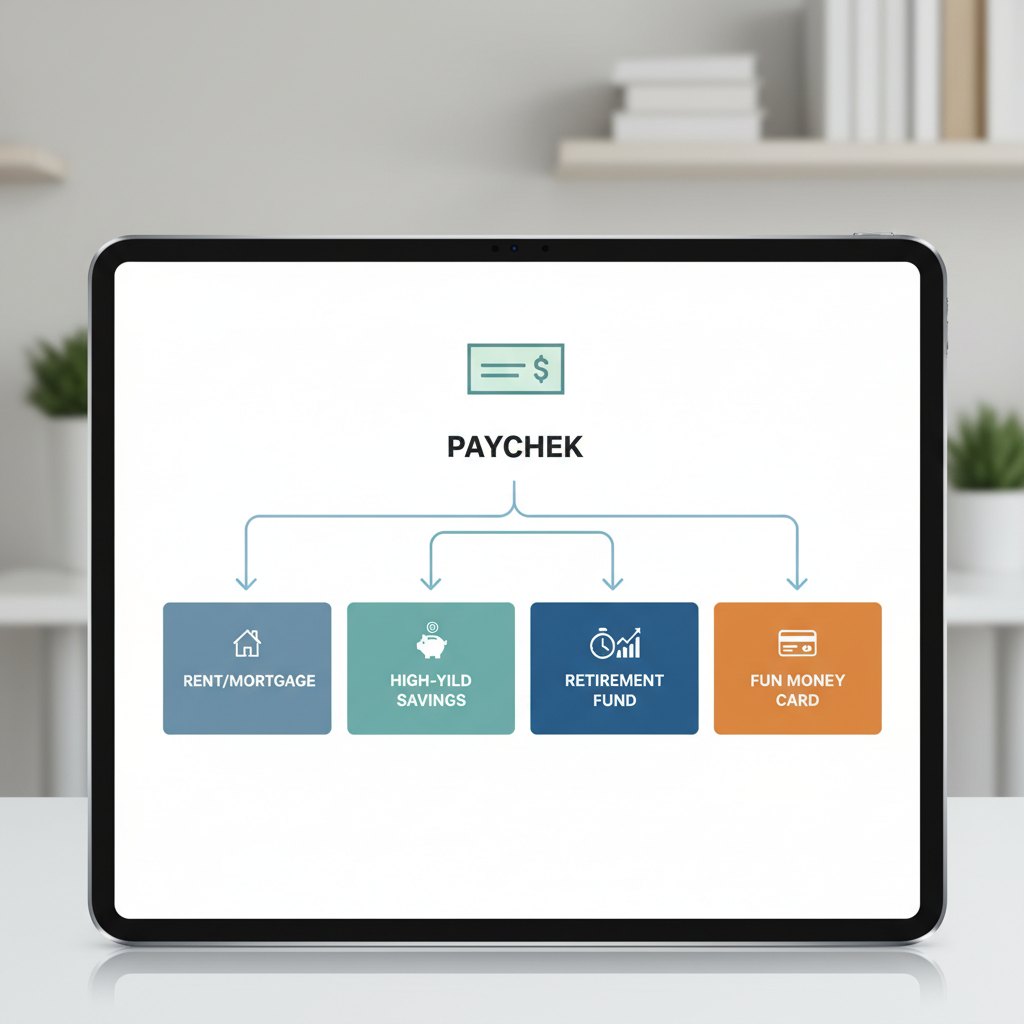
Before you touch a single button in your banking app, you need to understand the strategy. The ‘Lazy’ Money Method isn’t about complex rules or cutting out lattes. It’s about creating a simple, automated cash-flow system. Think of it like a series of waterfalls. Your paycheck is the river at the top, and it automatically flows down into different pools (your accounts) in a specific order, leaving you with a final pool of cash you can spend however you want, 100% guilt-free.
Here’s the entire strategy, broken down. Your money will follow this path automatically every single time you get paid:
- INFLOW: Your paycheck gets direct-deposited into your primary checking account. This is your central hub, your financial airport.
- OUTFLOW 1 (Bills): Key bills (rent/mortgage, utilities, car payment, insurance) are automatically paid from this hub. No more due dates to remember.
- OUTFLOW 2 (Future You): A set amount is automatically transferred to your wealth-building accounts. This includes your high-yield savings account (for emergencies), your retirement fund (like a Roth IRA), and any other investment goals. This is you paying your future self before you pay for impulse buys.
- OUTFLOW 3 (Guilt-Free Spending): Whatever is left over after bills and savings gets automatically transferred to a separate checking account with its own debit card. This is your ‘Fun Money’ or ‘Whatever-the-Hell-I-Want’ fund. When it’s gone, it’s gone until the next payday. No tracking, no guilt.
This system works because it removes the single biggest point of failure: you. By automating decisions, you eliminate willpower, forgetfulness, and the temptation to ‘just skip saving this month.’ You build a financial fortress on autopilot.
The 60-Minute Setup: Your Step-by-Step Action Plan
Alright, theory’s over. It’s time to execute. Block out an hour, grab your laptop, and let’s build your money machine. No excuses. This one hour of focused work will save you hundreds of hours and thousands of dollars down the line.
Step 1: The Tool Rollout (15 Mins)
First, get your ducks in a row. You’re going to need your login info for all your financial accounts. Open a few tabs in your browser:
- Your Primary Checking Account: Where your paycheck lands.
- Your High-Yield Savings Account (HYSA): If you don’t have one, open one NOW. Seriously. They pay 10x more interest than a traditional savings account. Online banks like Ally, Marcus, or Capital One 360 are great options. This is for your emergency fund.
- Your Bill Accounts: Your electric company, cell phone provider, credit card portals, etc.
- Your ‘Fun Money’ Account: This can be a second, no-fee checking account (many online banks offer them) or even a service like Chime or a reloadable debit card. The key is that it’s separate from your main bill-paying account.
Step 2: The ‘Pay Yourself First’ Heist (20 Mins)
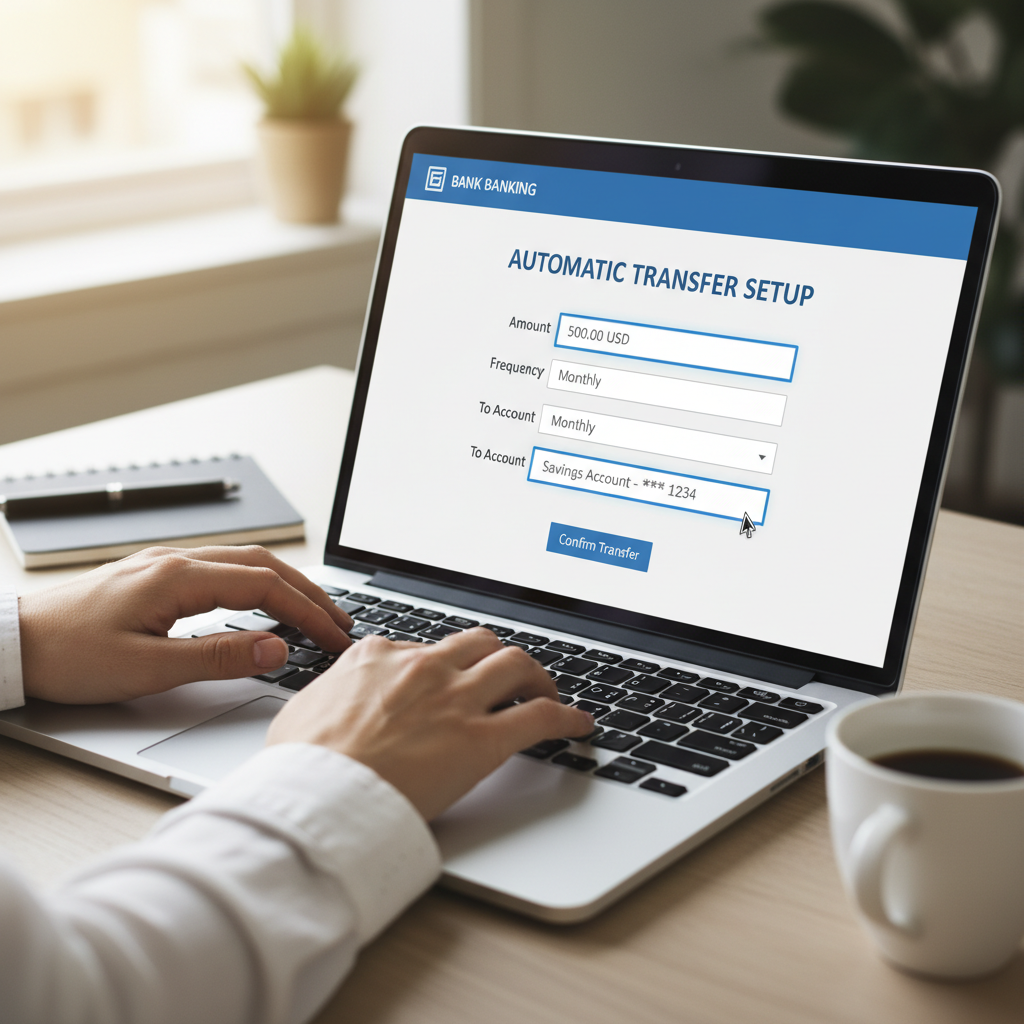
This is the most important step. Log into your primary checking account and navigate to ‘Transfers’ or ‘Payments.’ You’re going to set up recurring automatic transfers to your savings and investment accounts. Schedule these to happen the day after your paycheck hits.
Don’t know how much? Start small. The key is consistency. Even $50 a paycheck makes a massive difference over time because you’re building the habit. Once you set it, you’ll be shocked how quickly you adjust to living without it. Look at how this ‘lazy’ move stacks up:
| Weekly Automated Transfer | Annual Savings (Before Interest) |
|---|---|
| $25 (a few coffees) | $1,300 |
| $50 (one dinner out) | $2,600 |
| $100 (a week of groceries) | $5,200 |
| $250 (a car payment) | $13,000 |
Step 3: Taming the Bill Monster (15 Mins)
Now, log into each of your essential service providers—utilities, cell phone, internet, car insurance, credit cards. Find the ‘Auto-Pay’ or ‘Automatic Payments’ section and link it to your primary checking account. Schedule the payment to happen a few days before the due date.
Scam Warning: Auto-pay is your friend, but not your boss. Set a calendar reminder for the first of every month to spend 5 minutes scanning your bank and credit card statements. This helps you catch fraudulent charges, unexpected subscription hikes (hello, ‘shrinkflation’), and ensures your auto-pays are working correctly without overdrafting. Don’t set it and forget it completely.
Step 4: The ‘Fun Money’ Airlift (10 Mins)
The final piece of the puzzle. Calculate what’s left in your primary checking account after your automated savings and automated bills are accounted for. This remaining amount is your discretionary spending money. Set up one last recurring transfer to move this amount from your primary hub to your separate ‘Fun Money’ account a day or two after your paycheck hits. This is the only account you’ll use for daily coffees, lunches, shopping, and entertainment. When the money’s gone, you stop spending. Simple as that. You’ve pre-paid your bills and savings, so everything in this account is yours to enjoy without an ounce of guilt.
The Math: Why This ‘Lazy’ Method Makes You Rich

This might feel like just shuffling money around, but you’re actually implementing one of the most powerful wealth-building strategies on the planet: consistency and compounding. Doing the work once—during this one-hour setup—pays dividends for decades. Humans are wired for instant gratification. We’re terrible at making small, consistent sacrifices for a huge future payoff. This system hacks our own psychology.
Let’s talk numbers. Imagine you’re 25 and you set up an automatic transfer of just $300 a month (about $70 a week) into a simple, low-cost S&P 500 index fund inside a Roth IRA. You don’t touch it. You don’t time the market. You just let the automation do its thing.
| Age | Total Contributed | Potential Account Value (at 8% avg. return) |
|---|---|---|
| 35 (after 10 years) | $36,000 | ~$54,000 |
| 45 (after 20 years) | $72,000 | ~$175,000 |
| 55 (after 30 years) | $108,000 | ~$440,000 |
| 65 (after 40 years) | $144,000 | ~$1,000,000+ |
Look at that last row. You put in $144,000 over 40 years, but your money worked so hard for you that it generated over $850,000 on its own. That’s the power of setting up a system and letting it run. The person who tries to ‘time the market’ or only saves ‘when they have extra’ will almost never beat the person with a boring, automated system. Your consistency is your superpower.
Advanced ‘Lazy’ Hacks: Level Up Your Automation
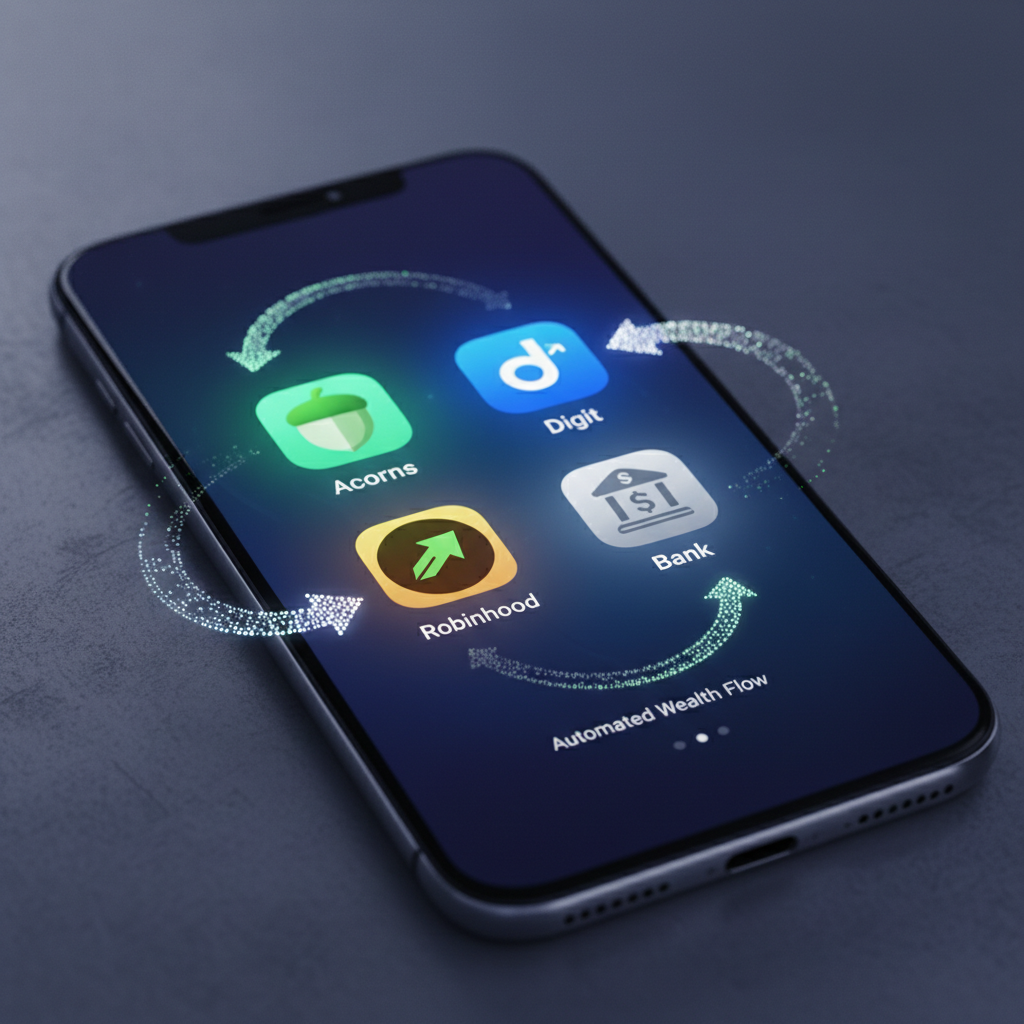
Once you’ve mastered the basic setup, you can add layers to your automation machine to make it even more powerful. These are the pro-level moves that take your finances from stable to unstoppable.
- Automate Your Raises: The next time you get a raise or a bonus, don’t let lifestyle creep eat it all up. Immediately go into your automatic transfer settings and increase your savings/investment amount by 50% of your raise. If you get a $200 monthly raise, bump your automatic savings by $100. You’ll never even miss the money.
- Use ‘Round-Up’ Apps: Services like Acorns and Digit connect to your debit card and automatically round up your purchases to the nearest dollar, investing the spare change. Buying a coffee for $3.50? The app will pull $0.50 and invest it for you. It’s micro-investing on autopilot and it adds up fast.
- Automate Your Credit Card Payoffs: If you have credit card debt, set up automatic payments for more than the minimum. Even an extra $25 or $50 per month, automated, can shave years and hundreds (or thousands) of dollars in interest off your debt. Treat debt payoff like a bill and automate it.
- The 401(k) Match is Free Money: If your employer offers a 401(k) match, contributing enough to get the full match is the single best return on investment you will ever get. It’s an instant 50% or 100% return. This is the ultimate lazy money move because it comes directly out of your paycheck before you can even touch it. Set it up with HR and never think about it again.
Each of these hacks is another small, automated leak you’re patching in your financial bucket. Individually they seem small, but together they create a watertight system for building wealth effortlessly.
Conclusion
There you have it. The ‘Lazy’ Money Method isn’t about being lazy at all—it’s about being incredibly smart with your time and energy. It’s about building a robust system that handles the boring, repetitive, and emotionally-draining parts of money management for you. In one hour, you can create a financial assembly line that pays your bills, builds your savings, and grows your investments without your daily intervention.
You’ve traded a lifetime of financial anxiety for one hour of focused work. You’ve made your money your employee, not your master. This is the foundation of financial freedom. It’s not about deprivation or complex charts; it’s about automation. Now, go enjoy the peace of mind and the extra time you just bought yourself. You’ve earned it.
Disclaimer: I am not a financial advisor. This content is for informational and educational purposes only. Please consult with a licensed financial professional before making any investment decisions.