Don’t Toss Old Jeans: 5 Ways to Flip Denim for Cash on Etsy
Look in your closet. Go ahead, I’ll wait. See that stack of old jeans? The ones that don’t fit anymore, are out of style, or have a rip in the wrong place. You see clutter. I see a goldmine. Every single pair of those jeans is a potential product, a future sale, and cash in your pocket. We’re not talking about pennies, either. We’re talking about building a real, sustainable side hustle on a platform crawling with buyers hungry for unique, handcrafted goods: Etsy.
Forget thinking you need to be a master tailor or a fashion school grad. The beauty of flipping denim is its accessibility. If you can use a pair of scissors, you can make money. This isn’t some pie-in-the-sky dream; it’s a practical, street-smart way to turn trash into treasure. The world is obsessed with sustainability, vintage vibes, and one-of-a-kind pieces. Upcycled denim hits all three. In this guide, we’re breaking down the entire playbook. We’ll cover where to source your material (for free!), five concrete ‘flip’ methods you can start tonight, how to dominate the Etsy marketplace, and the real numbers behind what you can earn. So, grab that dusty stack of denim. It’s time to stop hoarding and start hacking your way to a new income stream.
The Setup: Gearing Up for Your Denim Empire
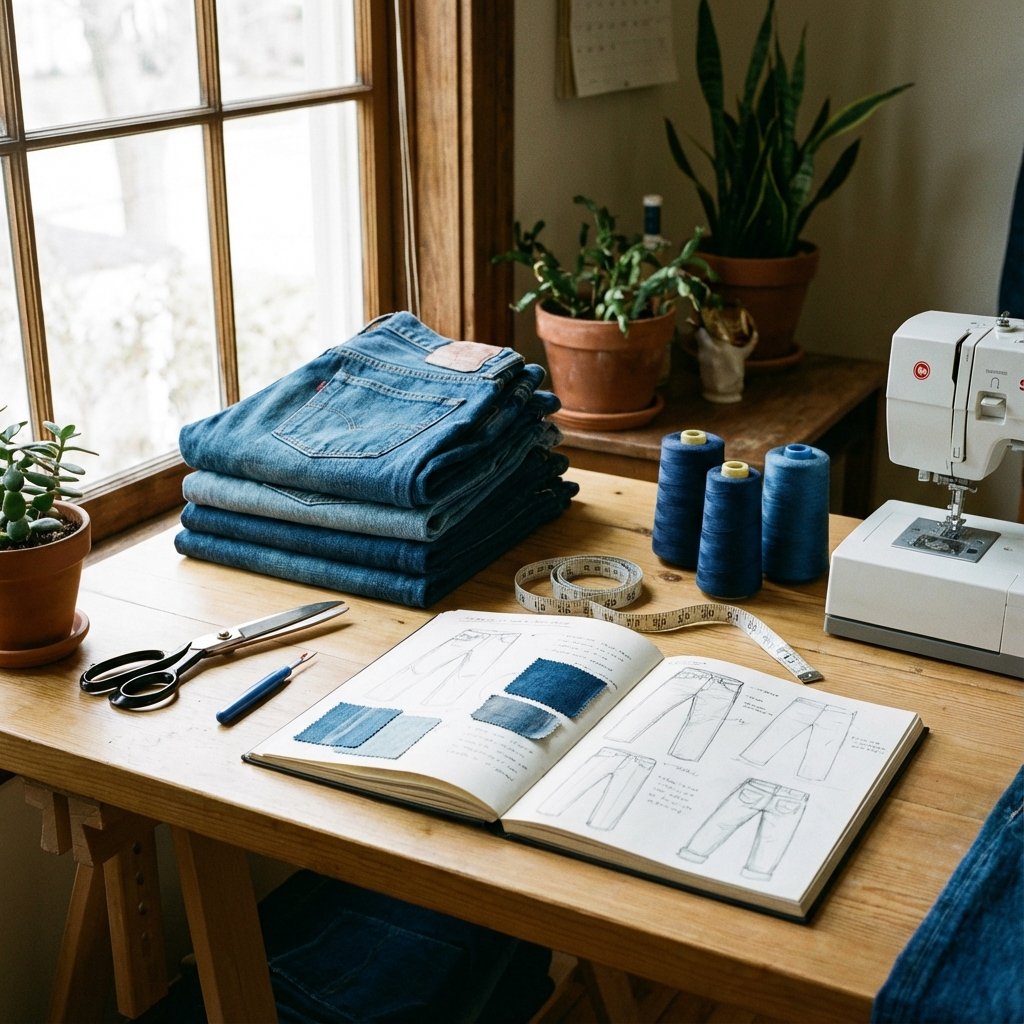
Before you can make it rain denim dollars, you need to get your workshop in order. And by ‘workshop,’ I mean a corner of your living room. Don’t get bogged down by thinking you need a professional studio. The goal here is to start lean and mean, with minimal upfront cost. Your biggest asset is the stuff you already have.
Sourcing Your Raw Materials (aka The Jeans)
Your first and best source is your own home. Raid your closet, your partner’s, your kids’. Ask your friends and family. Put a post on your local ‘Buy Nothing’ group. People are more than happy to get rid of clothes they no longer wear. You’re doing them a favor!
- Your Closet: The ultimate $0 investment.
- Friends & Family: Again, free. Offer to trade a finished product for a bag of their old jeans.
- Thrift Stores: Hit up the Goodwill Outlet or ‘the bins’ where you pay by the pound. You can get jeans for less than a dollar apiece. Look for unique washes, high-quality brands (like Levi’s or Wrangler), and interesting wear patterns.
- Garage Sales: End-of-day deals are your best friend. Offer to take all remaining jeans for a flat, low price.
Your Starter Tool Kit
You don’t need a fancy industrial sewing machine. Start with the basics and upgrade only when your profits can pay for it.
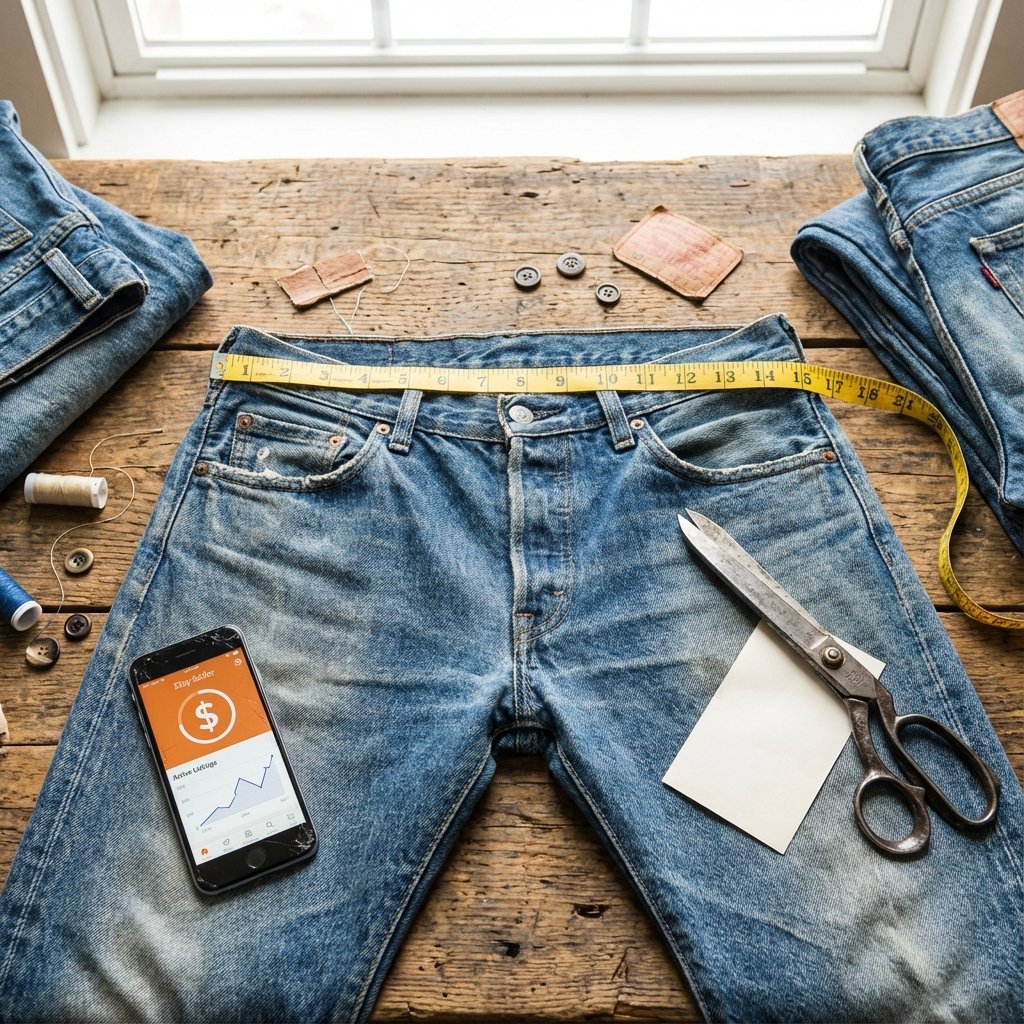
- Good Fabric Scissors: Don’t use your kitchen scissors. A sharp pair of fabric shears will give you clean cuts and save you a world of frustration. This is your most important tool.
- Measuring Tape: Essential for creating accurate listings and consistent products like cut-offs.
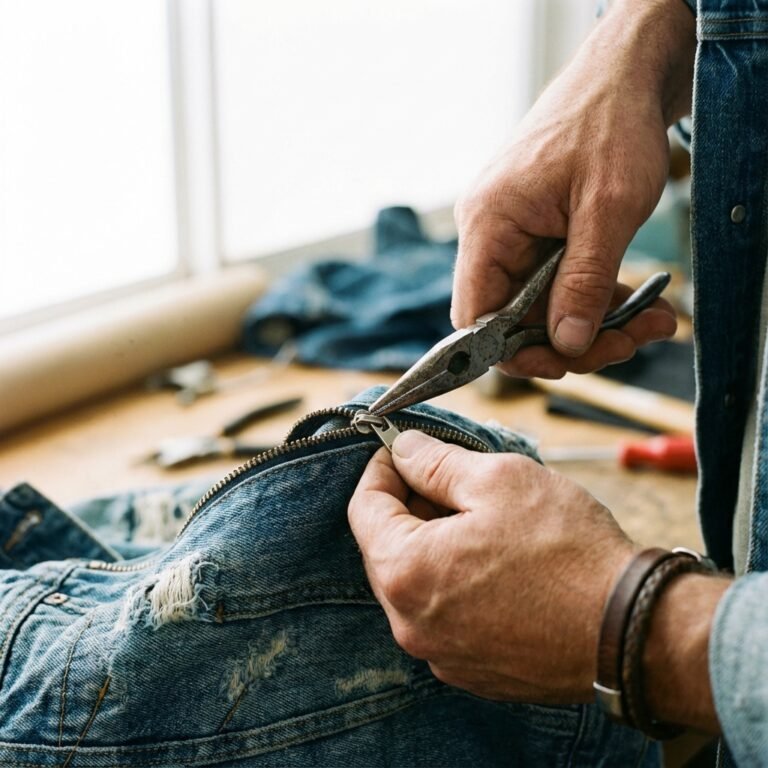
- Seam Ripper: Your best friend for deconstructing jeans to salvage pockets, zippers, and large panels of fabric.
- Optional Upgrades: A basic sewing machine (a simple Singer or Brother model is fine), an iron, and some heavy-duty needles. But for many flips, you won’t even need these.
Setting Up Your Etsy Shop
This is your digital storefront. Make it look good, but don’t overthink it. Getting it open is more important than making it perfect.
- Shop Name: Pick something catchy that relates to denim, upcycling, or your personal brand. Check if it’s available on Etsy and social media.
- Banner & Logo: You can create these for free using a tool like Canva. Keep it clean and simple.
- Fill Out Your Policies: Be clear about shipping times, returns (or no returns for custom items), and how you handle things. This protects you and builds trust with buyers.
- Your First Listings: Etsy charges $0.20 per listing. Your goal is to get your first 5-10 products made and listed so buyers have something to see.
That’s it. Your initial investment can be under $20 if you source jeans for free and just buy scissors. This is the definition of a low-risk, high-reward hustle.
The Five Flips: Your Blueprint to Denim Dollars
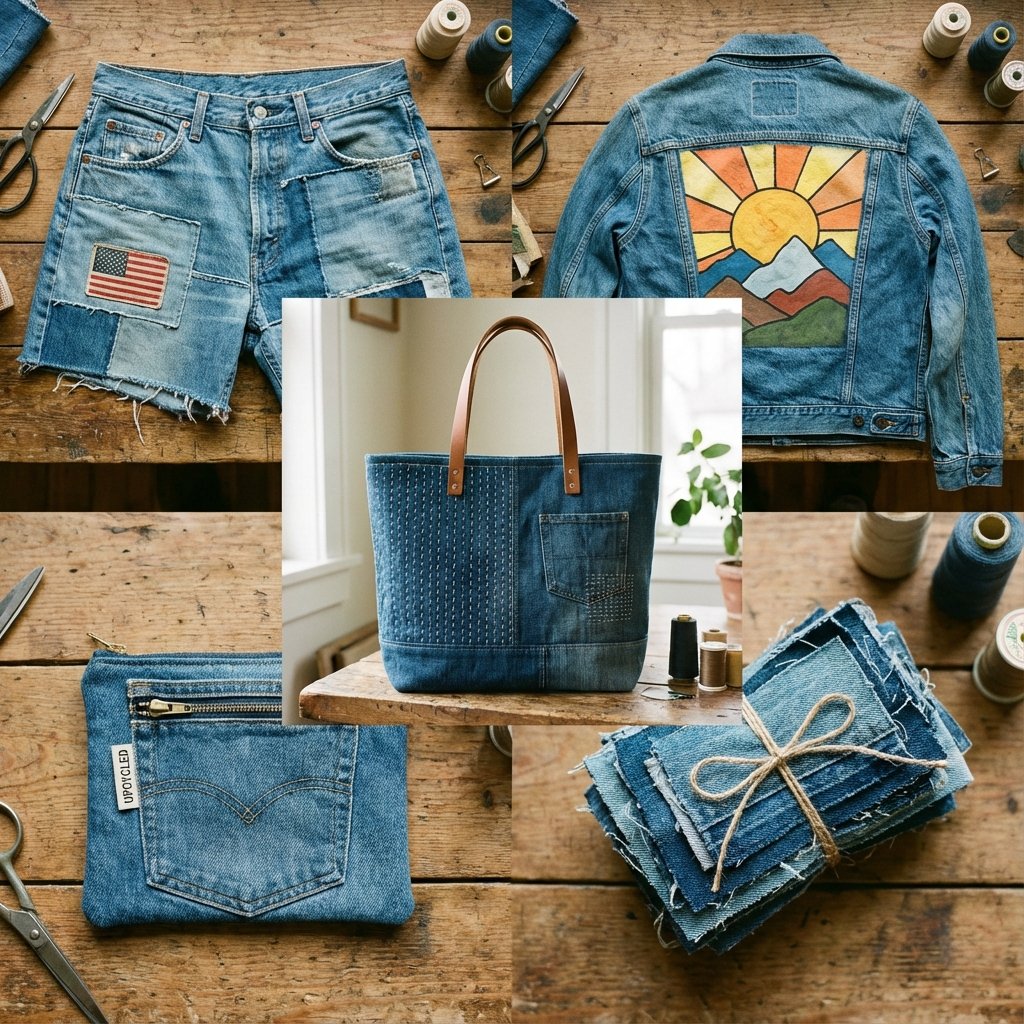
Alright, you’ve got your materials and your tools. Now for the fun part: turning those jeans into cash. Here are five proven methods, ranging from super simple to slightly more involved. Pick one that fits your skill level and start there. You can always expand your product line later.
Flip #1: The Classic Cut-Offs
This is your bread and butter. Everyone wants the perfect pair of vintage-style denim shorts, and they’ll pay good money for them. Your job is to find high-waisted, good-quality jeans (think ‘mom jeans’) and transform them.
The Hustle: Measure and cut the jeans to a popular length (usually a 2-3 inch inseam). Use a sandpaper block or a razor to create authentic-looking distress marks. Toss them in the washer and dryer to get that perfect, fluffy frayed hem. List them with precise measurements: waist, hips, and rise are non-negotiable for buyers.
Flip #2: The Patchwork Prodigy
Don’t sleep on the scraps! The sustainability and DIY movements are huge. Other crafters will pay for curated materials. This is one of the lowest-effort flips.
The Hustle: When you cut up jeans, you’ll have tons of leftover fabric. Cut these scraps into uniform sizes (e.g., 4×4 inch squares). Bundle them into curated packs based on color/wash (light wash, dark wash, black denim packs). You can also sell unique back pockets, especially from brands like Levi’s, as individual patches.
Flip #3: The Embellished Masterpiece
This is where you can let your creativity shine and command higher prices. You’re not just selling a piece of clothing; you’re selling a piece of wearable art. Target niche communities: punk, boho, streetwear, etc.
The Hustle: Add your own flair to denim jackets or jeans. This could be hand-painting a design on the back, adding metal studs and chains, or doing some simple sashiko-style embroidery. You don’t have to be an artist. You can use stencils for painting or follow simple embroidery patterns. The key is a unique, eye-catching design.
Flip #4: The Functional Flip (Bags & Accessories)
Not everyone is looking for clothes. Expand your customer base by turning denim into durable, everyday items. This is a great way to use the legs of jeans that might be stained or ripped at the top.
The Hustle: The possibilities are endless. Sew simple but sturdy tote bags, zippered pouches for makeup or pencils, drink coasters, or even durable pet toys. A simple tote bag is just a few straight lines on a sewing machine, and the perceived value is much higher than a pile of scraps.
Flip #5: The Denim Supply Shop
This is the ultimate meta-hack. Instead of just selling scraps, you become a one-stop shop for other denim flippers and crafters. This diversifies your income and requires zero creativity.
The Hustle: Deconstruct jeans and sell the components. Create listings for ‘Vintage Jean Zippers,’ ‘Assorted Denim Belt Loops,’ or ‘Metal Buttons and Rivets.’ People restoring their own jeans or working on complex projects need these specific parts and will pay for the convenience of not having to rip apart a pair of jeans themselves.
Etsy Domination: Photos, Keywords, and Pricing
Making a great product is only half the battle. If no one can find it, you won’t make a dime. Mastering the Etsy platform is how you get your denim creations in front of hungry buyers. You need to think like a marketer and a search engine.
Product Photography That Sells
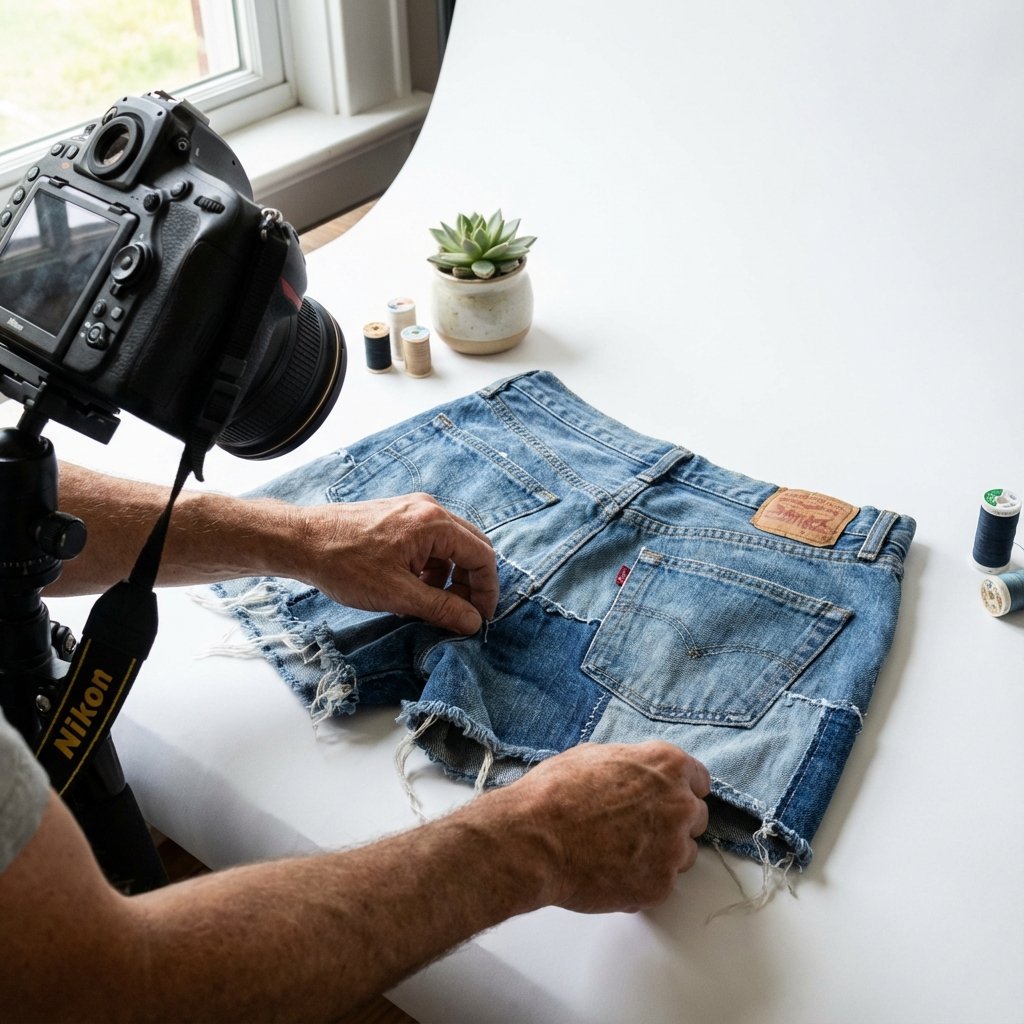
Your photos are your most powerful sales tool. People can’t touch or try on your items, so your pictures have to do all the work. You don’t need a fancy camera; your smartphone is more than enough.
- Lighting is Everything: Natural light is your best friend. Shoot near a bright window on an overcast day for soft, even light that shows true colors. Avoid harsh, direct sunlight and yellow indoor lighting.
- Clean Background: Use a simple, non-distracting background. A white poster board, a clean wood floor, or a solid-colored wall works perfectly.
- Show Every Angle: Take photos of the front, back, side, and any special details. For clothes, include a picture of the tag and a close-up of the fabric texture or distressing.
- Include Measurements: For clothing, take a photo with a measuring tape laid across the key areas (waist, inseam, rise). This answers customer questions before they even ask and reduces the chance of returns.
Keywords and SEO: How to Get Found
Etsy is a search engine. To get found, you need to use the same words your customers are using. This is called Search Engine Optimization (SEO).
- Think Like a Buyer: What would you type into the search bar? Don’t just list ‘Denim Shorts.’ Get specific: ‘High Waisted Levi’s Shorts,’ ‘Vintage Frayed Cutoffs,’ ‘Distressed Mom Jean Shorts Size 28.’
- Use All 13 Tags: Etsy gives you 13 ‘tags’ for each listing. Use every single one. Mix it up with different phrases. Think about the style (‘Boho Festival Shorts’), the material (‘Upcycled Denim’), the color (‘Light Wash Blue’), and the recipient (‘Gift for Her’).
- Write a Detailed Description: Your description is another chance to use keywords. Describe the item in detail. Repeat the most important information, like measurements. Tell a story about the piece if you can. Was it reworked from a 90s pair of jeans? Mention that!
Pricing for Profit
Don’t undervalue your time. You’re not just selling a pair of shorts; you’re selling your labor, your creativity, and your curation skills. Here’s a simple formula to get you started:
(Cost of Materials + Your Hourly Rate x Time Spent) + Etsy Fees = Your Price
Let’s break it down. If a pair of jeans cost you $1, you spent 30 minutes (let’s say your time is worth $20/hour, so that’s $10), and fees are roughly 10% (a safe estimate), your base cost is $11. To make a profit after fees, you’d need to price it around $20-$25. Adjust based on the quality and uniqueness of your item. A hand-painted jacket that took 3 hours is worth way more than a simple pair of cut-offs.
The Real Talk: Earning Potential & Pro Scripts

So, can you actually make real money doing this? Absolutely. But it’s a hustle, not a get-rich-quick scheme. Your income will depend directly on the time you put in, the quality of your work, and how well you market your products. Let’s look at some realistic numbers.
Realistic Earning Potential
This isn’t a guarantee, but it’s a realistic look at what you can earn per item after accounting for materials and fees. Your time is the biggest variable.
| Denim Flip Product | Avg. Sale Price | Est. Profit Per Item | Effort Level |
|---|---|---|---|
| Classic Cut-Off Shorts | $25 – $45 | $15 – $35 | Low |
| Curated Scrap Bundles (1 lb) | $15 – $20 | $12 – $18 | Very Low |
| Embellished/Painted Jacket | $80 – $200+ | $50 – $150+ | High |
| Simple Denim Tote Bag | $30 – $50 | $20 – $40 | Medium |
| Denim Component Pack (Zippers, etc.) | $10 – $15 | $8 – $12 | Low |
If you sell just five pairs of cut-offs and a couple of scrap bundles a week, you’re looking at an extra $100-$200 in profit. If you land a sale on a custom jacket, that’s a huge bonus. Scaling up by dedicating a few more hours a week could easily turn this into a $500+ per month side hustle.
Scripts for 5-Star Service
Great customer service leads to repeat buyers and amazing reviews. Don’t waste mental energy typing the same things over and over. Use these scripts.
The ‘Thank You For Your Order’ Script:
“Hey [Buyer’s Name]! Thanks so much for your order of the [Item Name]. I’m so excited for you to receive it! I’m planning to have it packed up and shipped out within [Your Stated Timeframe, e.g., 1-2 business days]. I’ll send you the tracking number as soon as it’s on its way. Thanks again for supporting my small shop!”
The ‘Handling a Custom Request’ Script:
“Hi [Buyer’s Name], thanks for reaching out about a custom order! I’d love to hear more about what you have in mind. To give you an accurate quote and timeline, could you tell me a bit more about [Specific questions, e.g., the size you need, the design you’re thinking of, any specific colors]? Looking forward to creating something awesome for you!”
The ‘Shipping Update’ Script:
“Good news, [Buyer’s Name]! Your order has officially shipped. You can track its journey to you here: [Tracking Number]. It should arrive within the estimated timeframe, but please let me know if you have any questions. Thanks again!”
Red Flags: Avoiding Scams and Pitfalls

Running a business, even a small side hustle, means you need to keep your head on a swivel. The Etsy platform is generally safe, but scammers and difficult situations exist everywhere. Knowing the red flags will save you time, money, and massive headaches.
The Golden Rule of Payments
This is the most important rule, so I’m putting it first. It will protect you from 99% of financial scams.
Scam Warning: NEVER, under any circumstances, agree to take a payment or conversation off of the Etsy platform. Scammers will ask you to email them or use PayPal Friends & Family, Venmo, or Zelle directly. They do this to get around Etsy’s seller protection. If you take the transaction off-site, Etsy cannot help you if something goes wrong. Keep all communication and payments within the Etsy system. No exceptions.
Common Pitfalls for New Sellers
- Copyright Infringement: It’s tempting to paint a popular cartoon character or a band logo on a jacket. Don’t do it. Using copyrighted or trademarked imagery without a license is illegal and can get your shop shut down permanently. Focus on your own original designs or generic patterns (florals, geometric shapes, etc.).
- The ‘Damaged Item’ Dispute: Always take photos of your items, especially higher-priced ones, as you’re packing them. This provides proof of the item’s condition before it shipped. While rare, some dishonest buyers will damage an item themselves to try and get a refund. Having photographic evidence helps you when you dispute their claim with Etsy.
- Ignoring Your Shop Policies: Your policies are your contract with the buyer. If you state ‘No Returns on Custom Items,’ you can refer back to that policy if a buyer wants to return a personalized jacket. Be firm but polite. Sticking to your own rules creates consistency and protects you.
- Undercharging for Shipping: This is a classic rookie mistake. Make sure you weigh your packaged items and use Etsy’s calculated shipping tool to charge the correct amount. If you just guess, you can easily end up losing your entire profit on a sale just to cover the shipping cost.
Staying vigilant doesn’t mean being paranoid. It means being a smart, prepared business owner. Focus on creating great products and providing excellent service, and you’ll build a reputation that attracts the right kind of customers.
Conclusion
That pile of denim doesn’t look like clutter anymore, does it? It’s a stack of potential. It’s the startup capital for your new side hustle. We’ve walked through the entire game plan: from sourcing your materials for next to nothing, to five concrete ways to flip them, to mastering the Etsy platform and protecting yourself like a pro. This isn’t just about making a few extra bucks. It’s about empowerment. It’s about taking something discarded and giving it new life and new value. It’s about building something from scratch with your own hands and your own hustle.
Don’t get stuck in ‘analysis paralysis.’ You don’t need to launch with 50 perfect products. Start with one flip. Make one pair of cut-offs or one tote bag. Take some pictures, write a description, and list it. Your first sale is a powerful motivator. The barrier to entry is almost zero, but the ceiling for what you can build is incredibly high. So, what are you waiting for? Grab those scissors, fire up that Etsy app, and get to flipping. Your denim empire awaits.