Transform Your Bedroom Into A Dark Academia Paradise On A Budget
You see it all over your feed: the moody lighting, the towering stacks of classic literature, the hint of tweed and old leather. The Dark Academia aesthetic calls to the intellectual and the romantic in all of us. It promises a sanctuary for thought, a cozy corner to escape the modern world. Then you click the link and see the price tag on that ‘vintage-inspired’ mahogany desk or that single brass candlestick and your wallet screams in terror. Forget that noise. This isn’t about buying a pre-packaged lifestyle from a high-end catalog. This is about being smarter than the marketers.
You can achieve that same rich, layered, and deeply personal vibe without draining your bank account. It’s about the hunt, the creativity, and the satisfaction of building something beautiful with your own hands and a street-smart strategy. We’re going to break down the exact playbook to transform your boring bedroom into a scholarly paradise. No trust fund required—just a little hustle and a willingness to see the potential where others see junk. Get ready to build the room of your dreams on a budget that’s firmly rooted in reality.
The Vibe Check: Decoding the Dark Academia DNA
Before you spend a single dime, you need to understand the mission. ‘Dark Academia’ isn’t just a look; it’s a feeling. It’s the smell of old books, the quiet scratch of a pen on paper, the warmth of a candle in a dark room. To replicate it, you need to break it down into its core components. This is your blueprint. Don’t just copy what you see; understand *why* it works, so you can recreate it with whatever you find.
The Color Palette: Moody & Muted
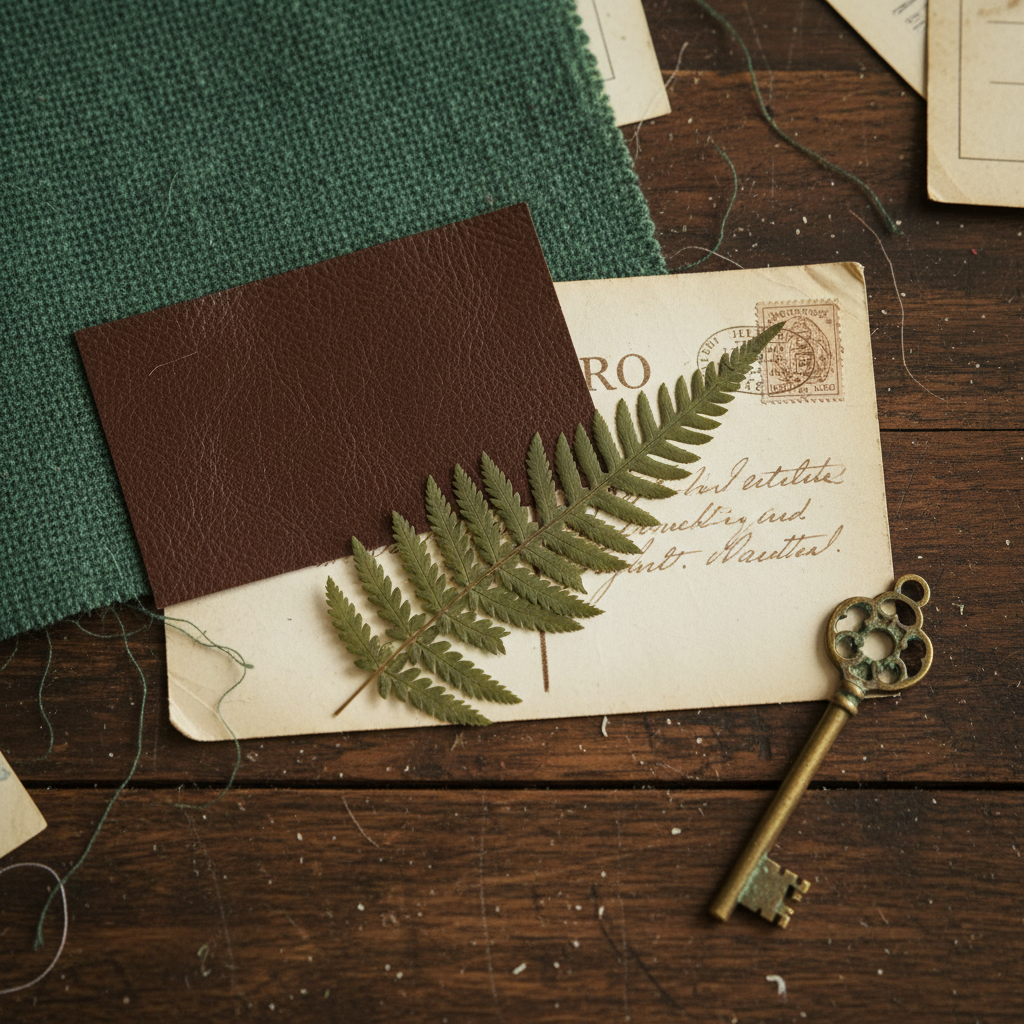
Your foundation is color. You’re aiming for a palette that feels like a centuries-old university library. Think rich, saturated, and natural tones. Ditch the bright and bubbly; we’re going for deep and contemplative.
- Deep Browns: The color of wood, leather, and coffee. This is your primary neutral.
- Forest & Olive Greens: Think old banker’s lamps and tweed jackets. It adds an earthy, natural element.
- Charcoal Gray & Black: Use these for depth and drama. A black picture frame, a charcoal-colored throw blanket.
- Burgundy & Deep Reds: The color of old velvet and wine. Use this as an accent to add a touch of passion and luxury.
- Cream & Parchment: Not stark white! You need a soft, aged off-white for contrast, like the pages of an old book.
The Textures: Layering is Law
A cheap room feels flat. An expensive-looking room has depth, and that comes from texture. You want to mix materials that feel substantial and have a story. Your goal is to create a space that makes you want to touch everything.
- Wood: Dark, scratched, and worn is better than new and shiny. Don’t be afraid of imperfections; they add character.
- Brass & Gold Metals: Avoid shiny chrome or silver. You want warm metals that look like they have a patina. Candlesticks, lamp bases, and picture frames are perfect for this.
- Wool & Tweed: A simple wool blanket or a tweed pillow cover instantly adds that classic, scholarly feel.
- Worn Leather (or Faux Leather): Look for an old chair, a set of desktop accessories, or even just the look of leather-bound books.
- Paper: Books, maps, sketches, letters. Paper is a key decorative element here, representing knowledge and correspondence.
The Must-Have Props: Setting the Scene
These are the iconic items that scream ‘Dark Academia.’ Your mission is to collect these over time from the cheapest places possible.
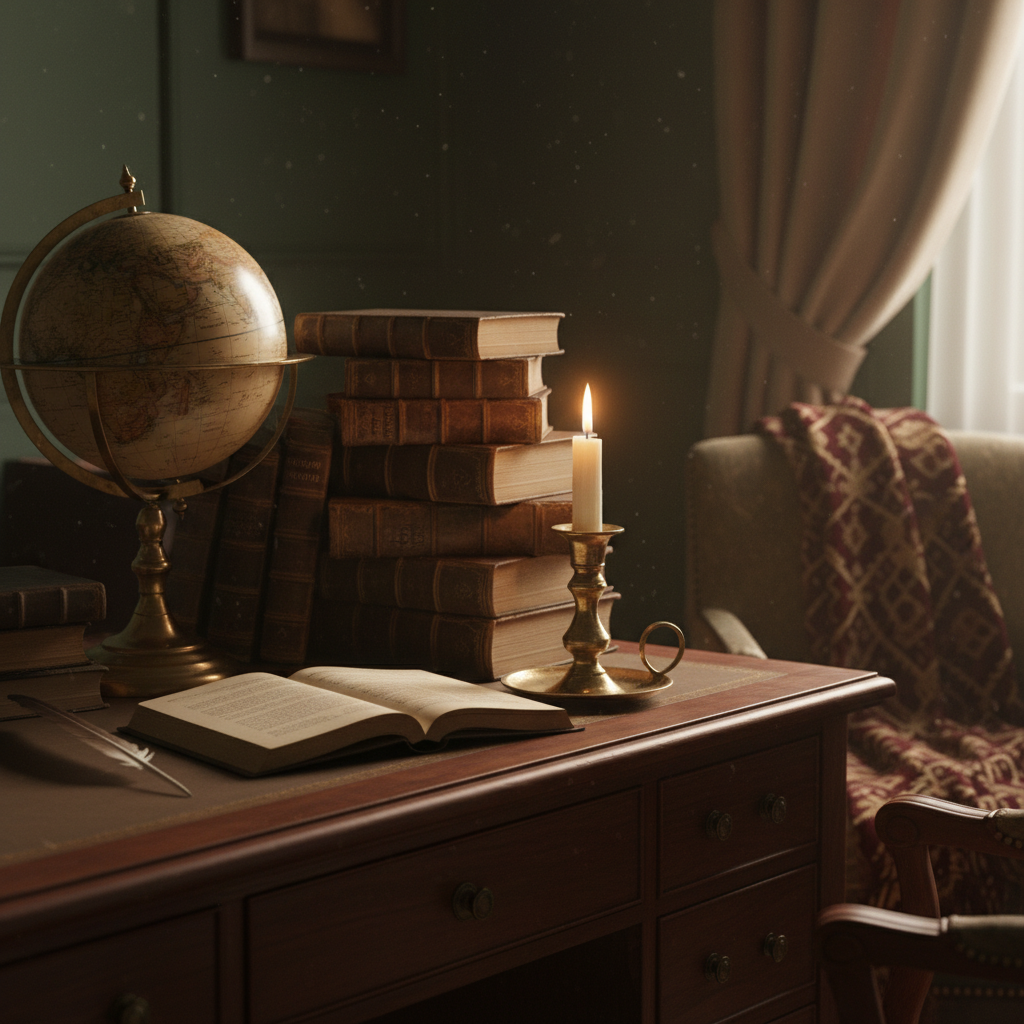
- Books, Books, and More Books: The more, the better. Hardcovers are ideal. Don’t worry about the titles as much as the look of the spines. Stack them on the floor, on your desk, on your nightstand.
- Candles: Taper candles in brass holders are the gold standard. They provide the moody lighting that is absolutely essential.
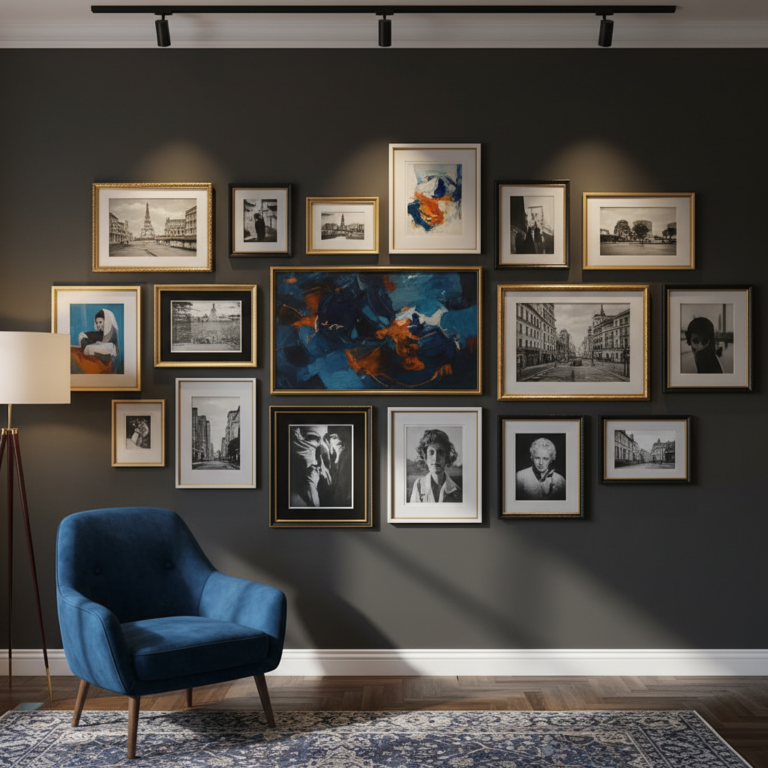
- Classical Art & Imagery: Think sketches of anatomy, botanical prints, portraits of stern-looking historical figures, and architectural drawings.
- Scholarly Tools: A globe, a magnifying glass, an old-fashioned pen and inkwell, a bust of a Greek philosopher (these are surprisingly common at thrift stores!).
- Elements of Natural History: Think faux skulls, framed insects, rock collections, or pressed flowers. It taps into the ‘naturalist scholar’ side of the aesthetic.
The Treasure Hunter’s Playbook: Sourcing Your Paradise for Peanuts
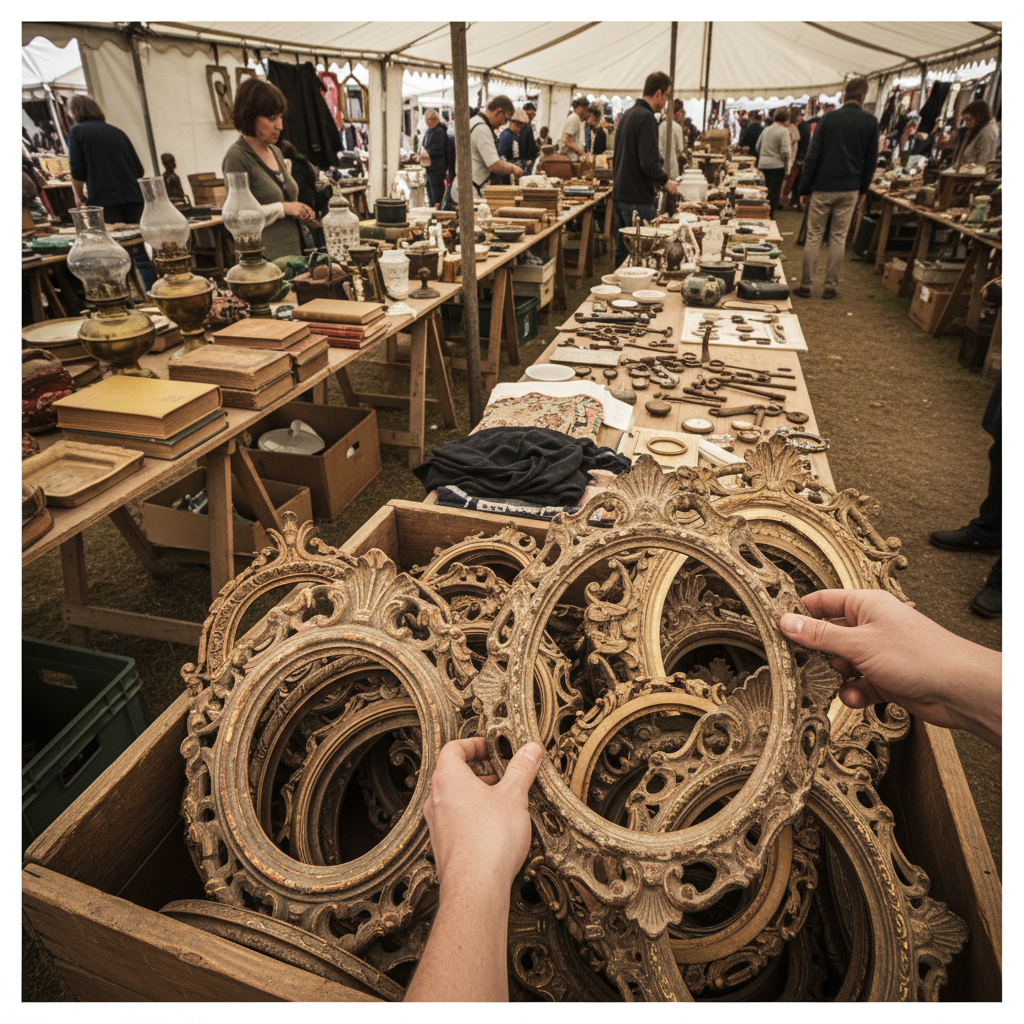
This is where the real work—and the real fun—begins. The retail price for ‘Dark Academia’ decor is a scam. You’re a frugal hacker, and your superpower is finding the treasure in other people’s trash. Put on your comfy shoes and get ready to dig.
Your Goldmine: Thrift Stores & Charity Shops
This is your primary hunting ground. Go often and be patient. Learn which days they restock. Look past the junk to see the potential.
- The Book Section: Head here first. Look for hardcovers with interesting spines. You can often buy them by the bag or for $1-2 each. Look for real leather-bound books—they’re rare, but you’ll feel like you struck gold.
- The Housewares Aisle: This is where you’ll find brass candlesticks, old teacups to use as pen holders, dark wooden trays, and weird statues. Don’t overlook an item just because it’s a little tarnished; a good polish can work wonders.
- The Art & Frames Section: Ignore the ugly art and look at the frames. A gaudy, ornate gold frame can be spray-painted matte black or dark bronze to look incredibly chic. You can get huge, solid wood frames for under $10.
Digital Digging: Online Marketplaces
The internet is your 24/7 flea market. The key is using the right search terms.
- Facebook Marketplace & Craigslist: Use vague terms like ‘old desk,’ ‘wooden chair,’ or ‘bookshelf.’ People often don’t know what they have and list items for cheap just to get rid of them. Be ready to act fast and arrange your own pickup. This is the best place for budget furniture.
- eBay & Etsy: These can be more expensive, but they’re great for specific items. Search for ‘vintage postcard lot,’ ‘brass candlestick set,’ or ‘old maps.’ Set a low maximum price filter to weed out the overpriced stuff.
Old School Ops: Flea Markets & Estate Sales
This requires more effort but yields the most authentic results.
- Flea Markets: Go early for the best selection or late for the best deals when vendors are looking to pack up. Be prepared to haggle respectfully.
- Estate Sales: These are literal treasure troves. You’re walking into someone’s preserved life. Look for old books, desk items, globes, and furniture. The final day of the sale is usually 50% off everything.
Key Rule: The ‘Good Bones’ Principle. Don’t worry if something isn’t the perfect color. Does it have a good shape? Is it made of solid material? Paint is your best friend. A can of matte black or oil-rubbed bronze spray paint can transform cheap junk into a sophisticated artifact.
The DIY Deep Dive: Faking It ‘Til You Make It

You’ve gathered your supplies. Now it’s time to add your personal, creative touch. These DIY projects are the secret to bridging the gap between cheap thrift store finds and the high-end look you’re after. They take a little time but save you a ton of money.
Project 1: The ‘Ancient Texts’ Treatment
Turn those generic $1 thrift store hardcovers into a library of mysterious, old-world tomes.
- Gather Your Books: Find hardcovers with plain, non-glossy covers. Old textbooks or novels work perfectly.
- Prep the Surface: If the cover is slightly glossy, give it a very light scuffing with fine-grit sandpaper so the paint will stick. Wipe off any dust.
- Paint the Covers: Using craft acrylic paint, give the covers a new coat. Stick to your Dark Academia palette: black, deep brown, forest green, or burgundy. You might need two coats. Let it dry completely.
- Add ‘Gilded’ Details: Use a gold or brass-colored paint pen (metallic Sharpies work too!) to draw simple lines, symbols, or fake titles on the spines. Don’t worry about being perfect; slight imperfections look more authentic.
Project 2: Museum-Worthy Art for Free
That $5 frame you found with the hideous floral print inside is about to become a masterpiece.
- Ditch the Old Art: Carefully remove the existing picture and glass. Clean the glass and set it aside.
- Upgrade the Frame: If the frame isn’t already a dark wood or metallic, now’s the time to paint it. Matte black spray paint is a foolproof choice. Let it dry thoroughly.
- Find Your ‘New’ Art: Go to the websites of major museums like The Met, The Getty, or the Rijksmuseum. They have vast online collections of high-resolution public domain images you can download for free. Search for ‘botanical illustration,’ ‘anatomical sketch,’ or ’17th-century portrait.’
- Print & Frame: Print your chosen image on matte photo paper or heavy cardstock for the best result. If you want an aged look, you can briefly soak the print in a shallow tray of cold black tea or coffee and let it air dry before framing. Reassemble your frame and admire your new, incredibly cheap art.
Project 3: The Tea-Stained Poet’s Papers
Create authentic-looking aged paper for letters, maps, or sketches to display on your desk or pinboard.
- Brew Your ‘Aging’ Solution: Brew a very strong cup of black tea or instant coffee and let it cool completely in a shallow baking dish.
- Soak the Paper: Submerge a sheet of regular printer paper or thicker cardstock in the liquid. Let it sit for 5-15 minutes, depending on how dark you want it.
- Add Character (Optional): For extra texture, you can gently crumple the paper while it’s wet and then flatten it out again, or sprinkle some instant coffee grounds directly onto the wet paper to create darker splotches.
- Dry Carefully: You can either let it air dry on a rack or, for a flatter result, use a hairdryer on a low setting. For a slightly ‘scorched’ look, you can carefully hold the edges of the *completely dry* paper near the heat of a lightbulb for a few seconds (be extremely careful!).
The Cost Breakdown: The Frugal Hacker vs. The Retail Rube
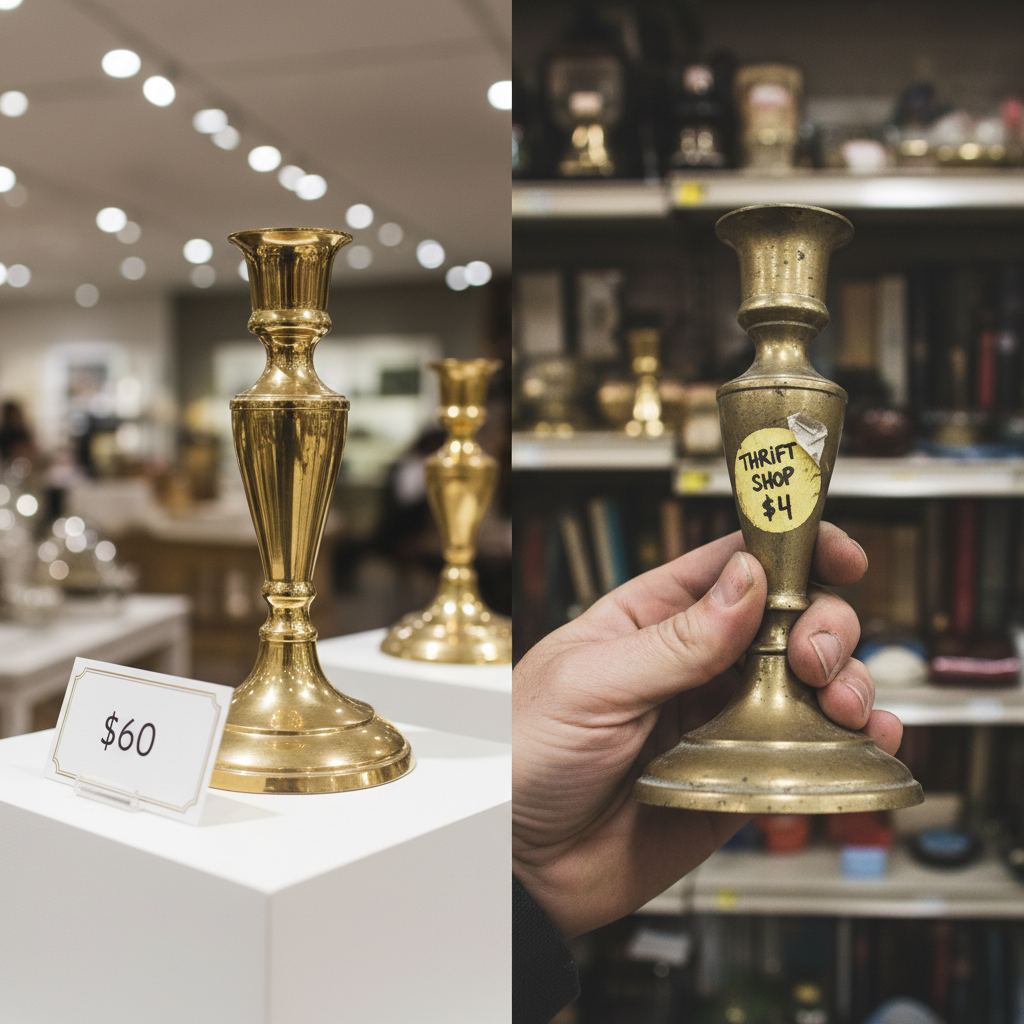
Still think you need to spend big to get this look? Let’s run the numbers. Here’s a side-by-side comparison of what it costs to buy ‘the look’ from a trendy home decor store versus hacking it yourself. The savings aren’t just small change; they’re huge. This is the proof that being street-smart pays off, literally.
| Item | Typical Retail Price (e.g., West Elm, Pottery Barn) | The Frugal Hacker Price | Your Savings |
|---|---|---|---|
| Set of 5 ‘Decorative’ Vintage Books | $75 – $150 | $5 (from Goodwill Outlet, $1/book) | $70 – $145 |
| Pair of Brass Taper Candlesticks | $60 – $100 | $8 (found at a flea market) | $52 – $92 |
| Large Framed Botanical Print (24×36) | $200 – $400+ | $25 ($10 frame from thrift store + $15 for a quality print) | $175 – $375 |
| Small Wooden Writing Desk | $400 – $800 | $40 (Facebook Marketplace find) | $360 – $760 |
| Small Bust Statue (e.g., David, Apollo) | $50 – $120 | $12 (found at HomeGoods or a thrift store) | $38 – $108 |
| TOTALS | $785 – $1570 | $90 | A Whopping $695 – $1480! |
The math doesn’t lie. For less than the price of a single pair of retail candlesticks, you can furnish and decorate a huge portion of your room. Every dollar you save is a dollar you can put toward your financial goals, whether that’s paying off debt, investing, or funding your next side hustle. That’s what frugal hacking is all about: getting the life you want without paying the sucker’s price.
The Grand Finale: Assembling Your Scholarly Sanctuary
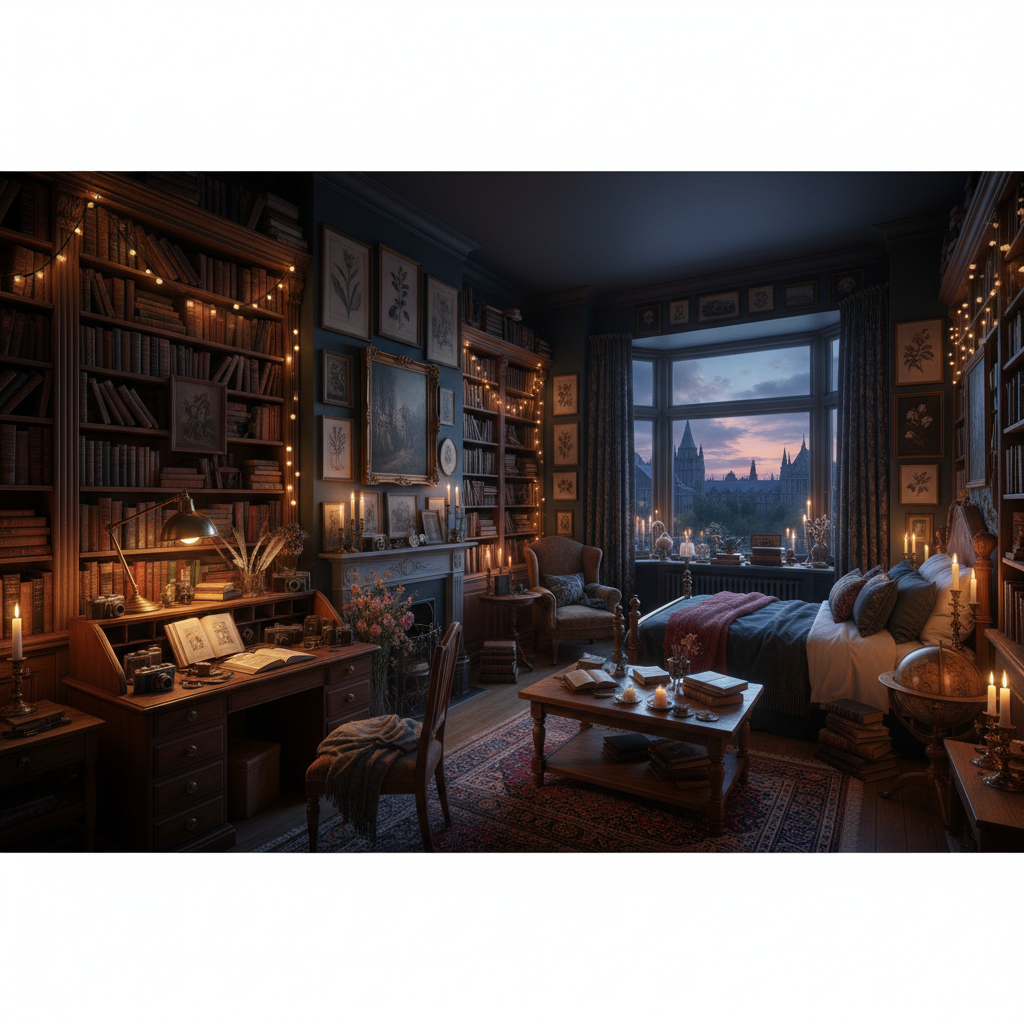
You’ve hunted, you’ve haggled, you’ve created. Now it’s time to put it all together. This is the final and most rewarding step: turning your collection of cool stuff into a cohesive, atmospheric space. Curation is key.
Lighting is Everything
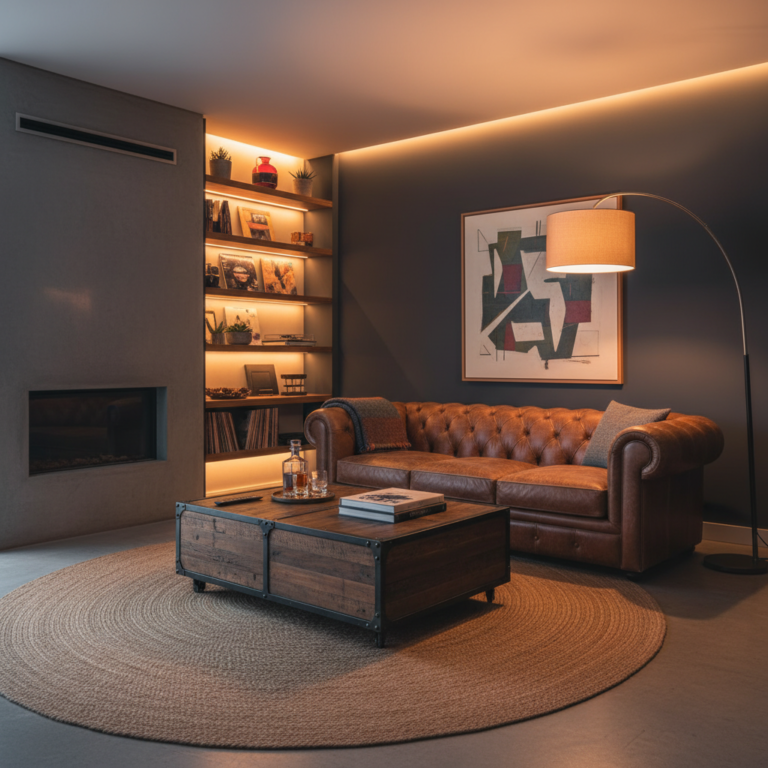
This is non-negotiable. Dark Academia lives and dies by its lighting. The goal is to create pools of warm, inviting light rather than illuminating the whole room evenly.
Key Rule: Banish the ‘Big Light’. That harsh overhead ceiling light is your enemy. Unscrew the bulbs if you have to. Your primary light sources should be low, warm, and layered.
- Task Lighting: Get a desk lamp with a warm-toned bulb (look for 2700K on the box). An old banker’s lamp or a simple brass lamp is perfect. This creates your focused ‘study’ zone.
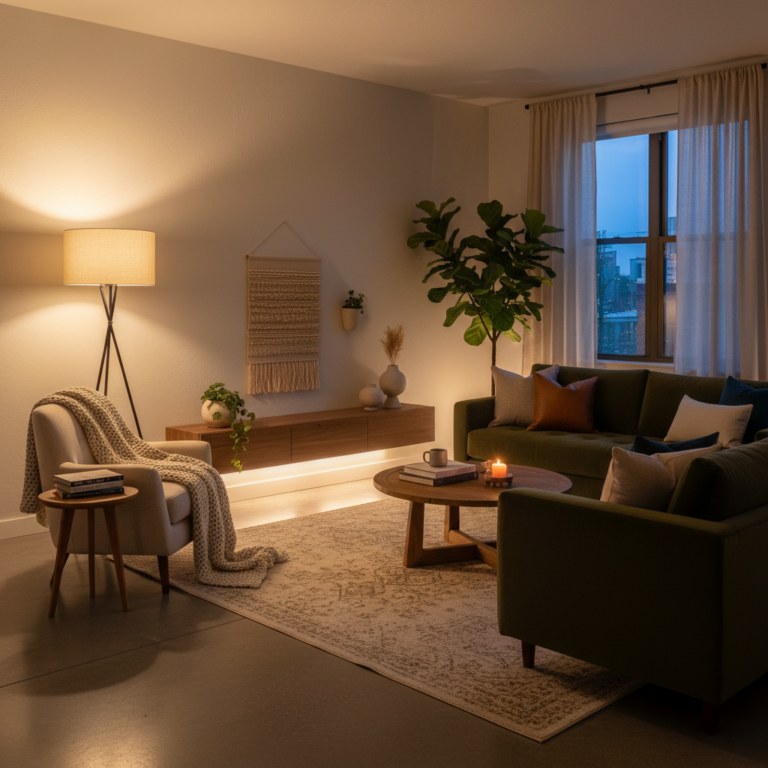
- Ambient Light: Use floor lamps or table lamps in corners to cast a general glow. Aim the light at a wall or bookshelf to diffuse it.
- Accent Light: This is where candles come in. Group them together (safely, on a tray or fire-proof surface) to create a flickering, dynamic light source. Battery-operated LED candles have gotten incredibly realistic and are a safer option for unattended mood-setting.
Master the ‘Artful Clutter’
Minimalism has no place here. This aesthetic celebrates the beauty of a life filled with books, hobbies, and intellectual pursuits. It’s about organized chaos, not messy squalor.
- Stack and Lean: Don’t just place things; style them. Lean framed art against the wall on top of your desk or dresser instead of hanging everything. Stack books horizontally and use them as a pedestal for a candle or a small object.
- Vary Heights: Create visual interest by varying the height of your objects. On a bookshelf, use a tall vase, a medium-sized stack of books, and a small teacup. This creates a more dynamic, curated look.
- Layer Textures: Drape a wool or tweed blanket over the back of your desk chair. Place a small, dark-colored rug under your desk. Let your collections—your rocks, your pens, your postcards—be visible and accessible.
Create Your Nook
Even in a small room, you can create the feeling of a dedicated scholarly corner. Position your desk facing a wall or a window to minimize distractions and create a sense of enclosure. This is your command center. Arrange your favorite books, your journal, your pens, and a cup of tea within arm’s reach. This isn’t just for looks; it’s about creating a functional space that encourages you to sit down, read, write, and think. This is your personal corner of the world, built by you, for you.
Conclusion
Look at what you’ve built. For a fraction of the cost the big brands want you to pay, you’ve created a space with more soul, more character, and more of *you* in it than any catalog-perfect room could ever have. You didn’t just decorate a room; you went on a treasure hunt, learned new skills, and outsmarted a system designed to separate you from your money. That feeling of satisfaction is something you can’t buy at any price.
Your Dark Academia paradise is proof that style is not about wealth. It’s about vision, resourcefulness, and the hustle to make it happen. So light a candle, grab a good book, and enjoy the sanctuary you’ve earned. You’re not just living on a budget; you’re living smarter. And that’s the ultimate power move.