
Bank Secrets Exposed: Overdraft Protection vs Coverage Explained
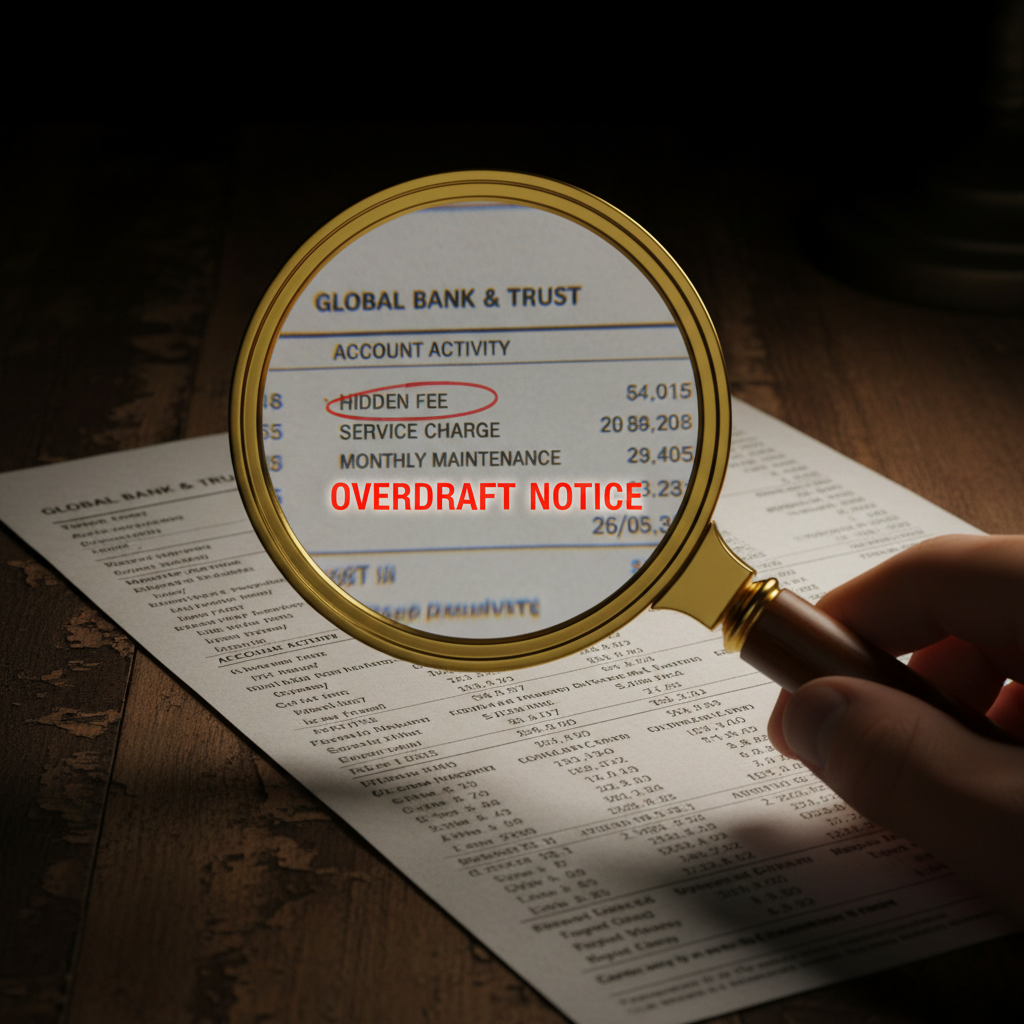
Listen up. Banks aren’t your buddies. They’re businesses, and one of their most profitable products is your financial misstep. That gut-wrenching moment when a $5 latte ends up costing you $40? That’s the overdraft racket in action. They’ve wrapped it in confusing terms like ‘Overdraft Protection’ and ‘Overdraft Coverage’ on purpose, counting on you not knowing the difference. Well, that ends today. We’re pulling back the curtain on this multi-billion dollar industry. This isn’t just about saving a few bucks; it’s about taking back control from institutions that profit when you’re in a tight spot. Get ready to learn the street-smart way to navigate the banking world and kill overdraft fees for good.
The Overdraft Racket: How Banks Profit From Your Slip-Ups

Before we get into the nitty-gritty, you need to understand the game. An overdraft happens when you spend more money than you have in your checking account. Simple, right? But for banks, it’s a goldmine. In the US alone, banks rake in billions—yes, billions—every year from these fees. The average overdraft fee hovers around a predatory $35. Think about that. You miscalculate by a dollar, and they slap you with a penalty that’s 35 times the mistake.
This isn’t an accident; it’s a business model. They know life happens. A bill comes out sooner than you expected, or you forget about that subscription you signed up for. They count on these small human errors to fuel their profits. They position overdraft services as a ‘convenience’ or a ‘courtesy,’ but let’s call it what it is: one of the most expensive ways to borrow a tiny amount of money for a very short time. Understanding this mindset is the first step to beating them. You have to see their ‘services’ not as help, but as carefully designed traps for your money.
Overdraft Protection: The ‘Helpful’ Friend Who Charges You to Borrow Your Own Money
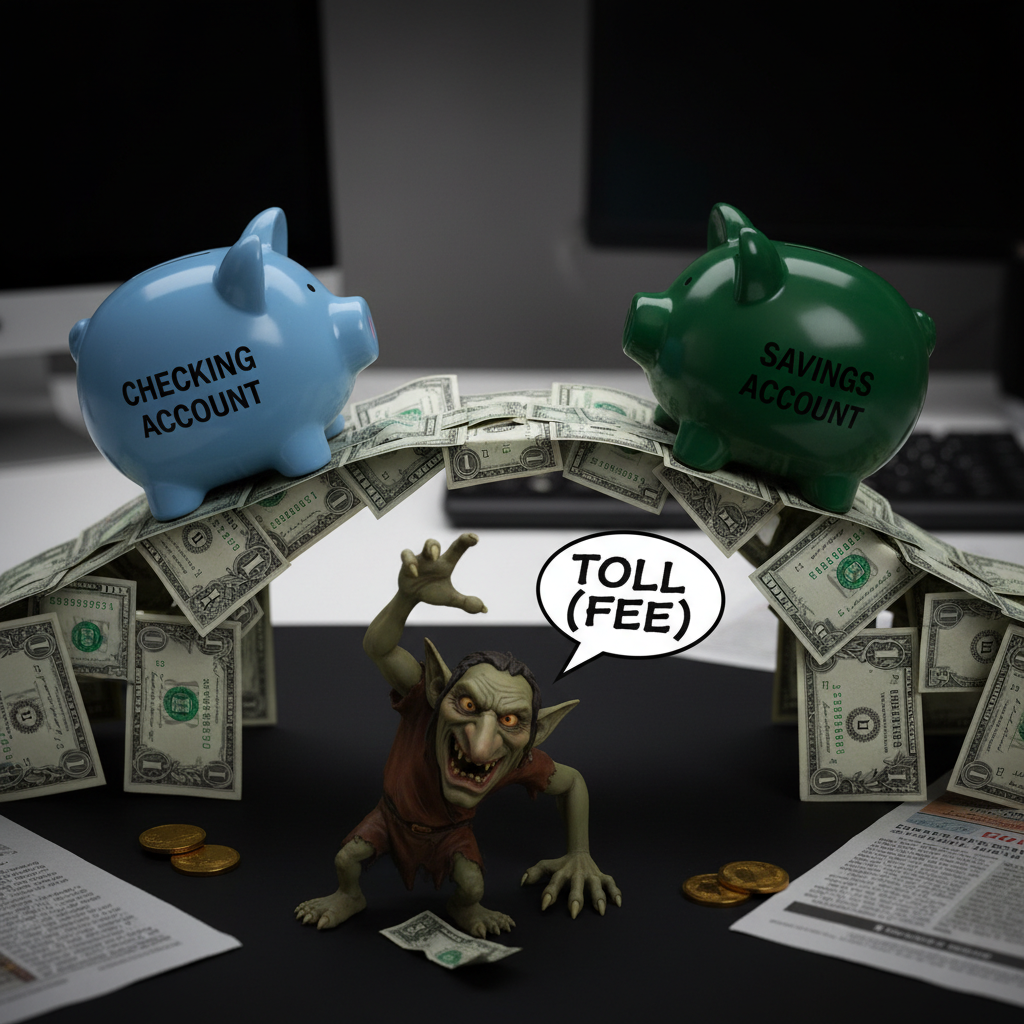
First up is ‘Overdraft Protection.’ This is the one that sounds responsible, the one they sell you as the smart choice. Here’s the hustle: when you don’t have enough cash in your checking account to cover a transaction, the bank automatically pulls the money from a linked account. This could be your savings account, a credit card, or a line of credit.
The ‘Pros’ (What the Bank Tells You)
- Your transaction isn’t declined, saving you potential embarrassment at the checkout counter.
- You avoid the massive non-sufficient funds (NSF) fee, which is often the same as a standard overdraft fee.
The Reality (The Street-Smart View)
This ‘protection’ isn’t free. Not by a long shot. You’re essentially paying a fee to borrow your own money. The costs can come in a few flavors:
- Transfer Fees: Many banks charge a flat fee, often around $10 or $12, every time they have to move money from your savings to your checking. Do this a few times a month, and you’re bleeding cash for no reason.
- Interest Charges: If the money is pulled from a line of credit or a credit card, you’re now paying interest on that amount. And we all know credit card interest rates are brutal.
Let’s do the math. Say you have this service and you overdraft three times in a year. You didn’t get hit with the $35 fee, great. But you did get hit with a $12 transfer fee each time.
$12 transfer fee x 3 incidents = $36 lost.
You’ve paid the equivalent of a full overdraft fee just for the ‘privilege’ of the bank moving your money around for you. It’s a slow leak instead of a flood, but your wallet is still getting soaked.
| Scenario | Cost of Overdraft Protection | Cost Without Protection (Declined) |
|---|---|---|
| Slight miscalculation on a $20 purchase | $12 Transfer Fee | $0 (Transaction is simply declined) |
| Four small overdrafts in a year | $48 (4 x $12 transfer fee) | $0 (Four transactions are declined) |
Overdraft Coverage: The Bank’s Blank Check to Charge You Big

Now we get to the big one: ‘Overdraft Coverage.’ This is the default, high-fee option. With coverage, if you try to make a debit card purchase or ATM withdrawal without enough funds, the bank can choose to ‘cover’ it for you. Then, they thank you for this ‘courtesy’ by hammering your account with that infamous $35 fee.
Here is the single most important secret you need to know: By law (thanks to Regulation E), you have to explicitly opt-in for overdraft coverage on one-time debit card and ATM transactions. They can’t charge you for these unless you gave them permission. They often get this permission by presenting it as a helpful service when you first open your account. They’ll ask something like, ‘Do you want us to make sure your card is never declined?’ and get you to say yes without explaining the consequences.
Scam Warning: Banks are masters of phrasing. When they ask if you want to ‘add debit card coverage’ or ‘ensure your transactions go through,’ they are asking for your permission to charge you $35 for a $2 mistake. Your answer should always be a firm ‘NO.’
The Vicious Cycle
Overdraft coverage is designed to create a cycle of debt. That $5 coffee becomes a $40 debt ($5 purchase + $35 fee). Now your account is even more negative. The next small transaction that comes through? Another overdraft. Another $35 fee. It can spiral out of control, with some banks even charging you a daily fee for having a negative balance. It’s a trap, and it’s devastating for anyone on a tight budget.
Imagine you’re at $2.50 in your account. You buy a bottle of water for $3.00. BAM! You’re now at –$32.50. Then your $10.99 streaming service tries to bill. BAM! Another fee. You’re now at –$78.49. In less than a day, you’re nearly $80 in the hole from two tiny transactions. This is the reality of ‘coverage’.
The Showdown: Protection vs. Coverage Head-to-Head
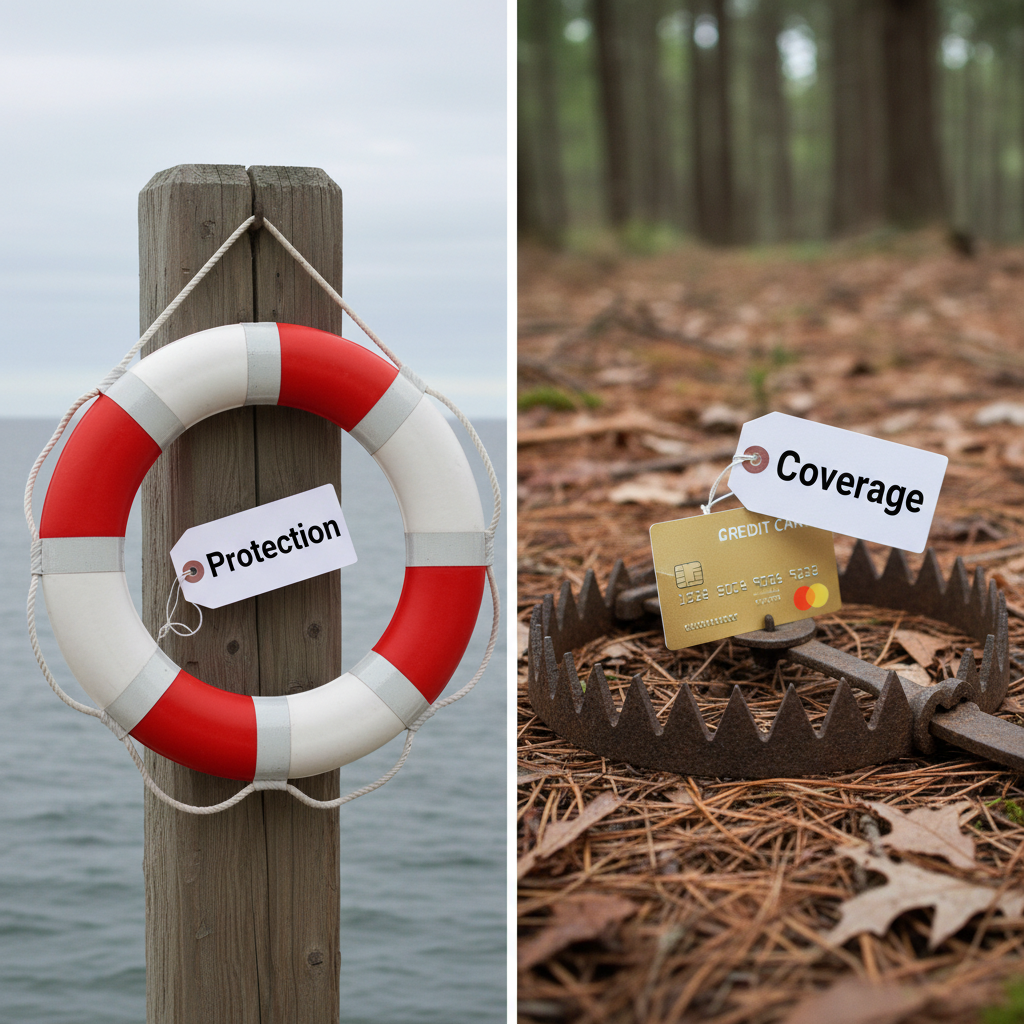
Okay, let’s put these two side-by-side. No marketing fluff, just the straight facts so you can see exactly what you’re dealing with. This is the cheat sheet you need to understand the game.
| Feature | Overdraft Protection | Overdraft Coverage |
|---|---|---|
| How It Works | Automatically transfers money from a linked savings account or line of credit to cover the shortfall. | The bank pays for your debit/ATM transaction and then charges you a massive flat fee for the ‘service’. |
| Typical Cost | A transfer fee (e.g., $10-$12) per transfer, or interest if it’s from a credit line. | A high flat fee (e.g., $35) per transaction that overdraws the account. |
| Key Requirement | You need to have money in the linked account or available credit. | You must have explicitly opted-in for this service on debit/ATM transactions. |
| The Bank’s Pitch | ‘A smart way to avoid declined transactions and high fees.’ | ‘A courtesy service to ensure your purchases are never denied.’ |
| The Street-Smart Reality | You’re paying a fee to access your own money. It’s cheaper than coverage, but still a waste. | This is the fee trap. It’s how a $3 purchase turns into a $38 problem. Avoid at all costs. |
| Best For… | People who want a safety net and are willing to pay a smaller fee for it, but honestly, there are better ways. | The bank’s bottom line. Not you. Never you. |
Looking at them together, it’s clear neither is a great deal. ‘Protection’ is the lesser of two evils, but it’s still an evil. You’re choosing between a small, consistent drain on your funds and a sudden, massive financial punch. The real winning move? It’s to reject both options entirely.
The Ultimate Frugal Hack: How to Beat the Banks at Their Own Game

You don’t have to play their game. The ultimate power move is to make both overdraft protection and coverage completely irrelevant. You’re going to build your own system—a free, effective system that keeps your money safe. Here’s your action plan.
Step 1: Just Say No. Opt-Out of Everything.
Your first move is to go on the offensive. Call your bank or walk into a branch and tell them you want to opt-out of overdraft coverage for your debit and ATM transactions. They might try to talk you out of it. Stand your ground.
Use this script: ‘Hi, I’d like to confirm my overdraft settings. I want to formally opt-out of any and all overdraft coverage for my one-time debit card and ATM transactions. I understand this means if I don’t have the funds, my transaction will be declined. Please confirm that this has been applied to my account.’
Also, cancel overdraft protection. Unlink your savings account. Why pay $12 for a transfer you can do yourself for free in 10 seconds on your phone?
Step 2: Turn Your Phone into a Weapon with Alerts.
Every modern banking app has notification settings. Use them. Set up a custom low-balance alert. Set it for $100, or $50, or whatever amount gives you enough warning to move money or stop spending. This is your early warning system. It costs nothing and is more effective than any service the bank can sell you.
Step 3: Build Your Own FREE Overdraft Protection.
This is the core of the strategy. Create a small ‘buffer’ in your checking account. This is an amount of money that you mentally treat as zero. For some, it might be $50. For others, $200. This buffer is your personal, interest-free, fee-free overdraft protection. If an unexpected $30 charge hits, it just eats into your buffer, not into the red. Then, your job is to replenish that buffer as soon as possible. This simple discipline will save you hundreds of dollars over time.
Step 4: Know Your Numbers in Real-Time.
The final piece is tracking. If you’re living on a tight budget or hustling to make ends meet, you need to know where your money is going. Use a budgeting app like Mint, YNAB (You Need A Budget), or Rocket Money. Link your accounts, and you’ll get a real-time picture of your finances. This eliminates the guesswork that leads to overdrafts in the first place.
Conclusion
The difference between overdraft protection and coverage isn’t just semantics—it’s the difference between a small leak and a financial shipwreck. Banks have built a multi-billion dollar industry by making these options confusing and counting on your inaction. But now you know the game. You know that ‘coverage’ is a trap you must opt-out of, and ‘protection’ is a pricey service you can replicate yourself for free. By setting up alerts and building your own cash buffer, you take the power back. A declined transaction might be momentarily awkward, but it’s infinitely better than a $35 fee that kicks off a cycle of debt. Be street-smart, be proactive, and keep your hard-earned money working for you, not for the bank’s profit margin.
Disclaimer: I am not a financial advisor. This article is for educational and informational purposes only. Please consult with a qualified financial professional before making any decisions regarding your finances.