

Let’s be real: your bank probably sucks. It holds your money, maybe pays you a pathetic 0.01% interest, and then charges you fees for the privilege. You’re getting played. But what if I told you that you could flip the script? What if you could make banks pay you for your business? I’m not talking about pennies in interest. I’m talking about cold, hard cash—$200, $400, even $500 at a time. This isn’t a gimmick; it’s a legitimate side hustle called bank bonus churning, and it’s how I pocketed over $1,000 last year with minimal effort. Forget clipping coupons or taking endless surveys for chump change. This is about making strategic moves with money you already have to score serious sign-up bonuses. In this guide, I’m breaking down the entire playbook—from finding the most lucrative offers to dodging the hidden fees and executing the plan flawlessly. It’s time to stop letting banks profit off you and start taking your cut.
The Hustle: Why Banks Are Throwing Cash at You

First thing you need to understand is why this works. Banks are desperate for new customers. They spend billions on marketing—Super Bowl ads, junk mail, billboards—all to get you in the door. They know that once they have you, you’re likely to stay for years out of sheer convenience. This is called ‘customer lifetime value’, and to them, you’re worth thousands. So, they offer a shortcut: a big, juicy cash bonus to get you to switch. It’s just a customer acquisition cost for them, but for you, it’s a high-paying side hustle.
The Two Main Types of Bonuses:
- Checking Account Bonuses: This is the most common hustle. A bank will offer you cash, typically between $100 and $500, to open a new checking account and set up a qualifying direct deposit for a few months.
- Savings Account Bonuses: These often require you to deposit a larger chunk of ‘new money’ (funds not already at that bank) and keep it there for a set period, usually 90 days. The bonuses can be huge, sometimes reaching $1,000 or more, but they require you to have the capital to park.
The beauty of this game is that you’re not loyal to any of them. You’re a free agent, moving your money where it’s treated best. You swoop in, meet the requirements, collect your cash, and then you’re free to move on to the next offer. It’s a system, and once you learn the rules, you can repeat it over and over again. You’re not just opening a bank account; you’re executing a calculated financial play.
Your Hit List: How to Find and Vet the Best Bank Bonuses
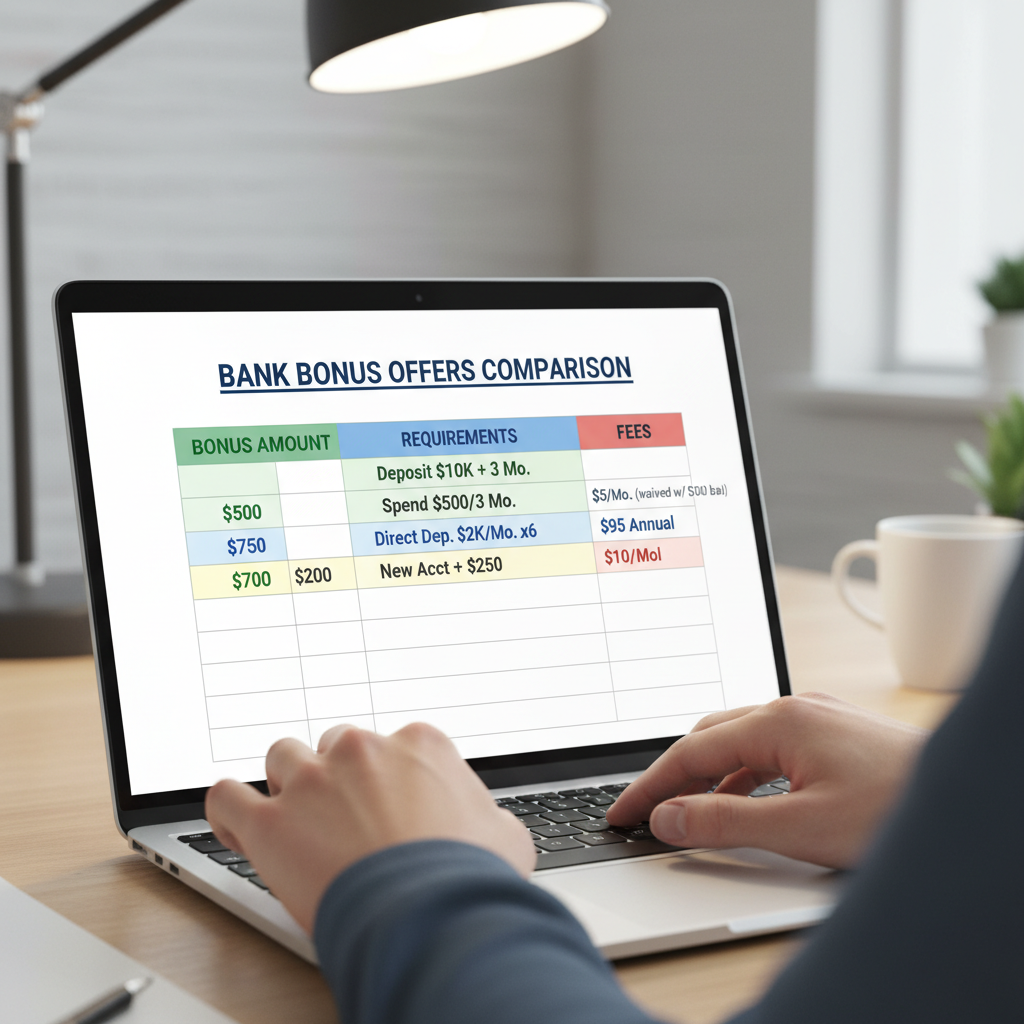
You can’t cash in if you don’t know where the deals are. Hunting for the best offers is half the battle, but luckily, the internet has done the heavy lifting for us. Your goal is to find offers with the highest payout for the least amount of hassle.
Top Resources for Finding Bonuses:
- Doctor of Credit: This is the holy grail. The site maintains a constantly updated list of the best national and state-specific bank bonuses. No affiliate links, just the raw data. Bookmark it. Now.
- NerdWallet & Bankrate: These mainstream finance sites are also great resources. They often feature big, nationally available offers from major players like Chase, Citi, and Bank of America.
Your Vetting Checklist: What to Look For
Before you jump on an offer, you need to dissect it like a hawk. Every bonus has strings attached. Your job is to make sure those strings don’t strangle your profit.
- The Bonus Amount: Is it worth your time? I don’t bother with anything under $100. Aim for $200+.
- The Requirements: What do you have to do? The most common requirement is a ‘qualifying direct deposit’. This usually means a paycheck, pension, or government benefit payment. Some banks are strict, others are not. Sometimes a simple ACH transfer from another bank (like Ally or Charles Schwab) can trigger the bonus. This is a key ‘hack’ to look for in the fine print and on forums.
- Minimum Deposit/Balance: How much cash do you need to open the account or park in it? Make sure you can comfortably meet this without stretching yourself thin.
- Monthly Fees & How to Waive Them: This is the #1 profit killer. A $12 monthly fee can eat up a $200 bonus fast. Look for easy ways to waive the fee, like maintaining a minimum daily balance or having a qualifying direct deposit. If you can’t easily waive the fee, skip the offer.
- Account Closure Timeline: Most banks require you to keep the account open for a certain period, like 90 or 180 days, after you receive the bonus. If you close it too early, they can claw the bonus back. Mark this date on your calendar.
The Step-by-Step Playbook to Cashing In

Alright, you’ve found a killer offer. Now it’s time to execute. Precision is key. Follow these steps religiously to make sure you get paid.
- Get Organized: Before you even start the application, gather your documents. You’ll need your Social Security number, a government-issued ID (like a driver’s license), and your current address and employment information. Have it all ready to go.
- Document Everything: Take screenshots. Screenshot the offer page. Screenshot the confirmation page after you apply. Save the email with the account opening documents. If there’s ever a dispute, you have the receipts.
- Fund the Account: During the application, you’ll need to make an initial deposit. Use an external bank account to transfer the funds. Pay close attention to any minimum opening deposit requirements.
- Set Up the Direct Deposit: This is the most critical step. Log into your employer’s payroll portal and change your direct deposit information to the new bank account. If you’re using the ACH transfer ‘hack’, initiate the transfer from another bank. Set a calendar reminder to check that the deposit went through.
- Track Your Progress: If you’re doing multiple bonuses, you NEED a tracking system. A simple spreadsheet is perfect. Track every detail so you don’t miss a beat.
| Bank Name | Offer Amount | Date Opened | DD Requirement Met? | Bonus Payout Date | Earliest Close Date |
|---|---|---|---|---|---|
| Chase Bank | $300 | 01/15/2024 | 02/01/2024 | 02/10/2024 | 07/15/2024 |
| U.S. Bank | $400 | 02/20/2024 | 03/05/2024 | PENDING | 08/20/2024 |
| SoFi | $300 | 03/01/2024 | PENDING | PENDING | N/A (No close req) |
The Key Rule: Read the terms and conditions. I know, it’s boring. But the exact rules for getting your money are spelled out there. Spend 10 minutes reading it to save yourself from losing hundreds of dollars.
Rules of the Game: How to Dodge Fees and Protect Your Score

Winning this game isn’t just about collecting bonuses; it’s about protecting your profits and your financial health. Here’s how to navigate the common pitfalls.
Avoiding Monthly Maintenance Fees
This is non-negotiable. Never pay a monthly fee. Before you sign up, confirm you can meet the requirements to waive it. Usually, it’s one of the following:
- Maintaining a minimum daily balance (e.g., $1,500 in a checking account).
- Receiving a certain amount in direct deposits each month (e.g., $500 or more).
- Linking other accounts at the same bank.
Set it up and forget it. Automate it if you can. If your situation changes and you can no longer meet the waiver, close the account after the required holding period.
Will This Hurt My Credit Score?
This is a common fear, but the short answer is: no, not really.
When you apply for a credit card, it results in a ‘hard pull’ on your credit report, which can temporarily lower your score. However, opening a bank account almost always results in a ‘soft pull’. A soft pull does not affect your FICO credit score at all. Instead, banks use a different reporting agency called ChexSystems, which is like a credit report specifically for deposit accounts. As long as you don’t have a history of bouncing checks or committing fraud, you’ll be fine. Opening a few accounts a year is highly unlikely to cause any issues.
The Tax Man Cometh
Don’t forget about Uncle Sam. Bank bonuses are considered interest income, not a gift or rebate. This means the bank will send you a Form 1099-INT at the end of the year if your bonuses total $10 or more. You are required to report this on your tax return. Just be aware of it and set aside a small portion of your bonus (maybe 20-30%, depending on your tax bracket) to cover it.
Scam Warning: Real Offers vs. Phishing Traps

The world of online finance is full of sharks. While bank bonus churning is a legitimate hustle, scammers will try to take advantage of people looking for easy money. You need to be able to spot a real offer from a phishing scam designed to steal your identity and your cash.
A legitimate offer will come directly from a real, FDIC-insured bank. A scam will try to impersonate one. Here are the red flags to watch out for.
Scam Warning Checklist:
- Unsolicited Emails or Texts: Real banks don’t typically text you out of the blue with a link to claim a $1,000 bonus. If you didn’t seek it out, be suspicious.
- Suspicious Links: Always hover over a link before you click it. A scam link might look like ‘chase-bank-rewards.com’ instead of the official ‘chase.com’. When in doubt, NEVER click the link. Go directly to the bank’s official website by typing it into your browser yourself.
- Sense of Urgency: Scams often pressure you with language like ‘ACT NOW OR THIS OFFER EXPIRES IN 5 MINUTES!’ Real bank offers last for weeks or months.
- Requests for Personal Info via Email: A bank will never ask you to email your Social Security number, password, or account numbers. This information should only be entered on a secure application page on their official website (look for the ‘https://’ and the lock icon).
The golden rule is simple: Only apply for offers on the bank’s official, secure website. If you find an offer on a blog or forum, that’s great—but when it’s time to apply, go find that offer yourself on the bank’s site. It’s your money and your identity. Protect it.
Conclusion
There you have it—the complete playbook for turning the banking system into your own personal side hustle. It’s not about getting rich quick; it’s about being smarter than the system. By strategically moving your money, you can collect hundreds, even thousands of dollars a year in cash that was just sitting on the table. It takes a bit of organization and attention to detail, but the payoff is one of the highest you’ll find for the amount of effort required. Stop letting your money sleep in a zero-interest account. Put it to work. Find your first $200 offer today, follow the steps, and get that cash. You’re in control now.
Disclaimer: I am not a financial advisor. This article is for informational and educational purposes only. Please consult with a qualified professional before making any financial decisions. Be aware of the tax implications of earning bank bonuses.


Makenzie is the founder and lead writer at MoneyHackTips.com — a personal finance blog dedicated to delivering street-smart financial wisdom for real people on real budgets. With 300+ published articles covering everything from debt management to investing fundamentals, Makenzie’s mission is to make every dollar work harder. When not writing about money hacks, Makenzie is testing frugal living strategies, optimizing side hustles, and helping readers build financial freedom from scratch.